
A good low carb breakfast shouldn’t need a skillet. A recipe app and twenty minutes of attention. These egg and avocado cups come close: halve an avocado, crack an egg into the hollow and bake. The hands-on prep takes about 5 minutes but the oven needs another 15-18 minutes so plan on roughly 20-23 minutes from start to table. An air fryer can shorten the cook time. Each serving has about 2.1 g net carbs and this guide covers what usually goes wrong so your first batch works.
Are egg and avocado cups a low-carb breakfast?
Yes. One serving (½ Hass avocado plus 1 large egg) has roughly 8.9 g carbs and 6.8 g fiber or about 2.1 g net carbs before toppings. Prep takes about 5 minutes. Bake at 375°F for roughly 15-18 minutes in an air fryer. Start checking around 8 minutes. For a fully safe egg dish cook until a food thermometer reads 160°F, per USDA guidance. Nutrition varies with avocado size.
Why Eggs and Avocado Work for a Low Carb Breakfast
A low carb breakfast works best when it’s simple enough to make on a weekday. Eggs and avocado meet that bar.
Is avocado low carb?
Mostly, yes, once you account for fiber. Avocado contains carbohydrates but a large share of it is fiber which is why this recipe lands near 2.1 g net carbs per serving (total carbs minus fiber). The fat is largely unsaturated. You can check raw Hass avocado values yourself in USDA FoodData Central.
What makes this a practical breakfast?
The avocado is the cooking vessel so there’s no pan to scrub and no toast or tortilla to buy. The eggs bring the protein and the whole thing goes into the oven while you get ready. For more ideas like this browse our low-carb recipes. For dishes that finish in five minutes total see our 5-minute meals.
Ingredients and the Avocado-to-Egg Ratio
What you need
- 2 large ripe Hass avocados (firm enough to hold their shape, soft enough to scoop)
- 4 large eggs
- ¼ teaspoon salt and ¼ teaspoon black pepper
- 1 teaspoon lime or lemon juice, optional
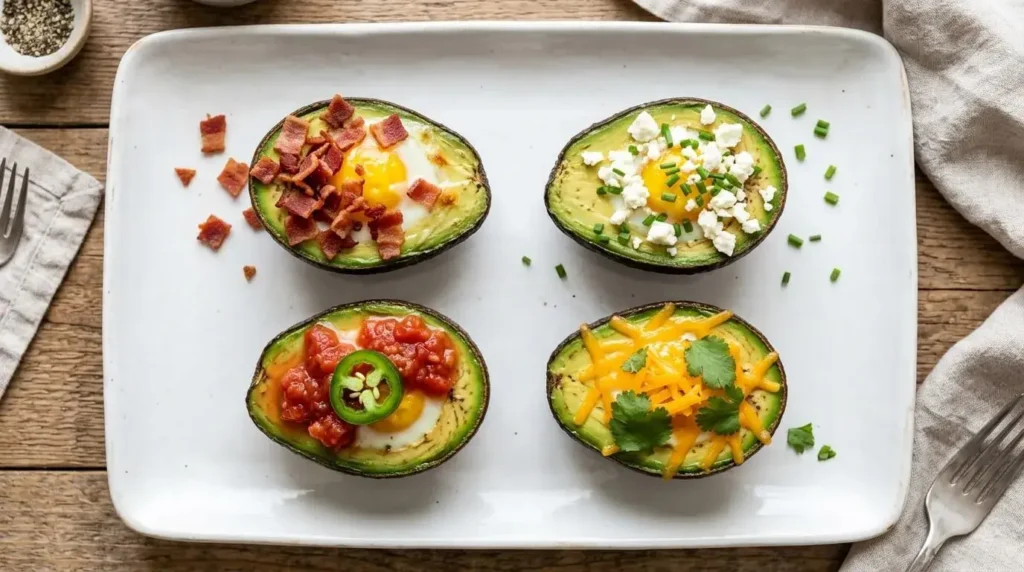
- Optional toppings: cheese, bacon, salsa, chives, cilantro
You’ll also need a baking dish and a food thermometer.
The ratio that prevents overflowing
The pit hole alone is rarely big enough for a whole egg. Scooping out a little flesh to make an egg-sized cavity is the most important step. Use this as a starting guide:
| Avocado | Egg | What to do |
| Small | Medium | Pit hole plus a spoonful of flesh scooped out |
| Small | Large | Scoop 1-2 tablespoons extra or leave some white behind |
| Large | Large | Scoop about 1 tablespoon extra |
| Large | Jumbo | Pour slowly and discard the excess white |
| Any | Egg reaches the rim | Stop pouring and spoon off the extra white |
Choose Your Cooking Method
All three methods work at 375°F. The differences are speed and how many halves you’re cooking. Treat every time below as a starting point because ovens and air fryers run hot or cool and avocado size changes the result.
| Method | Temperature | Approx. cook time | Best for |
| Oven | 375°F | 15-18 minutes | All four servings at once, the most forgiving for beginners |
| Air fryer | 375°F | Start checking around 8 minutes | Smaller batches and the fastest cook |
| Toaster oven | 375°F | 12-18 minutes | One or two servings without heating a full oven |
I recommend the oven for a first attempt since a stable dish makes the halves easier to keep upright. Whichever you use, confirm doneness with a thermometer rather than the clock.
How to Make Low-Carb Egg and Avocado Cups
Prepare the avocado
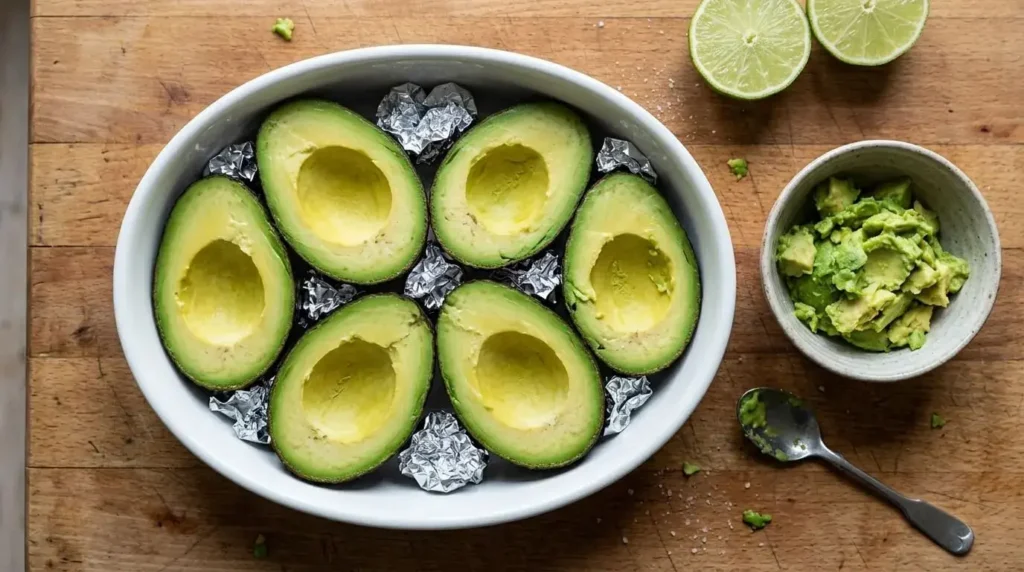
- Heat the oven to 375°F. Halve the avocados and remove the pits.
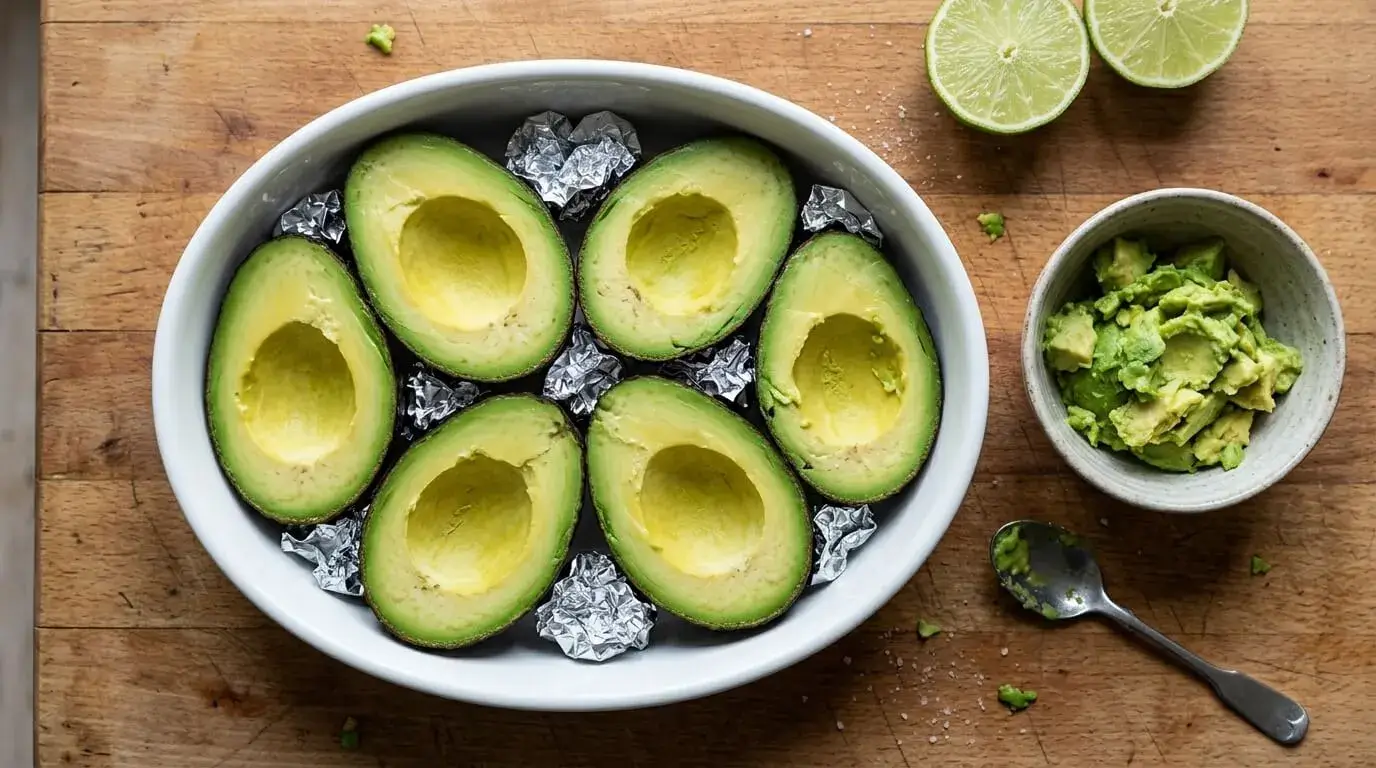
- Scoop 1-2 tablespoons of flesh from each half to enlarge the cavity (see the ratio table). Squeeze a little lime or lemon juice over the cut surfaces if using.
- Set the halves in a baking dish, wedging crumpled foil around any rock.
Add the eggs
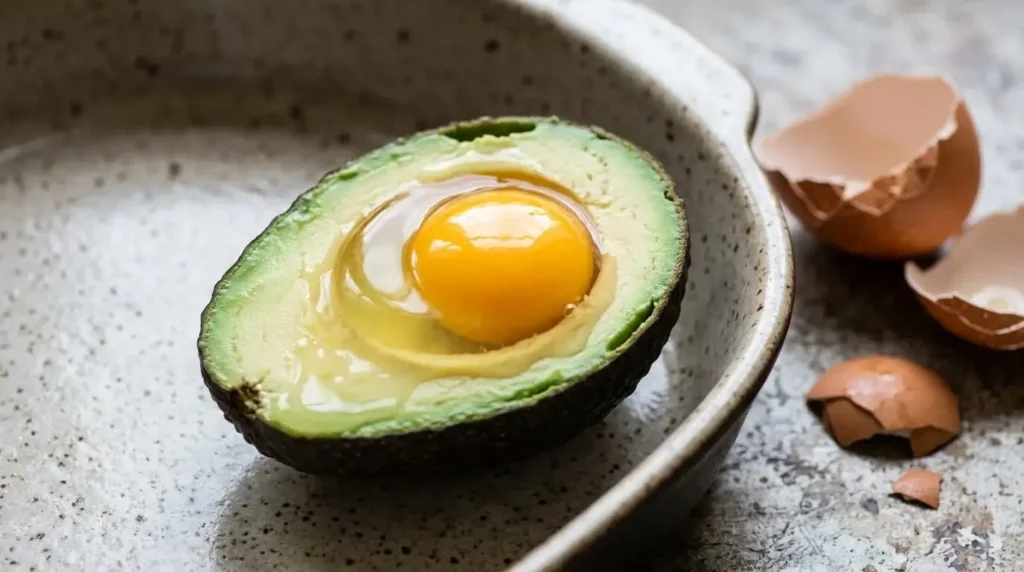
- Crack one egg into a small cup. This lets you remove the shell and control the pour.
- Pour the egg slowly into the cavity to stop if the white nears the rim. Season with salt and pepper.
Bake until the eggs reach the desired safe doneness
- Bake for 15-18 minutes until the whites are opaque and the yolk is firm.
- Slide a food thermometer into the center of the egg. If it reads below 160°F, bake 2 minutes more and recheck.
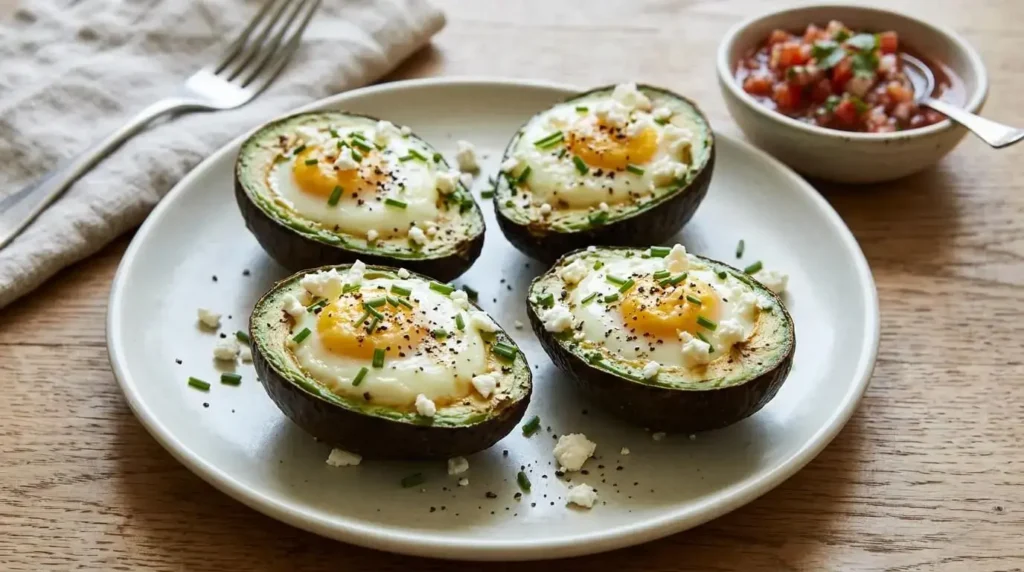
- Cool for 2 minutes then add toppings and serve.
Egg Doneness and Temperature Guide
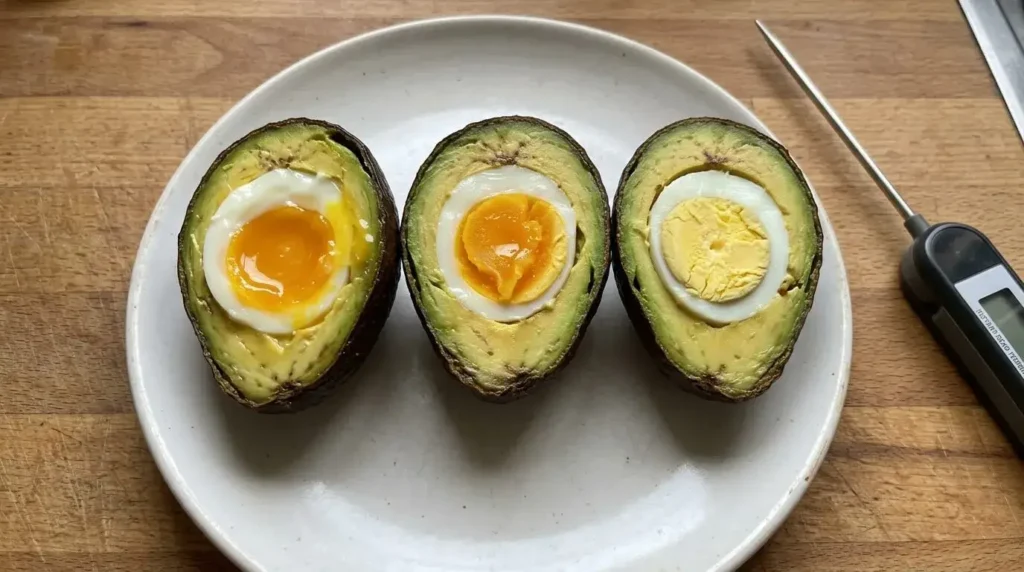
USDA recommends cooking egg dishes to 160°F (USDA FSIS). Color alone isn’t proof: a set-looking white can sit beside a yolk that hasn’t reached that temperature. Put the thermometer in the center of the egg without touching the avocado.
| Result | Visual cue | Approximate starting point | Safety note |
| Soft-set | Whites mostly opaque, yolk runny | Check around 13 minutes (oven) | Not verified at 160°F; outside USDA guidance |
| Medium | Whites set, yolk thick but soft | Around 15-16 minutes | Keep baking until the thermometer reads 160°F |
| Firm | Whites fully opaque, yolk set | Around 16-18 minutes | Most likely to reach 160°F then confirm with a thermometer |
A runny yolk looks appealing but I can’t call it safe.
Troubleshooting Avocado Egg Cups
Most problems trace back to the same cause: a cavity that’s too small. Check there first.
| Problem | Likely cause | Fix |
| Egg spills over | Cavity too small or poured too fast | Scoop more flesh, pour slowly, spoon off extra white |
| Avocado tips over | Rounded skin on a flat surface | Wedge with crumpled foil or use a snug dish |
| Egg white undercooked | Large egg or early check | Bake 2-3 minutes more and recheck for 160°F |
| Avocado browns | Cut flesh exposed to air | Add lime juice and bake soon after cutting |
| Bottom is watery | Loose white pooling in the cavity | Use a firmer avocado and blot the cavity before adding egg |
| Yolk overcooks | Too much time or an air fryer running hot | Start checking earlier (around 8 minutes in an air fryer) |
| Top browns too quickly | Cheese or bacon exposed to direct heat | Add toppings in the last 2-3 minutes or tent with foil |
Easy Substitutions and Low-Carb Toppings
Ingredient substitutions
- Smaller eggs: medium eggs fit small avocados without overflow.
- Egg whites: they cook faster so check earlier.
- Cheese: cheddar or feta works if you use dairy-free cheese if needed.
Low-carb topping ideas
- Crumbled bacon
- Wilted spinach, patted dry
- Chives or cilantro
- A spoonful of salsa or sliced jalapeño
Salsa and spinach add a few carbs so keep portions modest. For another protein-forward morning, try our high-protein breakfast bowl.
Storage and Reheating
Refrigerate leftover cups promptly in an airtight container and use them within 3-4 days then following USDA egg handling and storage guidance.
To reheat them in short microwave bursts or in an oven or air fryer until hot throughout. Expect changes: the avocado will soften and darken and reheating firms the yolk further. These cups are best eaten fresh and the leftovers are fine for a quick next-day breakfast.
This recipe hasn’t been tested for freezing so I don’t recommend it.
Meal Prep Notes for Busy Mornings
Doubling works: use two baking dishes rather than crowding one and check the center cups for doneness. Cool cooked cups then refrigerate them in a single layer in an airtight container.
To save a few minutes you can halve and scoop the avocados ahead, brush with lime juice and keep them covered in the fridge for a few hours. Add the eggs just before baking not in advance.
For more batch ideas, see our meal prep ideas and meal prepping for beginners.
Low-Carb 23-Minute Egg and Avocado Cups
Ingredients
Method
- Preheat the oven to 375°F.
- Halve the avocados and remove the pits. Scoop out 1-2 tablespoons of flesh from each half to make an egg-sized cavity. Brush the cut surfaces with lime or lemon juice if using.
- Arrange the halves in a baking dish, wedging crumpled foil around any that tip.
- Crack one egg into a small cup, then pour it slowly into each cavity, stopping before it reaches the rim. Season with salt and pepper.
- Bake for 15-18 minutes, until the whites are opaque and the yolk is firm. Insert a food thermometer into the center of the egg; for a fully safe egg dish, it should read 160°F. If lower, bake 2 more minutes and recheck.
- Air fryer variation: cook at 375°F, start checking around 8 minutes and continue until the egg reaches 160°F. Timing varies by appliance.
- Cool for 2 minutes, add toppings and serve.
Notes
- 5-minute prep does not mean 5-minute total time.
- Scoop enough avocado to hold the egg.
- Keep the avocado halves stable in the dish.
- Verify 160°F for egg safety.
- Refrigerate leftovers promptly and use within 3-4 days.
- Reheating will firm the yolk.
Nutritional Information
Estimate for 1 serving (½ avocado + 1 large egg), before optional toppings:
- Calories: about 233
- Protein: 8.3 g
- Fat: 19.6 g
- Carbs: 8.9 g
- Fiber: 6.8 g
- Net carbs: about 2.1 g
Values vary with avocado size and toppings; USDA FoodData Central can verify your own ingredients. For general breakfast context, see Harvard Health.
Are avocado egg cups good for weight loss?
They can fit a low-carb eating pattern but no single recipe guarantees weight loss.
Frequently Asked Questions
Can I eat avocado on a low-carb diet?
Yes in sensible portions. Half a Hass avocado has about 8.9 g total carbs in this recipe’s estimate but 6.8 g is fiber, leaving roughly 2.1 g net carbs. Avocado size varies and what counts as low carb depends on your own daily target so adjust portions to fit it.
Are eggs and avocado a good low-carb breakfast?
Yes. The pairing is low in net carbs, with protein from the egg and fiber and fat from the avocado. One serving here is about 233 calories and 8.3 g protein before toppings. Add bacon or cheese if you want more protein and keep toppings in mind when counting carbs.
How long do you bake avocado egg cups?
At 375°F, expect about 15-18 minutes for set whites and a firm yolk and start checking around 15 minutes. Time depends on egg size, avocado size and your oven. For egg safety, USDA recommends 160°F, so confirm with a food thermometer.
Can I make avocado egg cups in an air fryer?
Yes. Use 375°F and start checking around 8 minutes; timing varies by appliance and desired doneness. Keep the halves steady so they don’t tip avoid overfilling and don’t crowd the basket. Verify 160°F with a thermometer before eating.
How do I stop the egg from spilling out of the avocado?
Scoop 1-2 tablespoons of flesh to enlarge the cavity, crack the egg into a small cup first and pour slowly. If the white reaches the rim, stop and spoon the extra aside. Steady the halves in a dish with crumpled foil so they stay level.
How long do baked avocado eggs last in the refrigerator?
Refrigerate promptly in an airtight container and eat within 3-4 days per USDA guidance. The avocado will soften and darken and the yolk firms when reheated. Reheat until hot throughout. Freezing hasn’t been tested for this recipe so I don’t recommend it.
Final Serving Note
Five minutes is the prep time, not the finish line. Plan for about 20-23 minutes from first scoop to serving, a little less in an air fryer once you’ve learned your appliance. A properly sized cavity, a slow pour and a thermometer reading of 160°F are what make this low carb breakfast dependable on a busy morning.
Related resources: high-protein recipes · cottage cheese bowl · healthy eating when you have no time