
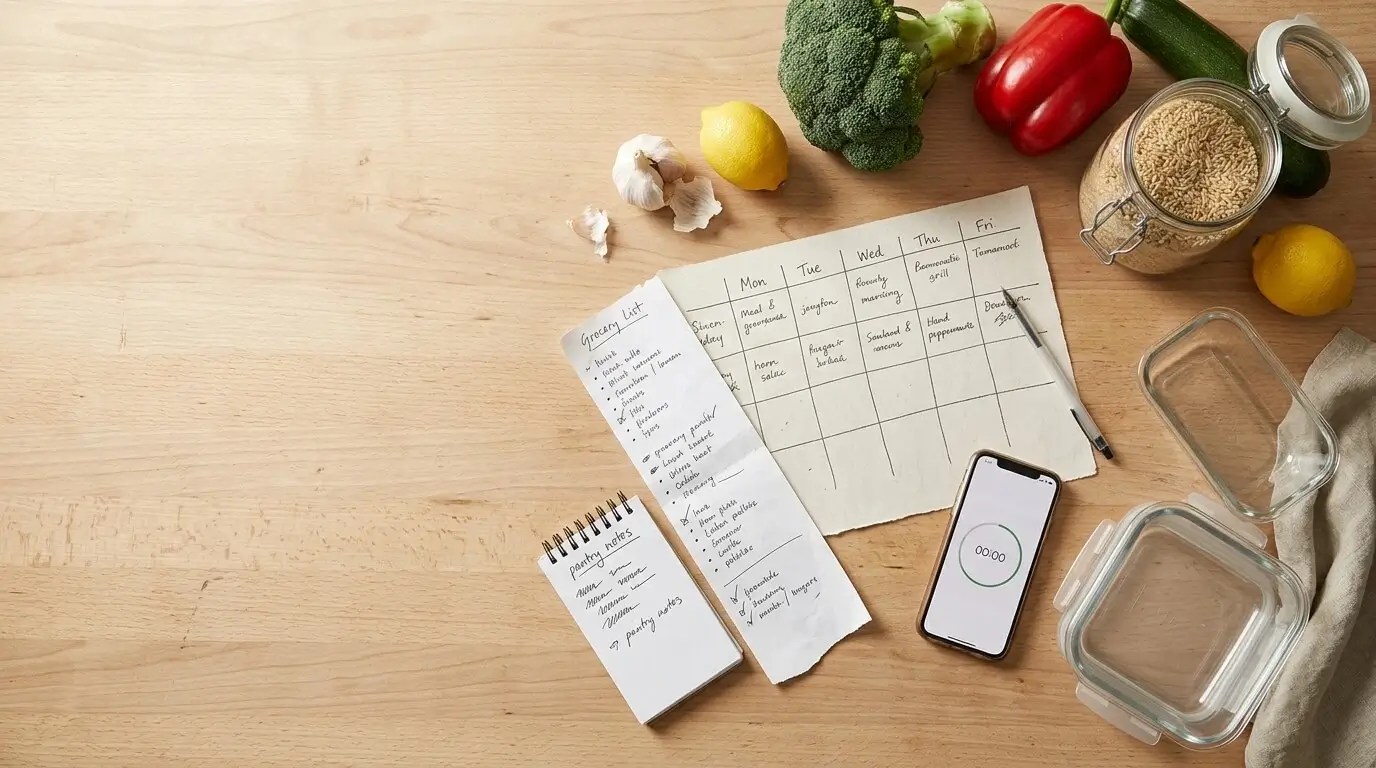
You can plan a full week of healthy meals in about 30 minutes if you treat planning as its own job, separate from shopping, cooking and prep. And here’s how to plan a week of healthy meals without hunting down 21 recipes: check what you already have, pick five easy dinners, leave two nights flexible and let one grocery list do the rest.
One clarification before the timer starts: the 30 minutes covers planning only. Remember that shopping, cooking and meal prep happen afterward, on their own schedule.
How to plan a week of healthy meals in 30 minutes
- Check your schedule and current food – 5 minutes
- Choose five simple dinners and two flexible days – 7 minutes
- Assign repeatable breakfasts, lunches and leftovers – 8 minutes
- Turn the plan into a categorized grocery list – 7 minutes
- Choose what to prep, refrigerate or freeze – 3 minutes
This is planning time only. Shopping, cooking and meal prep are separate.
How to Plan a Week of Healthy Meals in 30 Minutes
First, set a timer. Each block below produces one concrete output, so you finish with a plan, not a pile of saved recipes.
Minutes 0-5: Check your schedule and inventory
Open your calendar before you open a recipe site. Additionally, note late workdays, school events, practice nights and any dinners out. That tells you how many nights you’ll actually cook at home, which is usually fewer than seven.
Then take a quick lap through the pantry, refrigerator and freezer. And write down anything that needs using soon: half a bag of spinach, a softening bell pepper and leftover rice. Those items get assigned first. And the part of this that usually saves me the most money is this step, because it’s how you avoid buying a second jar of tomatoes while the first one hides behind the oats.
Minutes 5-12: Choose meal patterns, not seven completely different recipes
Instead of searching for seven brand-new dinners, choose patterns. Every dinner needs:
- a protein
- one or two vegetables
- a whole grain or starchy side
- a sauce or flavor (lemon-garlic, soy-ginger, tomato and salsa)
- optional fruit or dairy
Plan five dinners this way and leave two days flexible. Because those open nights absorb leftovers, invitations and the evening nobody wants to cook.
Minutes 12-20: Assign the week
Match each dinner to the night it suits. And put your quickest meal on your busiest evening, a sheet-pan meal on a night you can wait for the oven, a skillet meal when you need dinner fast and a one-pot meal when you’d rather wash one pan. Finally, slot flexible nights late in the week, when leftovers pile up.
Minutes 20-27: Build the grocery list
Go through your five dinners and merge overlapping ingredients into single lines. For example, if three meals use bell peppers, list them as “bell peppers, 4” rather than three separate entries. Cross off anything already in your kitchen.
Minutes 27-30: Decide what actually needs prep
Planning decides what you’ll eat and prep is the hands-on work that comes later. You should only choose tasks that save real midweek time, like cooking a batch of brown rice or mixing a sauce. If prep is new to you, start with our guide to meal prep for beginners.
Build Healthy Meals Without Planning: 21 Different Recipes
Use a simple balanced-meal formula
The Harvard Healthy Eating Plate gives you an easy visual: fill about half your plate with vegetables and fruit, a quarter with whole grains and a quarter with healthy protein and use healthy oils such as olive oil. It’s a guide for building meals, not a calorie target, so it works across a household without anyone counting anything.
Repeat breakfast and lunch components
Repetition is a feature here, not a lack of variety. So, pick two breakfasts and rotate them: a high-protein breakfast bowl on busy mornings and overnight oats or Greek yogurt with fruit and nuts on the others.
Lunches come mostly from dinner leftovers, whole-grain wraps or grain bowls built from components you already bought.
Plan five dinners + two flexible days
Your two flexible days take whatever shape the week needs:
- Leftover night: finish what’s in the refrigerator.
- No-cook night: wraps, big salads or snack-style plates.
- Social or takeout night: planned, not a failure.
- Pantry fallback: eggs, canned beans, frozen vegetables and whole-grain pasta.
Planning these nights on purpose is what keeps the other five from falling apart.
Choose the Best Cooking Method for Each Night
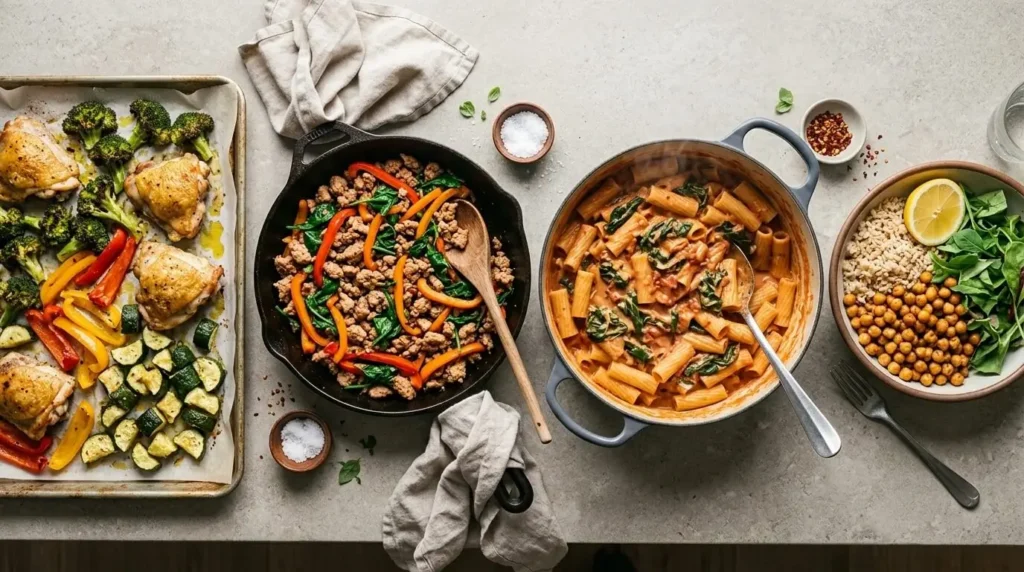
Cooking-method decision guide
Choose the method based on the time and cleanup you have that night, not just the dish you’re craving.
| If you need | Choose | Why it works |
| Minimal cleanup | Sheet pan | Protein and vegetables roast together; try sheet-pan fajitas |
| Fast stovetop dinner | Skillet | High heat, quick cooking, flexible ingredients |
| One-pot convenience | One-pot | Pasta, soups and grains cook with fewer dishes |
| Hands-off cooking | Slow cooker | Load it in the morning when evenings are tight |
| Almost no prep | No-cook/assembly | Best for flexible nights and leftover bowls |
Doneness and safe-temperature table
Color and texture can mislead you. So, use a food thermometer, which is the reliable way to confirm safe internal temperature. These minimums come from the USDA Safe Minimum Internal Temperature Chart:
| Food | Minimum internal temperature |
| Chicken and turkey (including ground) | 165°F |
| Ground beef and lamb | 160°F |
| Fish and shellfish | 145°F |
| Beef, lamb and veal steaks, chops and roasts | 145°F + 3-minute rest |
| Leftovers, when reheating | 165°F |
A 7-Day Healthy Meal Plan You Can Build in 30 Minutes
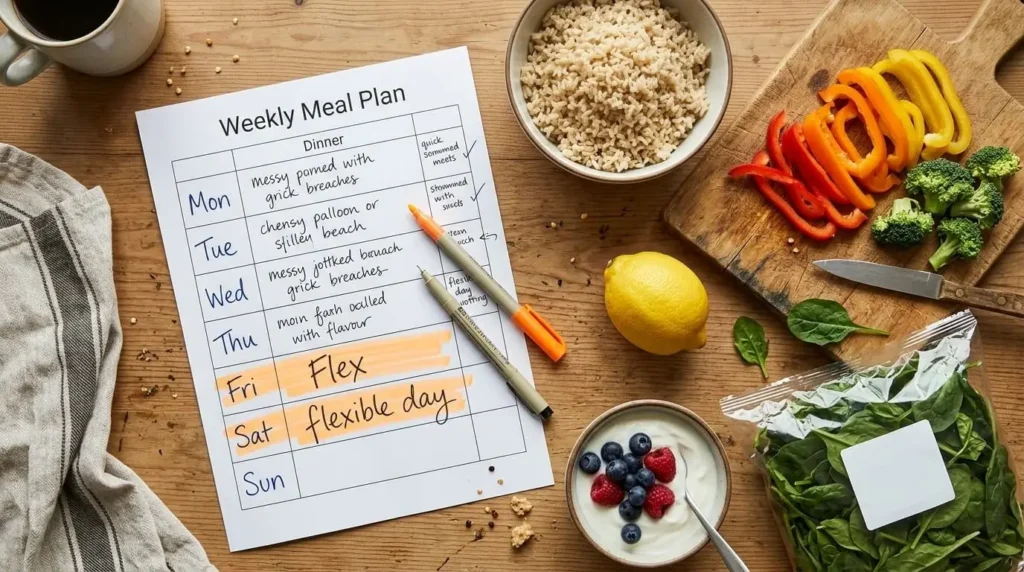
The sample week
This example is for two adults. Monday’s grain bowls make four servings, so two become Tuesday’s lunches.
| Day | Dinner | Reuse / leftover logic |
| Monday | 30-Minute Chicken & Veggie Grain Bowls | Makes 4 servings; cook extra rice for later in the week |
| Tuesday | ground turkey skillet | Uses remaining peppers and zucchini; serve over Monday’s rice |
| Wednesday | Vegan Chickpea Stir-Fry | Second half of the broccoli; leftovers become Thursday lunch |
| Thursday | 15-minute salmon with vegetables | Fresh protein midweek; uses lemon, garlic and greens |
| Friday | One-Pot Creamy Tomato Pasta | Pantry-heavy; wilt in the last of the spinach |
| Saturday | Leftover bowls, wraps or a no-cook plate | Clears the refrigerator |
| Sunday | Flexible: social, takeout or pantry night | Reset and plan next week |
Breakfasts rotate between two options all week. In which lunches come from Monday and Wednesday leftovers, plus wraps or bowls built from extra rice, greens and chickpeas.
The ingredient-overlap matrix
| Ingredient | Mon | Tue | Wed | Thu | Fri |
| Bell peppers | ✓ | ✓ | ✓ | ||
| Broccoli | ✓ | ✓ | ✓ | ||
| Zucchini | ✓ | ✓ | ✓ | ||
| Spinach/greens | ✓ | ✓ | ✓ | ✓ | |
| Brown rice | ✓ | ✓ | ✓ | ✓ | |
| Garlic | ✓ | ✓ | ✓ | ✓ | ✓ |
| Lemon | ✓ | ✓ | |||
| Fresh herbs | ✓ | ✓ | ✓ |
A handful of ingredients covers five dinners, yet no two meals taste alike because the protein, sauce and cooking method change each night. You should check each linked recipe’s ingredient list and swap in the week’s shared vegetables where they fit.
Turn the Meal Plan Into a Grocery List
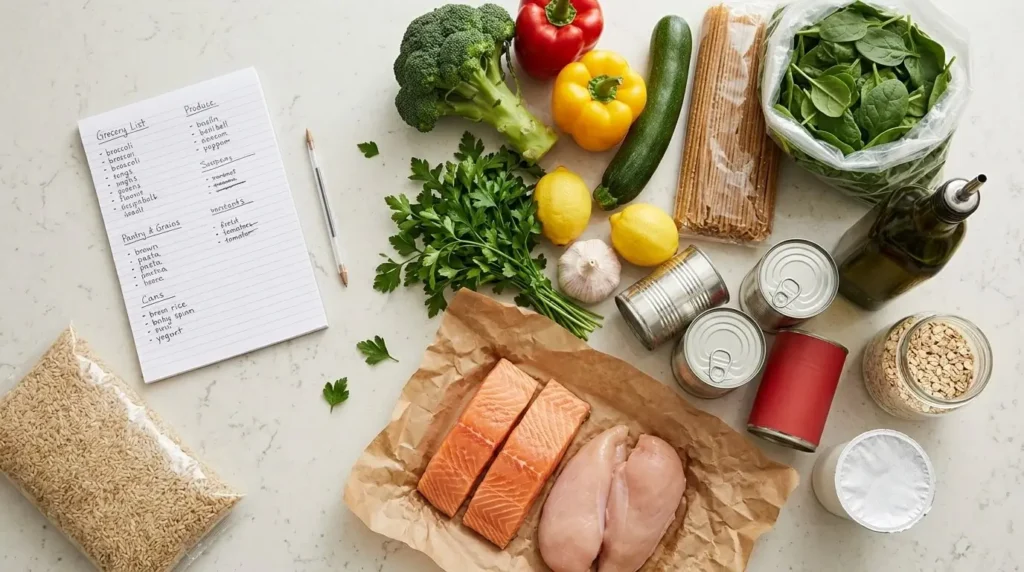
Shop by store section, not by recipe
Grouping by section means one pass through the store instead of zigzagging back for garlic.
| Section | Sample week (2 adults) |
| Produce | 2 heads broccoli, 4 bell peppers, 3 zucchini, 2 bags baby spinach, 3 lemons, 1 head garlic, 1 bunch parsley, 1 onion, breakfast fruit |
| Protein | 1 lb chicken breast, 1 lb ground turkey, 2 salmon fillets, 1 dozen eggs |
| Grains/bread | Brown rice, whole-grain pasta, whole-grain tortillas, rolled oats |
| Dairy | Large tub plain Greek yogurt |
| Canned/jarred | 2 cans chickpeas, 1 large can crushed tomatoes, low-sodium broth |
| Frozen | Mixed berries, 1 bag mixed vegetables (backup) |
| Pantry/staples | Olive oil, dried oregano, low-sodium soy sauce, nuts or seeds |
Scale the list for 1, 2 or 4 people
| Household | Scaling rule |
| 1 person | Halve core dinner quantities; favor leftovers that freeze well |
| 2 people | Use the sample plan as written |
| 4 people | Roughly double proteins, grains and vegetables |
Scaling isn’t perfectly linear. Because spices, oil and sauces rarely need doubling and appetites, recipe yields and how many leftovers you want all shift the numbers.
Meal Prep Notes: What to Prep, Store and Reheat
Use a two-session prep model
Session 1 (weekend): wash and chop produce for Monday through Wednesday, cook one big batch of brown rice, prepare Monday’s protein, mix the yogurt sauce and portion breakfast components like overnight oats.
Session 2 (midweek refresh): chop the remaining vegetables, move frozen salmon to the refrigerator if needed and assemble lunches for Thursday and Friday.
I prefer keeping sauces in their own containers instead of spooning them onto prepped bowls. By doing this, the rice stays drier and the same base can turn into a bowl one day and a wrap the next.
Storage and Reheating
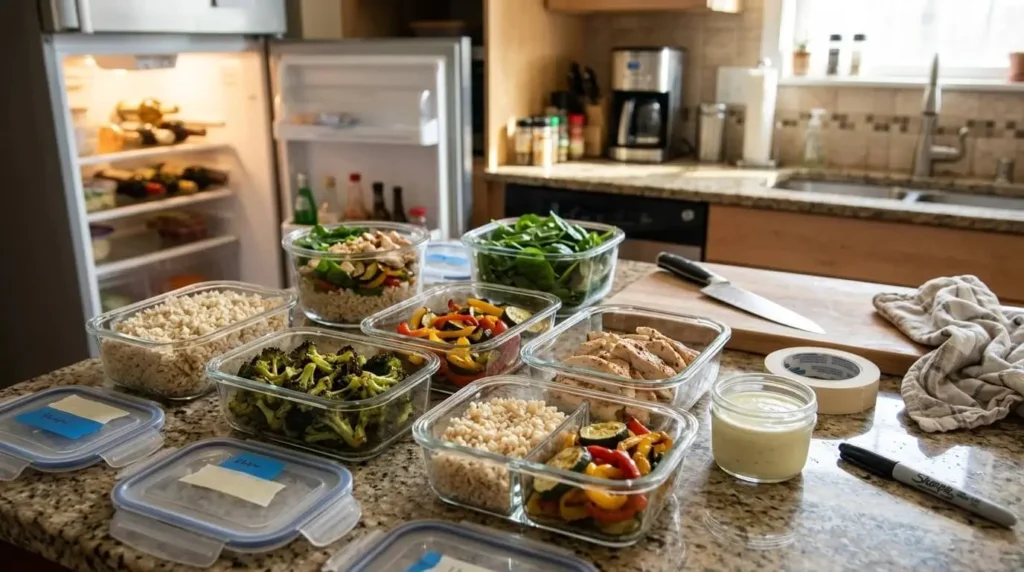
Follow USDA leftovers guidance: refrigerate cooked food within two hours, divide it into shallow containers so it cools quickly, keep the refrigerator at 40°F or below, use most cooked leftovers within 3-4 days and reheat leftovers to 165°F.
| Eat first (best quality) | Good for several days | Freeze first |
| Cooked salmon, washed greens and yogurt sauce | Cooked rice, turkey skillet and chickpea stir-fry | Raw protein you won’t cook soon, extra skillet portions |
Substitutions and Troubleshooting
Simple substitution matrix
| If you need to replace… | Vegetarian/vegan | Lower-cost | Other options |
| Chicken | Tofu, chickpeas and lentils | Canned beans and eggs | Ground turkey |
| Brown rice | – | Potatoes, oats-based sides | Quinoa (naturally gluten-free), whole-grain pasta |
| Greek yogurt | Unsweetened plant-based yogurt | Store-brand plain yogurt | Dairy-free: check for added sugar |
| Fresh vegetables | – | Frozen vegetables | Canned tomatoes for sauces |
| Salmon | Tofu or beans | Canned tuna or salmon | Chicken |
For a plant-based dinner swap, vegan peanut noodles slot into any weeknight. If you’re cooking for someone with a food allergy or celiac disease, read every label; these swaps aren’t allergy guidance.
What to do when the week falls apart
- Forgot to thaw: swap in Friday’s pantry pasta and move the frozen protein to tomorrow.
- Vegetables are going bad: push them into the next skillet, stir-fry or pasta.
- Unexpected dinner out: slide that meal to a flexible day; freeze the protein if it won’t keep.
- Too many leftovers: freeze portions early, while they’re still fresh.
- Missing ingredient or out of time: a fast one-skillet dinner like egg roll in a bowl can stand in for almost any planned meal.
The minimum-viable week
On your busiest weeks, plan only five dinners, repeat two breakfasts, let leftovers cover lunches and keep two nights open. That’s the whole plan. And for more strategies, see how to eat healthy when you have no time.
Nutritional Information: What Makes the Week Balanced?
This week isn’t built around a calorie number. It’s built around variety: vegetables at nearly every dinner, whole grains like brown rice and whole-grain pasta and protein that rotates between poultry, fish and beans. Olive oil and nuts add healthy fats.
USDA MyPlate encourages variety across fruits, vegetables, grains, protein foods and dairy or fortified alternatives, while limiting added sugars, saturated fat and sodium. Individual needs differ by age, activity and health, so treat this plan as a framework. Also, a registered dietitian can tailor portions for specific medical or personal goals.
FAQ
What is the 3-3-3 rule for meals?
There’s no official definition, but in meal planning, the 3-3-3 rule usually means choosing three proteins, three vegetables and three carbohydrates for the week, then combining them into different meals. It works on the same idea as this system: fewer ingredients, more combinations and less food waste.
What are some healthy meals I can make in 30 minutes?
Sheet-pan chicken grain bowls, a ground turkey skillet, chickpea stir-fry, salmon with vegetables and one-pot tomato pasta all fit a 30-minute cooking window. Also, keep in mind that cooking time and planning time are different; the 30 minutes in this guide refers to planning the whole week.
How do I create a 7-day meal plan?
Check your schedule and what’s already in your kitchen, then choose five dinners and leave two days flexible. After that, assign meals to specific nights, repeat simple breakfasts, use leftovers for lunches, build a grocery list by store section and choose a few prep tasks that save midweek time.
How do I meal plan for 1 week?
If you’re learning how to plan a week of healthy meals, start small. First, plan five dinners using a protein, vegetable and whole-grain formula, keep two nights flexible for leftovers or eating out, rotate two breakfasts and turn dinner leftovers into lunches. Then shop from one categorized list.
How long does it take to meal plan for a week?
With a clear system, planning takes about 30 minutes: checking your schedule and food, choosing meals and writing the grocery list. In addition, shopping, cooking and meal prep take additional time, which depends on your store, your recipes and how many people you’re feeding.
What is the difference between meal planning and meal prep?
Meal planning is deciding what you’ll eat, when and what to buy. And meal prep is the hands-on work of washing, chopping, cooking or portioning food in advance. Remember: You can plan without prepping much, but prepping without a plan often leads to waste.
Set a 30-minute timer this weekend and work through the five blocks once. You’ll leave with a week of meals, a grocery list, a short prep plan and a fallback for when things change. That’s how to plan a week of healthy meals that holds up beyond Wednesday.