
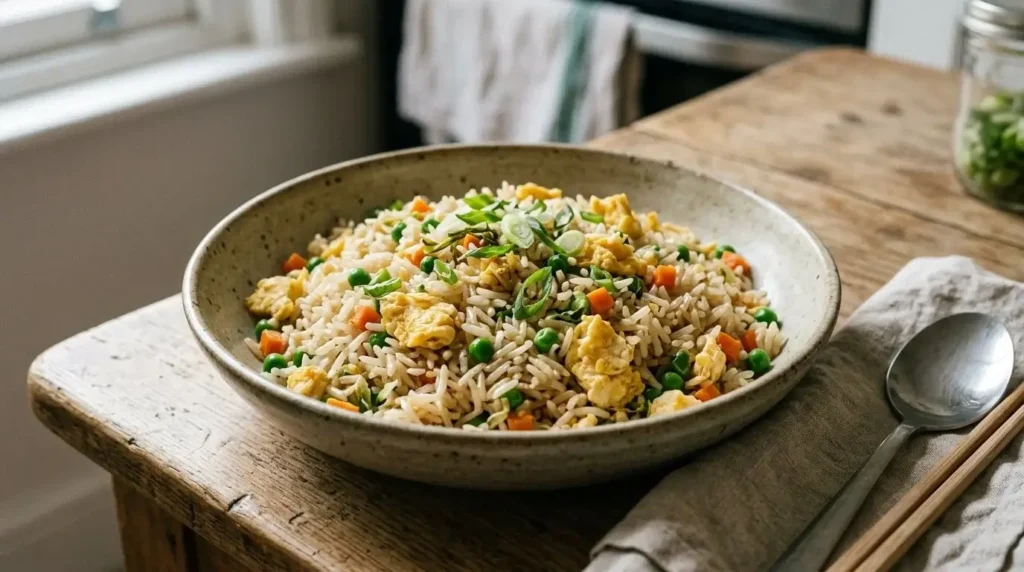
This 20-minute egg fried rice is a one-pan dinner that works with rice you’ve already cooked. Cold leftover rice gives the easiest texture but I’ll show you how to dry fresh or microwave rice so you don’t have to plan ahead. This egg fried rice recipe doesn’t need a wok either: a 12-inch skillet does the job and the eggs cook in the same pan so there’s no extra plate to wash. The goal is separated grains, distinct egg curds and rice that tastes seasoned instead of wet. The 20 minutes assumes cooked rice is ready. For more fast meals browse these more 20-minute dinners or try these quick egg dinners.
Quick Answer: How to Make Egg Fried Rice
To make egg fried rice, heat oil in a large skillet, cook the vegetables, add cold cooked rice and break up the clumps then push the rice aside and scramble the eggs in the same pan. Stir in soy sauce near the end and cook until the rice is hot separated and no longer wet.
What Makes This Egg Fried Rice Work
Five habits separate fluffy fried rice from a soggy pile:
- Dry, cold rice. Less surface moisture means the grains fry instead of steam.
- A large skillet. Space lets moisture escape.
- Controlled vegetables. One cup of frozen peas and carrots won’t flood the pan.
- Eggs in a cleared section. Same pan no transfer.
- Measured sauce, added late. It seasons the rice instead of steaming it.
The formula is simple: cooked rice, eggs, neutral oil, vegetables and aromatics, soy sauce and optional sesame oil and scallions.
What Rice Is Best for Egg Fried Rice?
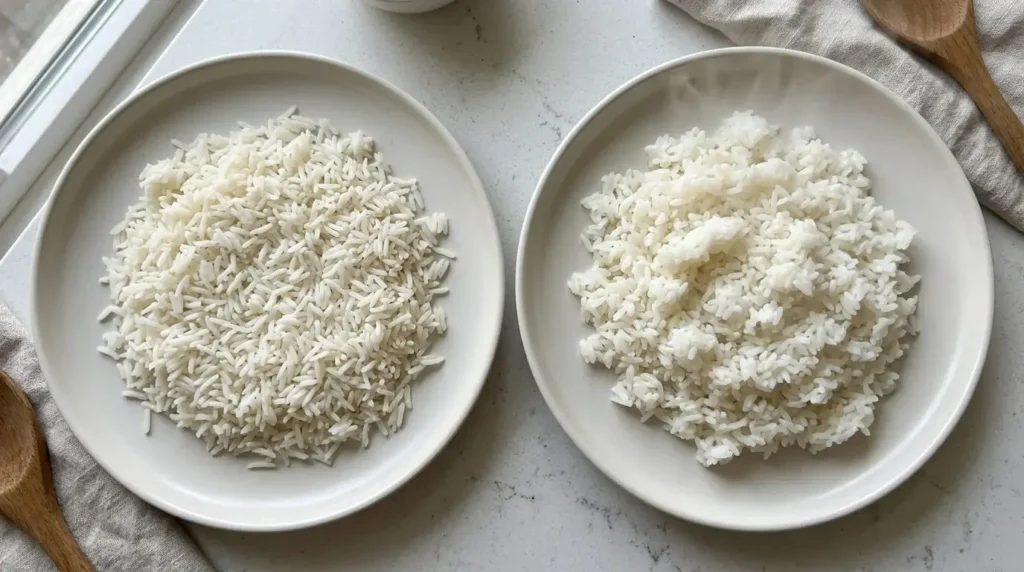
Refrigerated leftover long-grain white rice is the easiest option. Chilling firms the grains and lets surface moisture evaporate which is why fried rice recipes keep calling for day-old rice. Jasmine works well and smells wonderful. Basmati also works though the grains are more delicate. Brown rice is firmer and chewier so the texture changes noticeably. The real enemy is very wet rice whatever the variety.
Cold Rice vs. Fresh Rice
You have options depending on what’s in your kitchen:
| Rice situation | What to do | Expected result |
| Refrigerated leftover rice | Break up clumps and use directly | Best/easiest separation |
| Freshly cooked rice | Spread thinly and cool/dry surface | Good if surface moisture is reduced |
| Microwave rice pouch | Spread briefly to release steam | Fast convenience option |
| Very wet/clumped rice | Separate and cook a smaller batch | Better than overcrowding |
Fresh rice won’t behave exactly like chilled rice, but it gets close enough for a weeknight.
How to Dry Fresh Rice Quickly
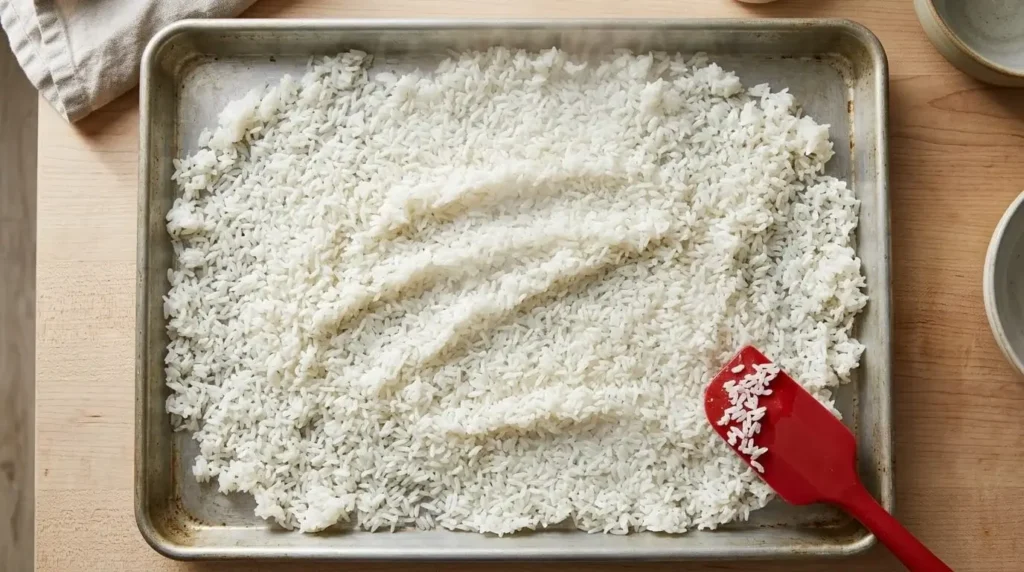
Spread the rice in a thin layer on a rimmed sheet pan or large plate. Let the steam escape for several minutes then break up any big clumps with a fork. Don’t tip visibly steaming, wet rice into a crowded skillet. It won’t match properly chilled rice but it fries far better than rice straight from the pot.
Do You Need a Wok?
No. A large skillet works well and for most home cooks it’s the better choice. A 12-inch skillet gives the rice enough surface area to fry and a nonstick pan is the most forgiving if you’re new to this. A wok is nice for high-heat tossing but most home stovetops can’t heat a wok the way restaurant burners do anyway. What matters is space: a crowded pan steams rice instead of frying it.
Wok vs. Skillet
| Pan | Best for | Beginner note |
| 12-inch nonstick skillet | Most home cooks | Easiest and forgiving |
| Large stainless-steel skillet | Strong browning | Requires better heat/oil control |
| Wok | High-heat tossing | Helpful but not necessary |
If the rice sits in a deep pile rather than a relatively thin layer, cook it in two batches.
Ingredients and Tested Ratios
This makes 4 servings:
- 4 cups cooked long-grain white rice, preferably chilled
- 3 large eggs
- 1 tablespoon neutral cooking oil
- 1 cup frozen peas and carrots
- 2 tablespoons finely diced yellow onion
- 1 small garlic clove, minced
- 2 tablespoons low-sodium soy sauce
- 1 teaspoon toasted sesame oil
- 2 green onions, thinly sliced
- ¼ teaspoon black or white pepper
- Optional: ginger, chili crisp, sesame seeds
These quantities are sized to keep a 12-inch skillet from overloading. Three eggs give roughly one egg per 1 1⁄3 cups of rice, enough to see and taste the egg in every bite. Low-sodium soy sauce lets you season by taste instead of by salt level. Sesame oil goes in off the heat where its aroma survives. Keep the list short: good fried rice depends on technique not a shelf of sauces.
How to Make Egg Fried Rice in One Pan
1. Prep Everything Before Heating the Pan
Once the skillet is hot, this moves fast. Break up the rice, measure the vegetables beat the eggs in a small bowl and measure the soy sauce. Have your green onions sliced and within reach. Prep takes about 8 minutes.
2. Heat the Skillet and Cook the Vegetables
Heat a 12-inch skillet over medium-high heat for about a minute, then add the oil. It should shimmer. Add the onion, garlic and frozen peas and carrots. They should sizzle immediately. Cook for 2 to 3 minutes until hot and the pan looks dry again. Don’t add frozen vegetables as one wet frozen block.
3. Add the Rice and Break Up Clumps
Add the rice and spread it across the pan. Use the edge of your spatula to cut through clumps then fold rather than mash so the grains stay whole. Let the rice sit against the hot surface for 20 to 30 seconds between stirs. After 3 to 4 minutes it should be hot and look relatively dry.
4. Push the Rice Aside and Cook the Eggs
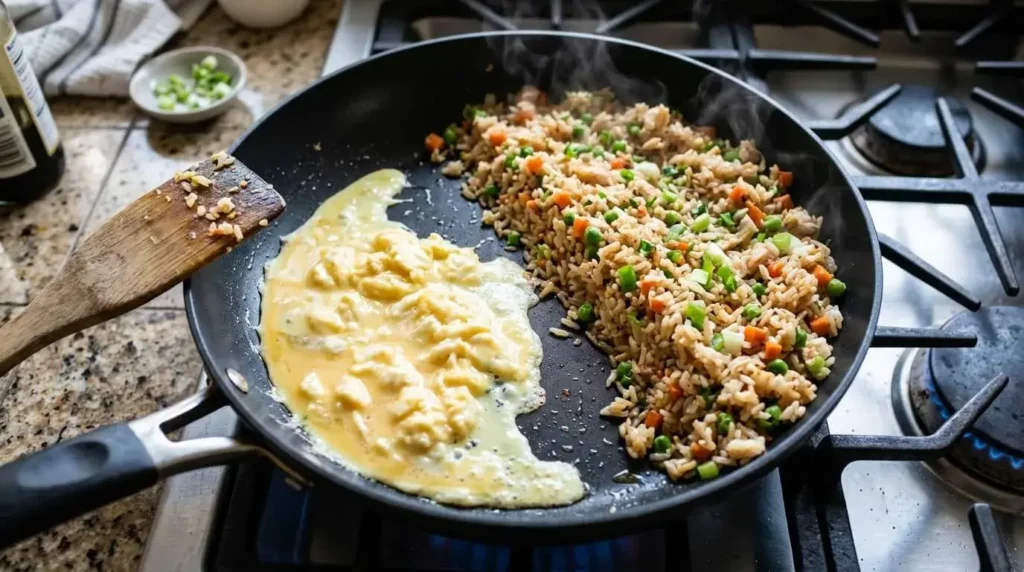
push the rice to one side. If the open space looks dry, add a small drizzle of oil. Pour the beaten eggs into the cleared section and let them set for about 15 seconds. Then scramble them into medium curds and cook until fully set, with no liquid egg left before folding them into the rice.
| Egg texture | Technique |
| Fine pieces that coat the rice | Stir more frequently as the egg sets |
| Medium curds (my default) | Let egg set briefly before folding |
| Larger curds | Leave undisturbed longer then break into pieces |
5. Add Soy Sauce and Finish
Fold the egg into the rice. Once everything is hot, drizzle the soy sauce around the edges of the rice not in one pool and toss until evenly distributed. Turn off the heat then stir in the sesame oil, green onions and pepper. The sauce should season the rice not steam it. Serve right away.
How to Know the Egg Fried Rice Is Done
Don’t rely on color alone. Check these cues:
| Check | Done looks like |
| Rice | Hot, separated, no visible wet patches |
| Egg | Fully set, no liquid egg pooling |
| Vegetables | Hot and tender-crisp, not watery |
| Sauce | Distributed, not collecting at the bottom |
| Pan | Mostly dry not filled with moisture |
For this egg-only recipe, the safety cue is simple: the egg should be fully set before you serve. For leftovers, the reheating benchmark is covered in the storage section below.
Why Is My Fried Rice Soggy?
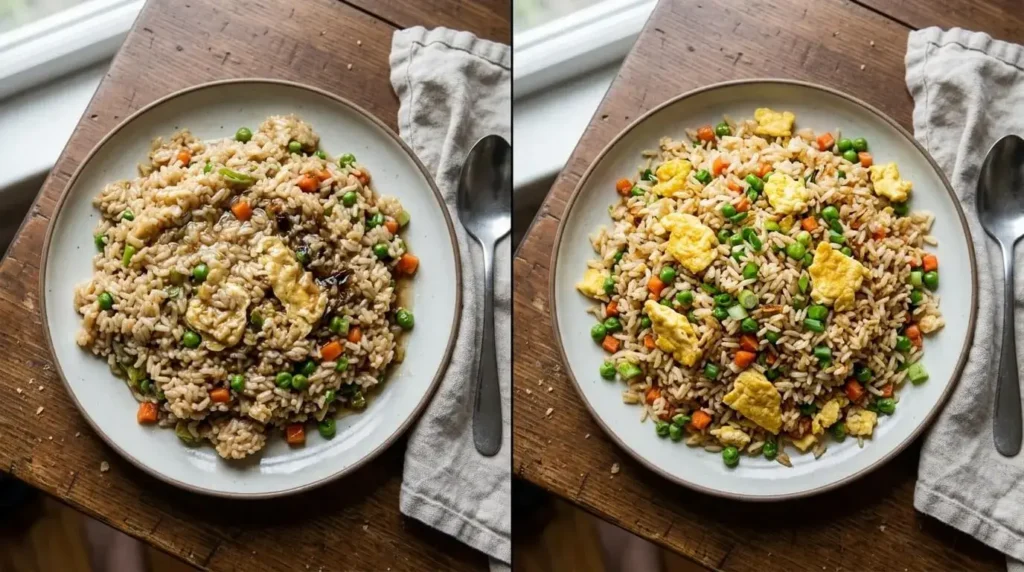
Soggy fried rice almost always comes down to moisture: too much going in or too little escaping. Find your symptom then fix the cause:
| Problem | Likely cause | Fix |
| Soggy rice | Wet rice | Dry/cool rice first |
| Soggy rice | Crowded skillet | Cook in two batches |
| Watery vegetables | Excess frozen-vegetable moisture | Drain/dry before adding |
| Wet rice | Too much sauce | Measure sauce |
| Rice not browning | Pan not hot enough | Preheat properly |
| Sticky rice | Rice was too moist | Use chilled/dried rice |
| Burnt egg | Egg cooked too long over high heat | Lower heat once egg sets |
| Bland rice | Too little seasoning | Add measured sauce after rice heats |
If your rice is already soggy mid-cook then turn the heat up slightly, spread it thin and let the moisture cook off before adding anything else.
How to Fix Clumpy Fried Rice
Don’t crush the grains. Use the edge of a spatula to separate large clusters. Then spread the rice into a thinner layer so steam can evaporate. If the skillet looks crowded remove half and cook in two batches. Clumps usually mean the rice was damp or the pan was too full.
Easy Substitutions and Variations
| Ingredient | Substitute | What changes |
| Long-grain white rice | Jasmine or basmati | More fragrant |
| White rice | Brown rice | Firmer, chewier |
| Frozen peas/carrots | Fresh vegetables | May need slightly different cooking time |
| Soy sauce | Gluten-free tamari | Use similar quantity but check salt |
| Neutral oil | Avocado/canola oil | Minimal flavor difference |
| Green onion | Chives | Milder finish |
As written this recipe is vegetarian and it’s gluten-free if you use certified gluten-free tamari. For a lower-sodium version then use less soy sauce and add more aromatics. For more vegetables this easy vegetable stir-fry pairs well on the side. Chicken or shrimp can be added as variations but cook them separately first because they change timing and food-safety needs. This quick chicken dinner shows one way to cook chicken fast.
How to Make Egg Fried Rice More Flavorful
Flavor comes from small, deliberate steps. Use real garlic and onion and let them sizzle before the rice goes in. Measure the soy sauce instead of pouring freely because prepared sauces can be high in sodium and lower-sodium versions or smaller amounts help. Add sesame oil off the heat since its aroma fades quickly. Season with white or black pepper and finish with green onions for freshness.
For a little heat, a spoonful of chili crisp on top of each serving adds depth without changing the core recipe. If it still tastes flat, add a splash more soy sauce a teaspoon at a time.
Storage, Freezing & Reheating
Refrigerator Storage
Refrigerate or freeze leftovers within two hours, or within one hour if the temperature is above 90°F. Use shallow containers so the rice cools quickly. Keep refrigerated at 40°F (4°C) or below and eat within 3 to 4 days. For more make-ahead options see these make-ahead lunch recipes.
How to Reheat Egg Fried Rice
Skillet: Add a portion with a small splash of water, cover briefly then stir until thoroughly hot.
Microwave: Cover loosely, heat, stir and continue until evenly hot.
Reheat leftovers to 165°F (74°C) and check with a food thermometer in several spots.
Can You Freeze Egg Fried Rice?
Yes. Freeze in individual portions, ideally in flat, sealed containers or freezer bags. Quality can decline over time so use it within a reasonable window and reheat to 165°F (74°C).
Meal Prep Notes
This recipe works well for 3 to 4 lunch portions. Divide it into containers before refrigerating so it cools faster and reheats only what you’ll eat. Expect a slightly softer texture than freshly cooked and add fresh green onions after reheating. For planning help see these meal-prep ideas for beginners.
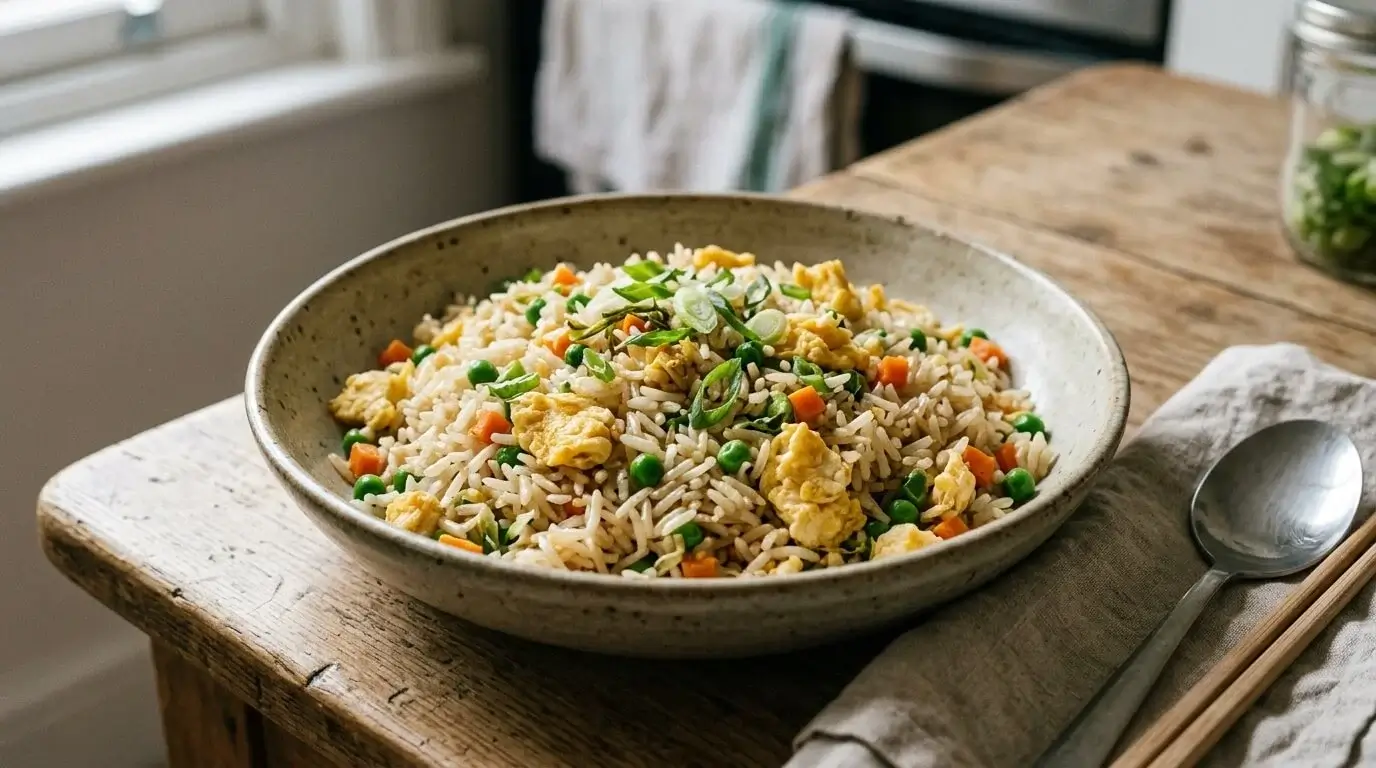
20-Minute One-Pan Egg Fried Rice
Ingredients
Method
- Break up the cooked rice before starting. If using freshly cooked rice, spread it in a thin layer and let excess steam escape before cooking.
- Beat the eggs in a small bowl and measure the soy sauce so everything is ready before the skillet heats.
- Heat a large 12-inch skillet over medium-high to high heat. Add the neutral oil.
- Add the onion, garlic and frozen peas and carrots. Stir-fry until hot and the excess moisture has cooked off.
- Add the rice. Spread it across the skillet and break up remaining clumps with the edge of a spatula. Cook until the rice is hot and the surface looks relatively dry.
- Push the rice to one side of the skillet. Add a small amount of oil to the empty space if needed, then pour in the beaten eggs.
- Let the eggs begin to set, then scramble them into medium-sized curds. Cook until fully set.
- Fold the egg into the rice and vegetables.
- Pour the measured soy sauce around the rice rather than adding a large pool in one place. Toss until evenly distributed.
- Turn off the heat. Stir in sesame oil, green onions and pepper. Serve immediately.
Notes
- Best rice: Chilled leftover long-grain white rice is easiest to fry without becoming wet.
- Fresh rice: Spread freshly cooked rice thinly to release steam before frying.
- Pan size: A 12-inch skillet is recommended. If the rice is crowded into a deep layer, cook in two batches.
- Frozen vegetables: Remove excess surface moisture before adding them.
- Sauce: Measure the soy sauce. Too much liquid can make the rice wet and overly salty.
- One-pan method: The egg cooks in a cleared section of the same skillet, so no separate egg pan is needed.
- Storage: Refrigerate promptly and use within 3-4 days.
- Reheating: Reheat leftovers to 165°F / 74°C.
Nutritional Information
Estimated per serving (1 of 4):
| Calories | Protein | Carbohydrates | Fat | Fiber | Sodium |
| 330 | 11 g | 50 g | 9 g | 2 g | 360 mg |
Nutrition is an estimate calculated from the published ingredient quantities and can vary with rice type, egg size, oil and soy sauce brand. Rice makes up most of the carbohydrates here. If you’re watching carbs, browse these low-carb recipe ideas for lighter options.
Frequently Asked Questions
Can I make egg fried rice without day-old rice?
Yes. Spread freshly cooked rice in a thin layer on a sheet pan for several minutes so steam escapes and the surface dries. Break up clumps before frying. Microwave rice works too if you spread it briefly first. It won’t match chilled rice exactly but it works well.
Do I need a wok to make egg fried rice?
No. A large 12-inch skillet works well and nonstick is the most forgiving for beginners. What matters is space: if the rice sits in a deep pile, it steams instead of frying. Cook in two batches if needed and a wok becomes optional.
Why is my egg fried rice soggy?
Usually it’s moisture: wet rice, a crowded skillet, watery frozen vegetables, a pan that isn’t hot enough or too much soy sauce. Dry the rice first, cook in batches if needed preheat the pan and measure the sauce. See the troubleshooting table above for specific fixes.
Can I use frozen vegetables?
Yes. Frozen peas and carrots work well. Minimize surface moisture by draining or patting off excess ice and cooking them in the hot pan until the moisture cooks off before adding the rice. Don’t add them as one frozen block since that cools the pan and waters down the rice.
How many eggs should I use for fried rice?
This recipe uses 3 large eggs for 4 cups of cooked rice. That gives visible egg in each bite without making the rice heavy or wet. Using more eggs makes the dish richer and softer while fewer eggs make it lighter and drier so adjust to taste.
How do I reheat egg fried rice?
In a skillet, add a splash of water, cover briefly, then stir until hot. In the microwave cover loosely, heat, stir and repeat until evenly hot. USDA recommends reheating leftovers to 165°F (74°C), checked with a food thermometer in several spots.
How long does egg fried rice last in the refrigerator?
Properly refrigerated egg fried rice lasts 3 to 4 days. Refrigerate it within two hours of cooking, or within one hour if it’s hotter than 90°F outside and store it in shallow containers so it cools quickly. When in doubt, throw it out.
With cooked rice, a big skillet and a few minutes of prep, this egg fried rice comes together on a busy night. For more ideas see these quick weeknight recipes.