
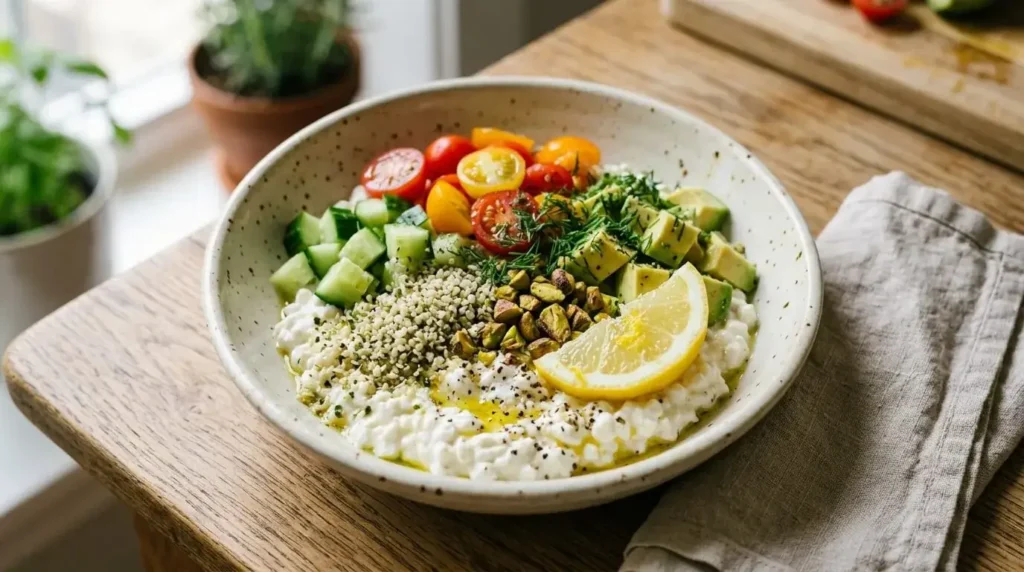
This cottage cheese bowl comes together in five minutes flat with zero cooking and one bowl to wash. It’s built around a measured protein-focused formula not a vague pile of toppings so you know exactly what you’re eating and how much protein you’re actually getting.
Quick Answer: How do you make a cottage cheese bowl? Start with cottage cheese add fresh produce or fruit include a protein or fat booster add something crunchy and finish with an acid or seasoning. For this version everything is assembled cold in about 5 minutes with no cooking required.
This article focuses on a measured savory master bowl, then shows you how to adapt it sweet for lunch or later in the week. If mornings are the tightest part of your day, this is also a good fit alongside our guide to healthy eating when you have no time. For quick meal ideas, see our 5-minute meals.
What Is a Cottage Cheese Bowl?
A cottage cheese bowl is exactly what it sounds like cottage cheese as the base is built up with a handful of simple additions instead of turned into a separate cooked dish. The best ones follow a basic five-part formula which is also what makes them so fast to throw together:
- Cottage cheese base
- Produce or fruit
- Protein/fat booster
- Crunch
- Acid/seasoning
That’s it. Once you know the formula then you can build a cottage cheese bowl recipe out of almost whatever you have in the fridge,sweet or savory without a written recipe in front of you.
Why This 5-Minute Protein Bowl Works
This bowl works because every ingredient has a job. Cottage cheese supplies the protein base. Fresh produce like cucumber and tomato adds volume and a little crunch without any prep beyond a knife. A fat source – avocado, olive oil or nuts – makes the bowl taste finished instead of diet-y. Hemp hearts and pistachios add texture and extra protein grams. Lemon juice and herbs go in last because cottage cheese turns bland fast without something acidic to wake it up.
Protein is one of the main reasons people reach for cottage cheese in the first place. However, it’s worth remembering that protein foods bring more than just protein fat, fiber and sodium content all vary by what you add then For this reason this bowl is built with that in mind rather than chasing a single protein number. Similarly, if this style of eating appeals to you, our high-protein recipes collection has more recipes built the same way.
Choose the Right Cottage Cheese
Not every tub of cottage cheese behaves the same way in a bowl and picking the right one solves most texture complaints before they start.
Full-Fat vs. 2% vs. Low-Fat
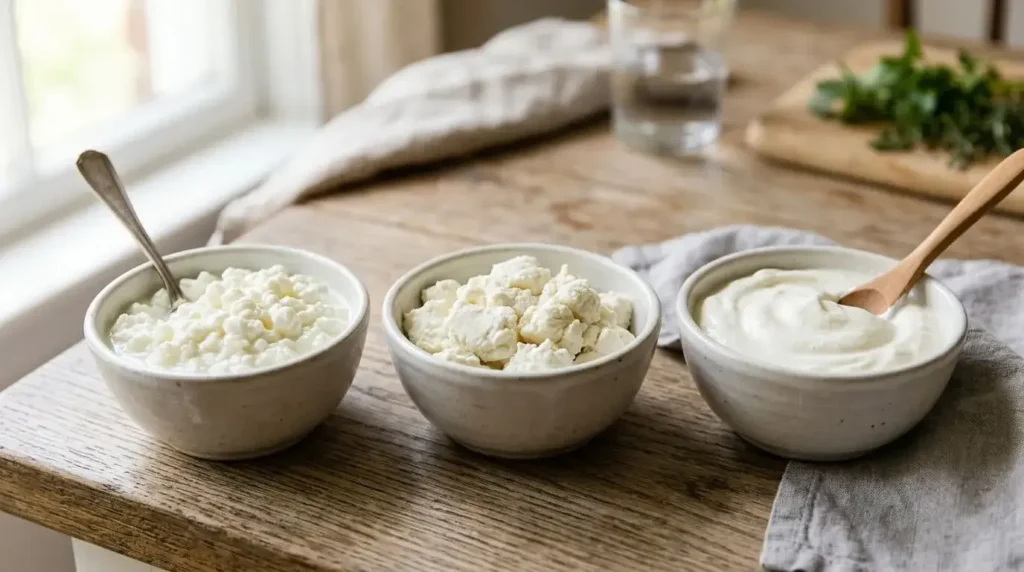
Full-fat cottage cheese is the creamiest, richest and it holds toppings well. 2% is a solid middle ground still creamy and a little lighter. Low-fat and fat-free versions tend to be looser and can taste thinner though they work fine if that’s your preference. None of these is objectively “best” – it comes down to the texture and calorie level you want.
Curdy, Dry, or Blended?
If you like texture go with a curdy, classic cottage cheese. If your bowls tend to turn watery look for a drier thicker variety. It holds up better under juicy toppings like tomato. And if you want a smooth yogurt-like base blend or whip the cottage cheese for 15-30 seconds before adding anything else.
| Choose this | Best for |
| Creamier/full-fat | Richer texture |
| 2% | Middle-ground option |
| Lower-fat | Lower-calorie preference |
| Dry/less watery | Fresh vegetable toppings |
| Blended | Smooth, yogurt-like texture |
Cooking-Method Decision Guide
The five-minute promise only holds up if nothing in the recipe needs to hit a stove. Here’s exactly where that line sits.
No-Cook Assembly – Recommended
The base recipe does not require cooking or pre-cooked ingredients. Everything goes cold straight from the fridge or counter.
Prepped Add Ins Still Five Minutes of Assembly.
If you already have cooked eggs, chicken, salmon beans or roasted vegetables on hand from earlier in the week. Adding them is still just assembly no extra time on the clock.
Cook-Now Add-Ins – Not Part of the 5-Minute Promise
Cooking chicken, beef, eggs, bacon, roasted vegetables or grains from scratch changes the math. Treat those as optional variations not part of the master recipe.
| Method | Actual use | Counts as a 5-minute base? |
| Cold assembly | Main recipe | Yes |
| Pre-cooked add-ins | Meal-prep variation | Yes, assembly only |
| Cooking eggs now | Optional | No |
| Cooking chicken/beef now | Optional | No |
| Roasting vegetables now | Optional | No |
Ingredients for the 5-Minute Cottage Cheese Protein Bowl
Core Bowl
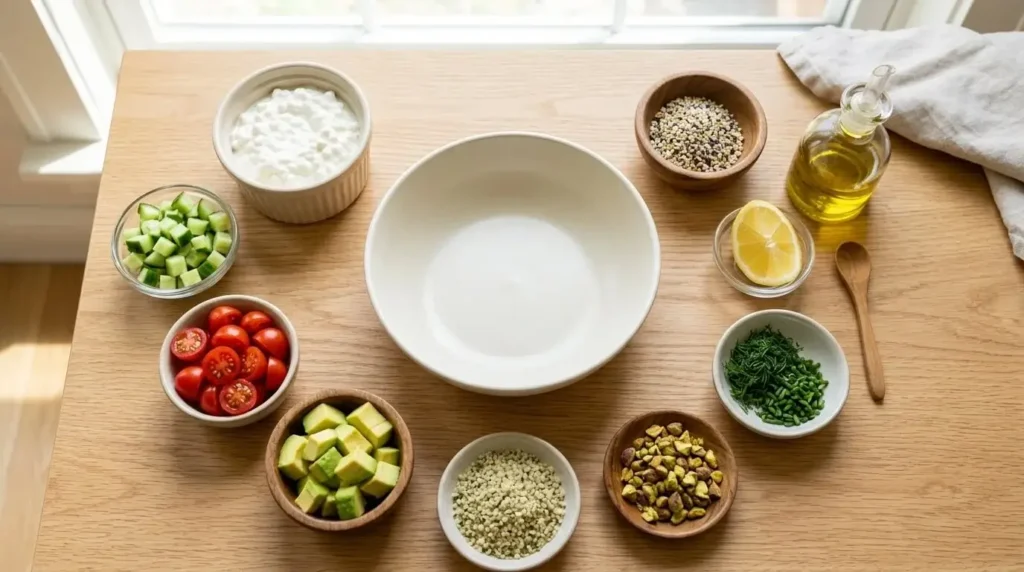
This is the tested measured version – one serving:
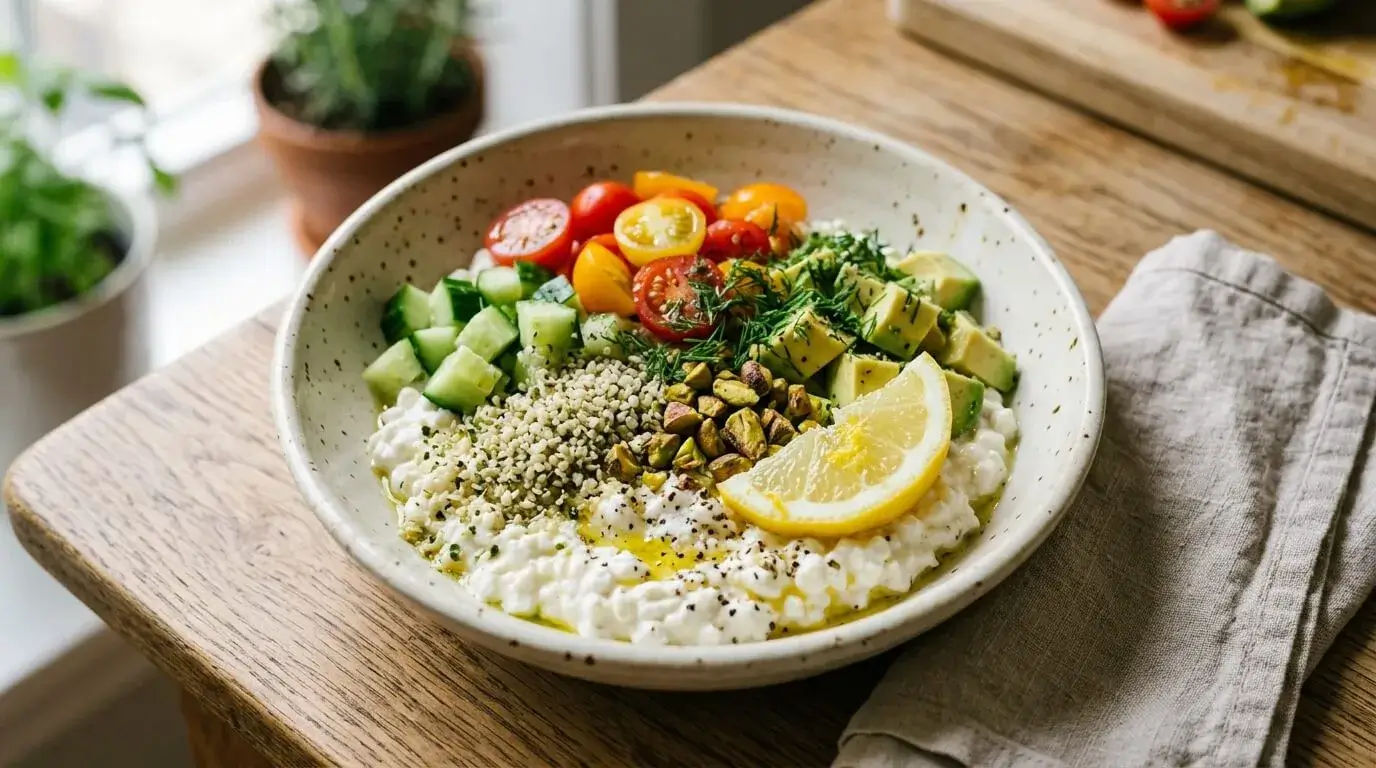
- 1 cup 2% cottage cheese
- ½ cup diced cucumber
- ½ cup halved cherry tomatoes
- ¼ small avocado, diced
- 2 tablespoons hemp hearts
- 1 tablespoon chopped pistachios
- 1 teaspoon extra-virgin olive oil
- 1 teaspoon fresh lemon juice
- 1 tablespoon chopped dill or chives
- ½ teaspoon everything bagel seasoning, adjusted to taste
The cottage cheese is your protein base. Cucumber and tomato add fresh volume without any prep beyond a few knife cuts. Avocado and olive oil round out the richness so the bowl doesn’t taste like diet food. Hemp hearts and pistachios add crunch along with a real protein contribution not just filler. Lemon juice, herbs and seasoning go in last because they’re what keep the whole thing from tasting flat.
Optional Protein Boosts
If you want more protein in the bowl and don’t mind using something already prepped add:
- Smoked salmon
- Cooked chicken
- Hard-boiled egg
- Beans
- Extra hemp hearts
- Extra cottage cheese
These are optional – the base recipe above already stands on its own. If you’d rather cook a protein specifically for this bowl, our 15-minute salmon recipe is a good match for the flavors here.
How to Make It in 5 Minutes
The 5-Minute Workflow
Here’s exactly how the five minutes break down:
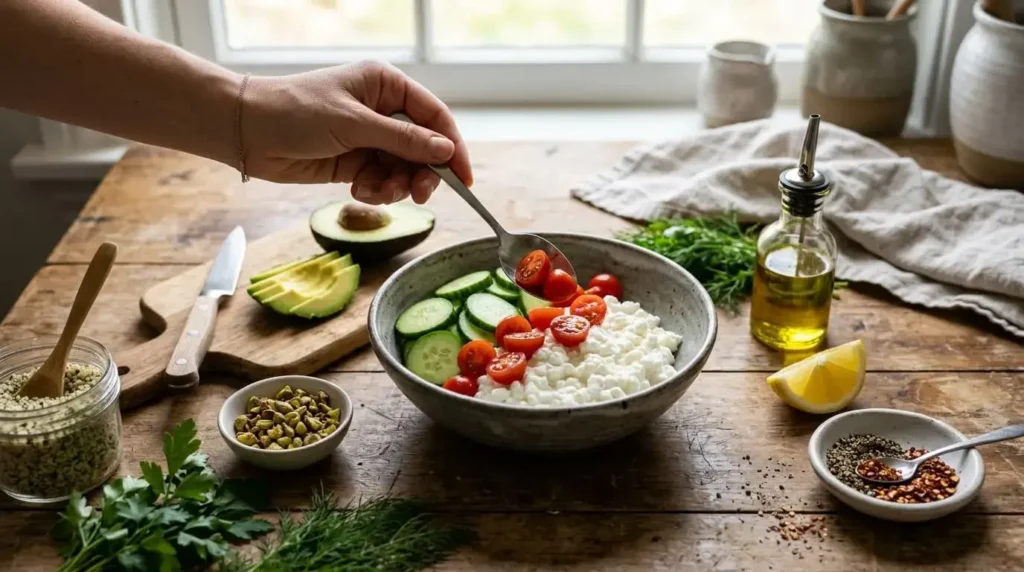
- Minute 0-1: Add the cottage cheese to a serving bowl and measure out the toppings.
- Minute 1-3: Dice the cucumber, halve the tomatoes and chop the herbs.
- Minute 3-4: Add the avocado, hemp hearts, pistachios, lemon juice, olive oil and seasoning.
- Minute 4-5: Fold everything together lightly, taste adjust the acid or seasoning and add the crunch last.
- Serve immediately for the best texture.
To be clear this is five minutes of active assembly – there’s no cooking step hiding anywhere in this timeline. When I first tested this I made the mistake of adding the pistachios and hemp hearts before folding in the wet ingredients and they went soft by the time I sat down to eat. Adding crunch in the very last step right before serving.Is what actually keeps the bite you want.
Cottage Cheese Bowl Toppings: Sweet vs. Savory
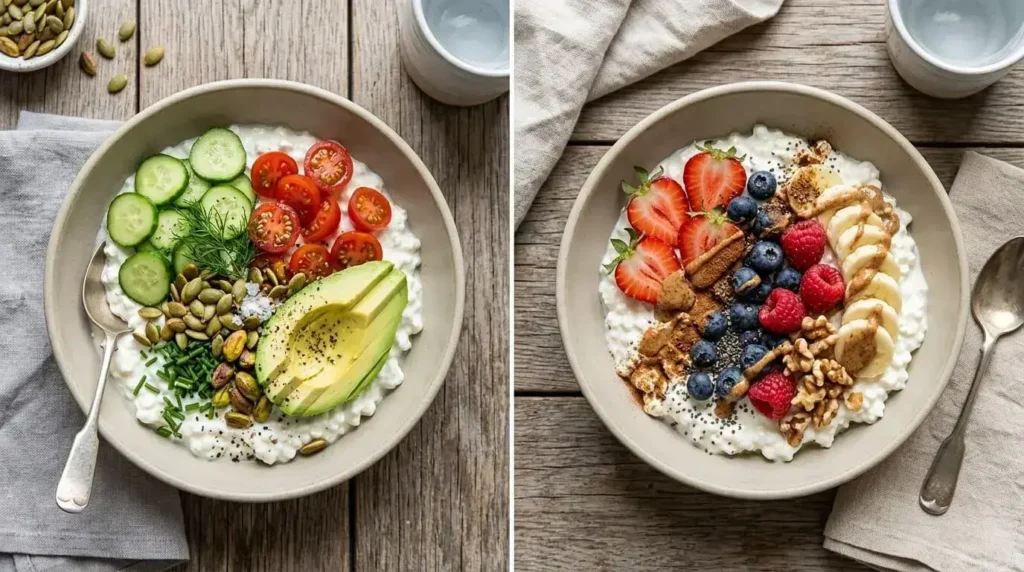
The same cottage cheese base works in two very different directions depending on what you’re in the mood for.
Savory Toppings
Instead of throwing random ingredients together, try one of these combinations:
- Cucumber + tomato + lemon + dill
- Avocado + pistachio + herbs
- Smoked salmon + cucumber + capers
- Black beans + salsa + corn
- Chickpeas + cucumber + za’atar
Sweet Toppings
For a sweeter, breakfast-leaning bowl:
- Berries + chia or hemp + nut butter
- Banana + cinnamon + walnuts
- Apple + cinnamon + walnuts
- Berries + Greek yogurt + nut butter
Keep in mind that sweet toppings change the calorie and sugar count meaningfully – the base bowl’s nutrition numbers and a sweet variation’s numbers aren’t the same thing so don’t assume one applies to the other.
Choose by Meal
| If you want… | Build the bowl with… |
| Breakfast | Fruit + nuts/seeds, or egg + vegetables |
| Snack | Smaller cottage cheese portion + fruit/crunch |
| Lunch | Vegetables + beans/salmon/chicken + avocado/seeds |
For a dedicated breakfast version with its own ratios see our high-protein breakfast bowl. And if you want a heartier lunch bowl with a cooked protein already handled for you, garlic butter chicken bites chopped and chilled work well here too.
Doneness and Temperature Guide for Optional Cooked Add-Ins
To repeat: the master recipe requires no cooking. This table only matters if you’re adding a cooked protein on the side.
| Optional add-in | Safe minimum internal temperature |
| Chicken/poultry | 165°F |
| Fish/seafood | 145°F |
| Ground beef/pork/lamb/veal | 160°F |
| Whole cuts of beef/pork/lamb/veal | 145°F + 3-minute rest |
| Egg dishes | 160°F |
Use a food thermometer rather than judging doneness by color – it’s the only reliable way to know a cooked add-in is safe. The cottage cheese itself doesn’t need to hit any temperature,it’s ready straight from the fridge.
Troubleshooting Your Cottage Cheese Bowl
Too Watery
Choose a drier cottage cheese next time drain briefly if needed pat juicy vegetables dry before adding them and hold off on wet toppings until right before you eat. Blending is optional and only necessary if you want a smoother texture.
Too Lumpy
Blend the cottage cheese briefly if you want it smooth. Otherwise, treat the curds as a texture feature rather than a problem – that’s just what cottage cheese is.
Too Dry
Add a small amount of olive oil, avocado or nut butter for sweet versions or stir in another creamy component.
Bland
Add acid first lemon juice or vinegar then seasoning then herbs.Cottage cheese needs that acidic lift more than most bases do.
Crunch Became Soggy
Keep nuts, seeds, granola and other crispy toppings in a separate container until the moment you’re ready to eat.
How do you make cottage cheese less watery? Use a thicker, drier variety, pat wet vegetables dry before adding them and hold juicy or dressed toppings until just before serving. A quick blend also helps if you’d rather have a smooth less watery texture overall.
Substitutions
| Ingredient | Swap | What changes |
| Cottage cheese | Greek yogurt | Smoother texture; nutrition changes |
| Cucumber | Bell pepper | More crunch |
| Tomatoes | Red pepper | Less juicy |
| Hemp hearts | Pumpkin seeds | Crunchier texture |
| Pistachios | Walnuts/almonds | Different texture/flavor |
| Lemon | Red wine vinegar | Sharper savory flavor |
| Berries | Apple/banana/peach | Different sweetness and texture |
| Nut butter | Seeds/seed butter | Nut-free option |
None of these swaps are guaranteed to be nutritionally identical to the original.Check labels if you’re tracking closely. This bowl is naturally vegetarian and easy to make gluten-free and it also fits well if you’re leaning toward low-carb recipes, since most of the volume comes from cottage cheese and vegetables rather than starch.
Storage, Reheating and Meal Prep.
What to Store Separately
For the best texture keep components in their own containers rather than assembling ahead:
Container 1: cottage cheese
container 2: chopped cucumber/tomatoes
Container 3: dry crunch
Container 4: dressing/seasoning, if used
Assemble right before eating.
How Long Can You Store It?
For any perishable prepared components, refrigerate promptly at 40°F or below, and don’t leave food at room temperature for more than 2 hours – or 1 hour if it’s above 90°F out. USDA guidance says refrigerated leftovers are generally fine within 3-4 days.
That said for the best texture in this specific bowl.I’d aim to use everything within 1-2 days. The fresh vegetables and crunchy toppings lose their appeal well before the food-safety window closes.
Reheating
The base bowl isn’t meant to be reheated. If you’ve added a cooked component like chicken or eggs.Reheat that separately and add it to the cold bowl afterward.
Meal-Prep Notes
Pre-cooked eggs, chicken, salmon, beans or roasted vegetables all work well here as long as they were already cooked and chilled safely beforehand. For more make-ahead ideas built the same way, browse our meal prep recipes.
5-Minute Cottage Cheese Protein Bowl
Ingredients
Method
- Add the cottage cheese to a serving bowl.
- Dice the cucumber, halve the tomatoes, and chop the herbs.
- Add the cucumber, tomatoes, avocado, hemp hearts, pistachios, and herbs to the bowl.
- Drizzle with olive oil and lemon juice, then sprinkle with everything bagel seasoning.
- Fold gently, taste, adjust the lemon or seasoning, and serve immediately.
Notes
- This is a no-cook recipe; the five-minute time means active assembly.
- For a smoother bowl, briefly blend the cottage cheese before adding toppings.
- For less liquid, choose a thicker cottage cheese and pat watery vegetables dry.
- Add nuts/seeds immediately before serving for maximum crunch.
- For meal prep, store the cottage cheese, vegetables, and crunchy toppings separately.
- Optional cooked add-ins such as chicken, salmon, or eggs should already be safely cooked and chilled before assembling.
- Sweet variation: swap the savory toppings for berries, cinnamon, chia/hemp, and a small amount of nut butter; calculate nutrition separately.
- Calories: 390-410
- Protein: 31-34 g
- Carbohydrates: 20-24 g
- Fiber: 7-9 g
- Fat: 20-23 g
- Sodium: varies substantially by cottage cheese brand and seasoning
Nutritional Information
Estimated Nutrition for the Base Bowl
Based on the ingredients above, one serving comes in at approximately:
- Calories: 390-410 kcal
- Protein: 31-34 g
- Carbohydrates: 20-24 g
- Fiber: 7-9 g
- Fat: 20-23 g
- Sodium: varies by cottage cheese brand and seasoning
These are estimates based on the tested recipe above, not a lab analysis – treat them as a close approximation rather than an exact figure.
Why the Numbers Can Change
Cottage cheese brand, fat percentage, seasoning, avocado size and any optional toppings you add will all shift the calorie, sodium and protein totals. It’s worth checking your specific cottage cheese label if you’re tracking closely.
Protein grams are only part of the picture – Harvard’s Healthy Eating Plate frames a balanced meal around vegetables, whole grains, healthy protein and healthy fats together which is roughly the approach this bowl takes rather than optimizing for protein alone.
Frequently Asked Questions
Are cottage cheese bowls healthy?
It depends on what’s in them and how they fit into your overall diet – a cottage cheese bowl isn’t automatically “healthy” just because it’s high in protein. This version leans on vegetables, healthy fats and a measured portion rather than added sugar or ultra-processed toppings.
What do you put in a cottage cheese bowl?
The basic formula is cottage cheese produce or fruit, a protein or fat booster something crunchy and an acid or seasoning to finish. From there you can go savory with vegetables or sweet with fruit, depending on what you’re in the mood for.
How much protein is in a cottage cheese bowl?
This tested recipe comes in around 31-34 grams of protein per serving mostly from the cottage cheese itself with a smaller contribution from the hemp hearts and pistachios. The exact number shifts depending on your cottage cheese brand and any add-ins.
Can I make a cottage cheese bowl in 5 minutes?
Yes – the no-cook base above genuinely takes about five minutes of assembly. If you add freshly cooked chicken, eggs, beef or roasted vegetables the cooking time is on top of the five minutes not included in it.
How do I make cottage cheese less watery?
Choose a thicker, drier cottage cheese, pat wet vegetables dry before adding them and hold off on juicy or dressed toppings until right before serving. A quick blend also helps if you want a smoother, less watery result.
Can I prepare a cottage cheese bowl?
Yes, as long as you store the components separately – cottage cheese, chopped vegetables and dry crunch each in their own container and assemble right before eating. That keeps the texture from turning soggy in the fridge.
Can I make a sweet cottage cheese bowl?
Yes – swap the cucumber, tomato and herbs for berries, cinnamon, a few walnuts and a small amount of nut butter. Keep in mind the nutrition numbers for a sweet version run different from the savory base bowl above.