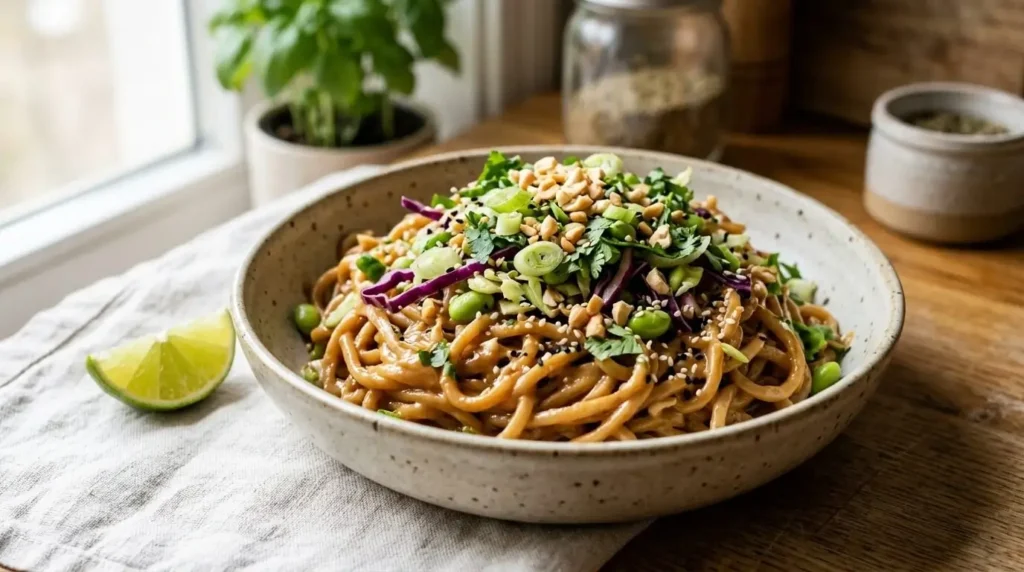
Vegan peanut noodles are the dinner I make when I’m too hungry to wait and too tired to wash three pans. This version is built around one real promise that ten minutes you start to bowl. You get a creamy peanut sauce with no separate cooking step noodles you don’t have to babysit and crunchy vegetables straight from the bag. Protein is optional – add edamame or tofu if you want it, skip it if you don’t. I’ve made this more times than I can count and the timing only works if you overlap the sauce-making with the noodles.Which is exactly what this recipe walks you through.
Quick Answer: How Do You Make Vegan Peanut Noodles?
Quick answer: Vegan peanut noodles are noodles tossed with a creamy sauce made from peanut butter, soy sauce or tamari, lime juice, a little maple syrup, garlic, and chili. For a true 10-minute version, cook quick-cooking noodles whisk the peanut sauce together while they boil then toss everything with crunchy vegetables and optional edamame. Because the tasks overlap instead of stacking up one after another. The noodles are ready right around the same time the sauce and toppings are.
Why This 10-Minute Vegan Peanut Noodles Recipe Works
This recipe uses one pot for the noodles and one measuring jug for the sauce – that’s it. There’s no separate stovetop step for the peanut sauce it’s whisked together cold-to-warm using hot water not simmered. The vegetables are ready-to-eat shredded cabbage or a bagged coleslaw mix so there’s no sautéing or chopping under pressure. Edamame goes into the noodle pot for the last minute of cooking, which means it heats through without needing its own pan. The sauce is intentionally built to stay glossy and pourable rather than turning into a stiff paste so it coats evenly whether you eat the noodles hot tonight or cold from the fridge tomorrow. If you want something to file next to your usual 10-minute meals or you’re hunting for something even quicker on a rough night. Our 5-minute meals roundup has a few backups too.
Ingredients You Need
For the Peanut Sauce
- Creamy natural peanut butter – the base of the sauce natural peanut butter blends smoother than the shelf-stable kind.
- Low-sodium soy sauce – for savory depth without oversalting
- Tamari – a gluten-free swap for soy sauce, if needed
- Lime juice – fresh for brightness and to balance the richness of the peanut butter
- Maple syrup – just enough sweetness to round out the sauce
- Garlic – finely grated so it disappears into the sauce
- Ginger – fresh and grated for warmth
- Sriracha – adjustable heat
- Hot water – the key to a pourable, not gluey, sauce
For the Noodles and Add-Ins
- Quick-cooking noodles – thin rice noodles are the fastest option
- Shredded cabbage or bagged coleslaw mix – for crunch with zero prep
- Shelled edamame – the fastest protein add-in
- Green onions – sliced thin
- Sesame seeds – for finishing
- Cilantro – optional for freshness
- Chopped peanuts – optional for crunch
Which Noodles Are Best for Vegan Peanut Noodles?
Noodle choice makes or breaks the 10-minute timeline, and it also affects whether the dish is actually vegan. A lot of noodles that look plant-based fresh ramen in particular – sometimes contain egg. Always check the ingredient label rather than assuming a noodle is vegan just because it’s rice,wheat or buckwheat-based.
Noodle Selection Decision Guide
| Noodle | Texture | Speed | Vegan/GF consideration | Best use |
| Thin rice noodles | Light, slippery | Very fast | Usually GF; check label | 10-minute version |
| Spaghetti | Firm, familiar | Moderate | Usually vegan but check label | Pantry version |
| Ramen | Springy | Fast | Check egg ingredients | Quick hot noodles |
| Udon | Thick, chewy | Fast if pre-cooked | Check package | Rich, chewy version |
| Soba | Nutty, firm | Fast | Some contain wheat | Cold/meal prep |
| Chickpea pasta | Firm | Moderate | Often GF; verify label | Higher-protein option |
If you’re building the 10-minute version specifically, thin rice noodles are the most reliable – they cook in a few minutes and don’t need much attention.
The 10-Minute Cooking Method
The trick to actually hitting ten minutes is overlapping tasks instead of doing them one at a time. Here’s how it breaks down.
Minute 0-2: Start the Noodles
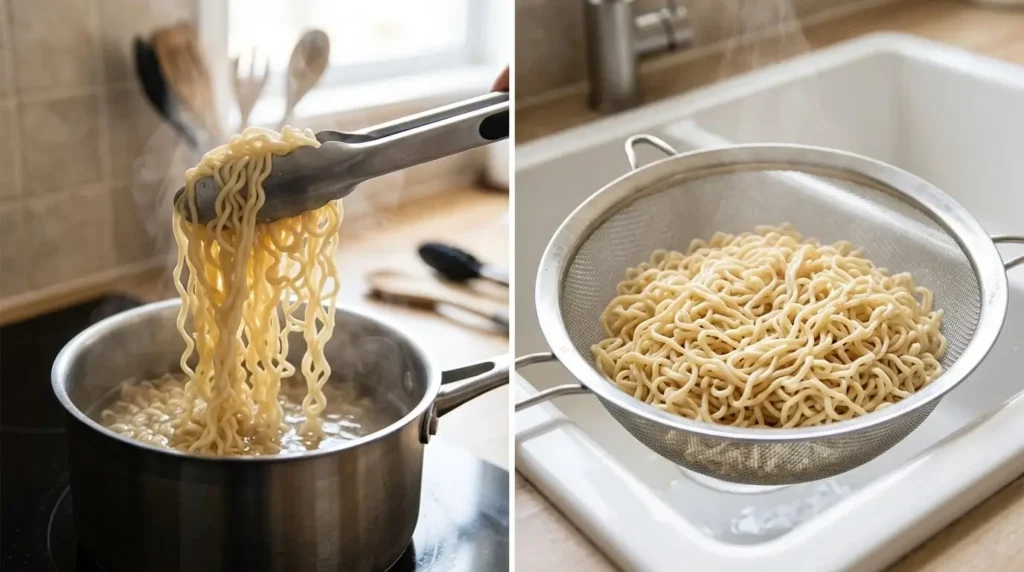
Get a pot of water going and add your quick-cooking noodles as soon as it boils. Cook according to the package instructions don’t walk away since thin rice noodles go from perfect to mushy fast. Before draining scoop out and reserve a little of the noodle water; you’ll want it for the sauce.
Minute 2-5: Whisk the Peanut Sauce
While the noodles cook then whisk the peanut butter, soy sauce, lime juice, maple syrup, sriracha, garlic, and ginger together then loosen with hot water until it’s smooth, glossy, and pourable – not stiff like frosting. That visual cue matters more than an exact measurement since peanut butter brands vary in thickness.
Minute 3-7: Prep the No-Cook Add-Ins
Overlapping with both of the steps above measure out your shredded cabbage then slice the green onions and have the edamame ready to go. None of this needs cooking which is what actually buys you the time.
Minute 7-10: Toss and Serve
Drain the noodles reserving that noodle water if you haven’t already, and add them to a large bowl with the sauce. Toss with a splash of the reserved water to loosen everything then fold in the cabbage and edamame.
Finish with green onions, sesame seeds, and cilantro and serve right away.
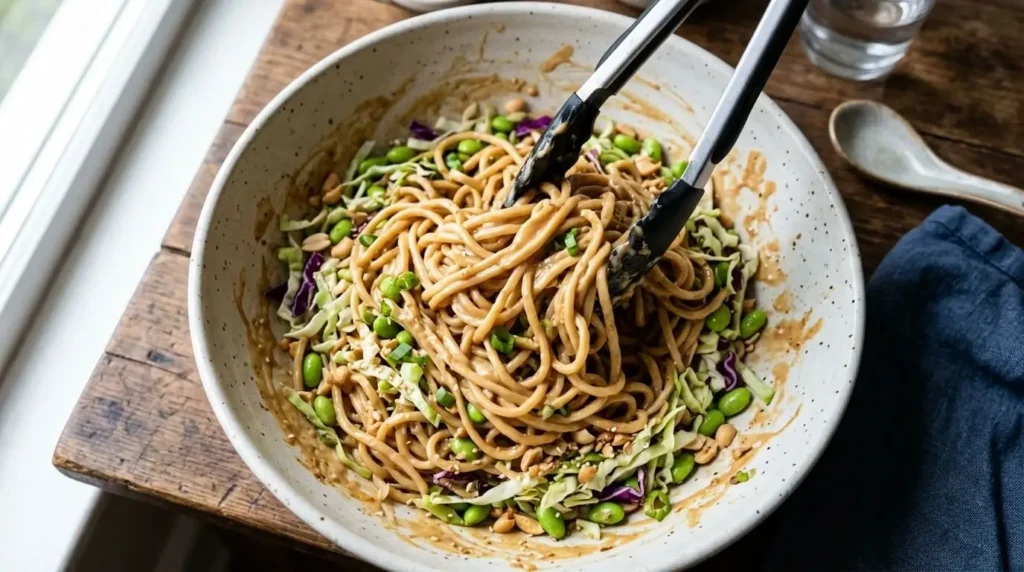
The 10-minute workflow at a glance:
- 0-2: Start noodles
- 2-5: Make sauce
- 3-7: Prep vegetables + edamame
- 7-9: Drain and toss
- 9-10: Garnish and serve
Noodle Doneness & Temperature/Safety Guide
Texture not temperature tells you when noodles are done. Temperature only becomes relevant once you’re storing leftovers.
| Stage | What to look for | Action |
| Al dente | Tender but still has a gentle bite | Drain immediately |
| Too soft | Mushy or breaking | Do not continue cooking |
| Sauce too thick | Doesn’t flow from spoon | Add hot noodle water 1 Tbsp at a time |
| Sauce ideal | Smooth, glossy, slowly flowing | Toss immediately |
| Refrigerated leftovers | Cold and fully chilled | Store at 40°F or below |
| Room-temperature leftovers | Food has been out too long | Refrigerate promptly |
General food-safety guidance from the USDA recommends keeping the refrigerator at 40°F or below not leaving cooked food out for more than about two hours and using refrigerated leftovers within three to four days.
Peanut Sauce Troubleshooting
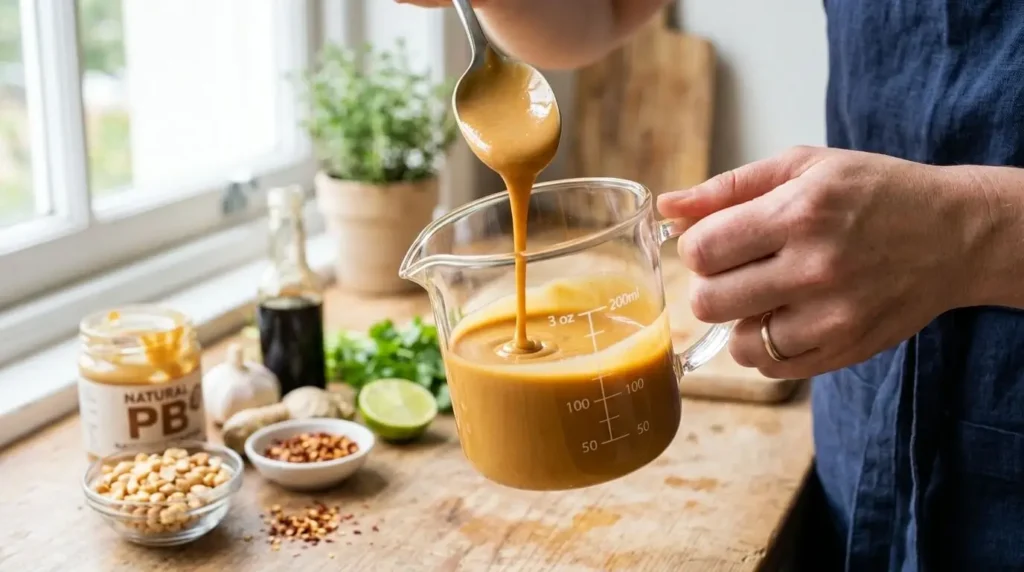
This is the part most recipes skip and it’s usually where a good bowl of peanut noodles goes wrong. The first time I made this my sauce seized up into a stiff paste because I whisked cold peanut butter straight from the fridge into cold liquid – now I either let the peanut butter sit out for a few minutes or lean harder on hot water to loosen it.
If the Sauce Is Too Thick
Add hot water or reserved noodle water one tablespoon at a time whisking after each addition. Don’t dump in a large amount at once – it’s much easier to loosen a thick sauce gradually than to fix one that’s suddenly too thin.
If the Sauce Is Too Thin
Whisk in a small amount of additional peanut butter then let it sit for a minute before deciding whether it needs more liquid. Sauces often thicken slightly as they sit.
If the Sauce Turns Grainy or Clumpy
This usually happens when peanut butter is combined with too little liquid, when the sauce is cold from the fridge, or when liquid is added too quickly. Warm the sauce slightly, whisk in hot water gradually, and it should re-emulsify into something smooth again.
If Leftovers Seem Dry
Add one to two teaspoons of water or a little extra peanut sauce, toss well, and warm gently if you’d like it hot.
Protein Options: What Should You Add?
| If you want… | Choose |
| Fastest option | Shelled edamame |
| More substantial texture | Crispy tofu |
| Higher-protein noodle base | Chickpea pasta |
| Make-ahead option | Edamame or tofu stored separately |
The base recipe uses edamame because it’s the only protein option that doesn’t add extra cooking time.It just goes into the noodle pot for the final minute. Crispy tofu is worth the extra ten minutes on a night when you’re not racing the clock and it pairs especially well with the sesame-garlic variation below. Plant foods like legumes, soy foods, nuts and seeds.Edamame and peanuts both included are recognized by nutrition researchers at Harvard T.H. Chan School of Public Health as solid contributors of protein to a plant-based diet. If you’re building out more meals around that idea, our high-protein recipes collection has more options.
Easy Substitutions
| Original | Substitute | What changes |
| Peanut butter | Almond or seed butter | Less peanut flavor |
| Soy sauce | Tamari | Gluten-free option when label confirms |
| Soy sauce | Coconut aminos | Sweeter, milder |
| Maple syrup | Agave or sugar | Sweetness changes slightly |
| Lime juice | Rice vinegar or lemon | Different acidity |
| Sriracha | Chili flakes or hot sauce | Different heat |
| Rice noodles | Vegan spaghetti | Firmer texture |
Peanut-Free Version
Sunflower seed butter or almond butter can stand in for the peanut butter in roughly the same amount. Keep in mind this only addresses the recipe’s own ingredients so if you’re cooking for someone with a serious peanut allergy, double-check every product label and any manufacturer’s cross-contact information rather than relying on this substitution alone.
Three Flavor Variations
Mild Creamy Peanut Noodles
Reduce or omit the sriracha entirely and add a touch more maple syrup if you’d like it a little sweeter and gentler.
Thai-Inspired Spicy Peanut Noodles
Lean into lime, sriracha, fresh cilantro, extra green onion and a few slices of fresh chili for heat. This isn’t meant to be an authentic regional dish – just a spicier, brighter take inspired by those flavors.
Sesame-Garlic Peanut Noodles
Add a drizzle of toasted sesame oil, extra sesame seeds, an extra clove of garlic and more green onion for a nuttier, savorier bowl.
Storage, Reheating & Meal Prep
Eat Tonight
For the best texture toss the sauce and noodles together right before serving and add the vegetables at the very end so they stay crisp.
3-Day Fridge Lunch Plan
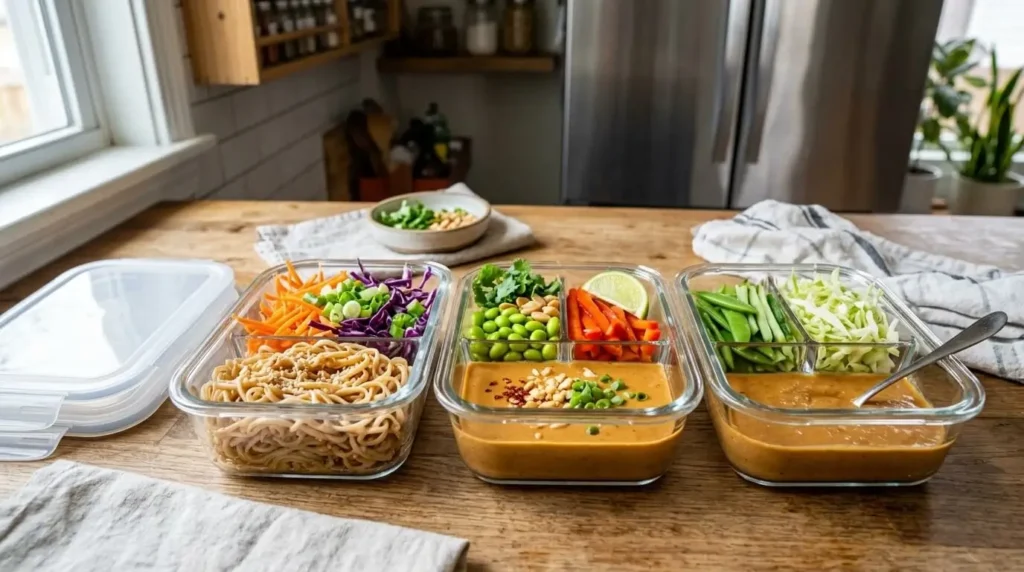
For meal prep, store the noodles, sauce, vegetables, protein, and garnishes in separate containers where you can. It’s a little more prep work up front but it keeps everything from turning soggy by day three. If lunchtime is usually the part of the day that falls apart this pairs well with our tips on how to eat healthy when you have no time.
Can You Freeze Vegan Peanut Noodles?
The sauce is the best candidate for freezing on its own. The noodles are better freshly made or kept in the fridge – I haven’t found a way to freeze and reheat them without the texture suffering, so I’d rather be upfront about that than promise results I haven’t actually gotten. For refrigerated leftovers, the USDA’s general guidance is to use them within three to four days and keep your fridge at 40°F or below. For more make-ahead ideas, see our meal prep guide.
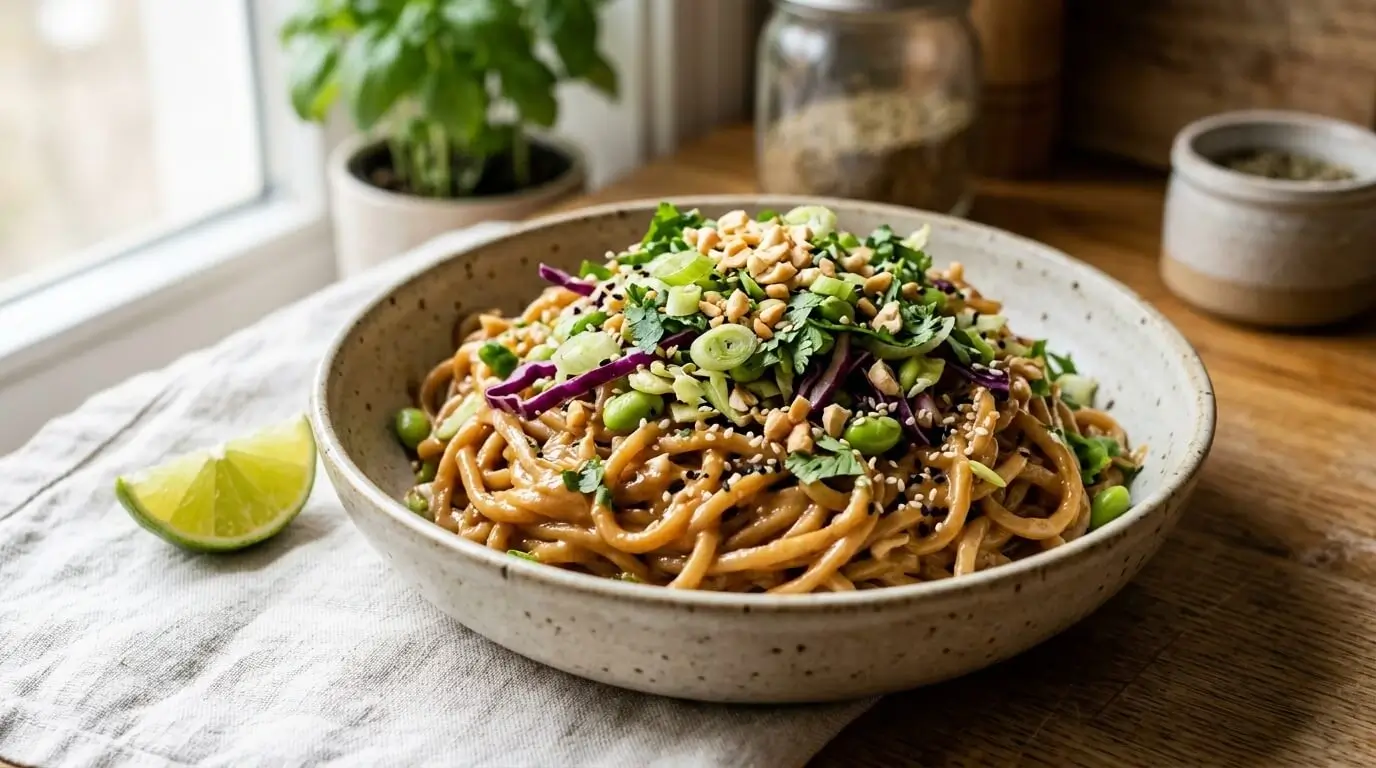
Vegan 10-Minute Peanut Noodles
Ingredients
Method
- Cook the noodles according to the package directions, stopping as soon as they are tender but still slightly firm. Reserve at least ½ cup noodle water, then drain.
- While the noodles cook, whisk peanut butter, soy sauce, lime juice, maple syrup, sriracha, garlic, ginger, and hot water until smooth and pourable.
- If the sauce looks too thick to pour easily, whisk in additional hot water 1 tablespoon at a time.
- Toss the hot noodles with the peanut sauce, adding a little reserved noodle water until the noodles are glossy and evenly coated.
- Add edamame and shredded cabbage. Toss again.
- Finish with green onions, sesame seeds, chopped peanuts, and cilantro.
- Serve immediately, or cool and refrigerate promptly for meal prep.
Notes
- Use a quick-cooking noodle to keep the recipe within the 10-minute target.
- Always verify that packaged noodles are vegan.
- For gluten-free noodles, use rice noodles and certified gluten-free tamari where appropriate.
- Reserve noodle water – it’s the easiest way to loosen peanut sauce without changing the flavor.
- The sauce should be glossy and pourable rather than stiff.
- For meal prep, storing sauce and noodles separately gives the best texture.
- Refrigerate leftovers promptly and use within 3-4 days.
Is This Recipe Healthy? Nutritional Information
Rather than labeling this “healthy” outright, here’s what’s actually in it: it’s a noodle dish built around peanut butter, vegetables and a plant-based protein add-in so it delivers a meaningful amount of protein and fiber alongside its carbohydrates and fat. As Harvard’s nutrition researchers point out so it’s worth looking at the whole “protein package”.The fat, fiber and sodium that come along with a protein source – rather than protein in isolation and that applies here too since peanut butter and soy sauce both bring flavor but also fat and sodium to the bowl.
Suggested draft nutrition, per serving (4 servings, with edamame):
- Calories: approximately 490
- Protein: approximately 18 g
- Carbohydrates: approximately 64 g
- Fat: approximately 19 g
- Fiber: approximately 5 g
These are planning estimates based on the ingredients above – recalculate from your exact brands once the recipe is finalized.
Frequently Asked Questions
What are vegan peanut noodles made of?
They’re noodles tossed in a sauce made from peanut butter, soy sauce or tamari, lime juice, maple syrup, garlic and chili, plus vegetables like shredded cabbage and often edamame. There’s no animal-derived ingredient in the sauce itself though noodle labels should always be checked.
Which noodles are vegan?
Most rice noodles, soba, udon and plain wheat pasta are vegan but not always – some ramen and egg noodles contain egg. Always check the ingredient list rather than assuming based on the noodle type alone.
Are peanut noodles healthy?
That depends on portion size and what you add. This version includes vegetables and a protein add-in like edamame and the nutrition estimates above give you real numbers to judge for yourself rather than a blanket claim.
How do you make peanut noodles vegan?
Use a vegan noodle (check the label), skip fish sauce or honey if a recipe calls for them, and build the sauce from peanut butter, soy sauce, lime, maple syrup, garlic and chili as in this recipe.
Can I make vegan peanut noodles gluten-free?
Yes – use rice noodles and swap the soy sauce for a certified gluten-free tamari checking both labels to confirm.
Can I eat peanut noodles cold?
Yes, as long as they’ve been stored safely in the fridge. Many people prefer them cold especially for meal-prep lunches.
Can I add tofu or edamame?
Yes. Edamame is the faster option and keeps the recipe within the 10-minute window so tofu adds more heft but takes longer to cook.
How do I keep peanut noodles from drying out?
Add a splash of water or a little extra peanut sauce when reheating or before eating leftovers, then toss well. The noodles absorb sauce as they sit so they usually need a little refresh.
Final Serving Suggestions
Serve your vegan peanut noodles with a squeeze of lime, extra sliced green onions, cilantro, sesame seeds and chopped peanuts on top – and a few cucumber slices if you want more crunch. It’s a good one to keep in rotation alongside our other vegan recipes, including vegan chickpea stir-fry for another fast plant-based dinner.