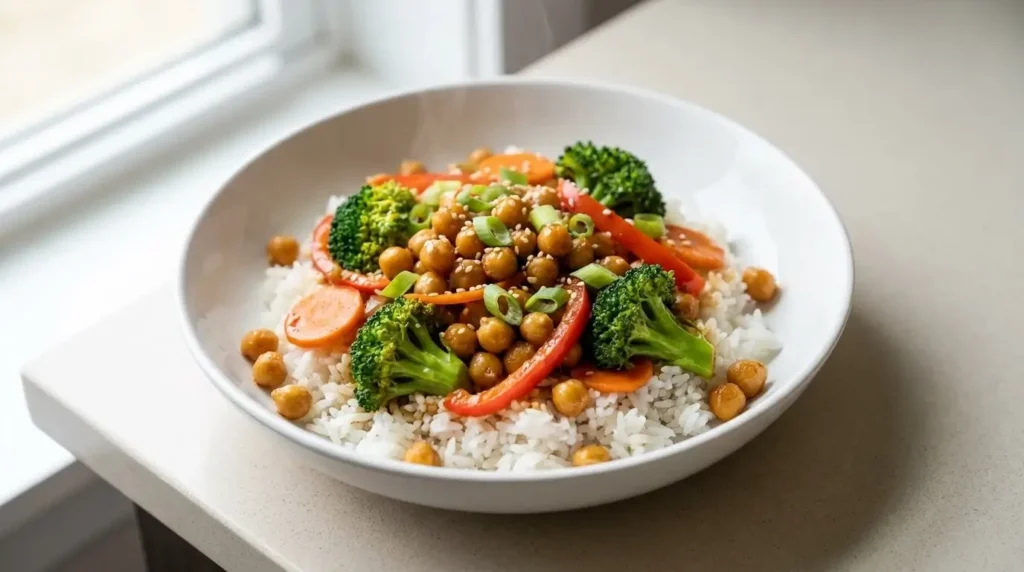
This Vegan Chickpea Stir-Fry is the dinner everyone makes when they get home tired and the refrigerator looks half empty. It only uses canned chickpeas, a handful of everyday vegetables and a five-ingredient sauce you can whisk together while the pan heats. After twenty minutes, you’re eating a chickpea stir fry that’s genuinely satisfying – a quick vegan dinner with real fiber and plant protein, not a sad bowl of steamed vegetables.
You don’t need a wok, stir-fry experience or a special shopping trip. To prepare it, only a regular skillet works; the vegetables are completely swappable and I’ll show you exactly what each stage should look like so nothing goes soggy or gluey. If you’re building a rotation of 20-minute meals, this healthy vegan dinner earns a permanent spot. It also holds up beautifully for meal-prep lunches.
What Is Vegan Chickpea Stir-Fry?
Vegan chickpea stir-fry is a one-skillet meal made by cooking canned chickpeas with colorful vegetables (like broccoli, carrots and bell pepper) in a savory homemade stir-fry sauce of soy sauce, ginger and sesame oil. It’s ready in about 20 minutes and is typically served over rice or noodles or eaten on its own.
Quick Facts
| Question | Answer |
| Prep Time | 10 minutes |
| Cook Time | 10 minutes |
| Total Time | 20 minutes |
| Difficulty | Easy |
| Best For | Weeknight dinners & meal prep |
| Diet | Vegan, dairy-free and gluten-free option |
Why You’ll Love This Vegan Chickpea Stir-Fry
Most chickpea stir-fry recipes read the same. And here’s what actually makes this one worth cooking on a Tuesday night:
- Uses pantry staples – canned chickpeas and sauce ingredients you probably already own.
- Ready in 20 minutes, including chopping.
- Naturally high in fiber – chickpeas plus a full pan of vegetables.
- Good source of plant protein, so it eats like a real dinner.
- Easy to customize with whatever vegetables are in the crisper drawer.
- Great for meal prep – it reheats well when you follow one small trick I’ll share below.
- Beginner-friendly, with visual cues at every step.
- One skillet and minimal cleanup.
If a quick vegan dinner that doesn’t rely on tofu sounds like your kind of healthy vegan dinner, this is it. And if you want more plant-based ideas afterward, browse our full collection of vegan recipes.
Ingredients You’ll Need
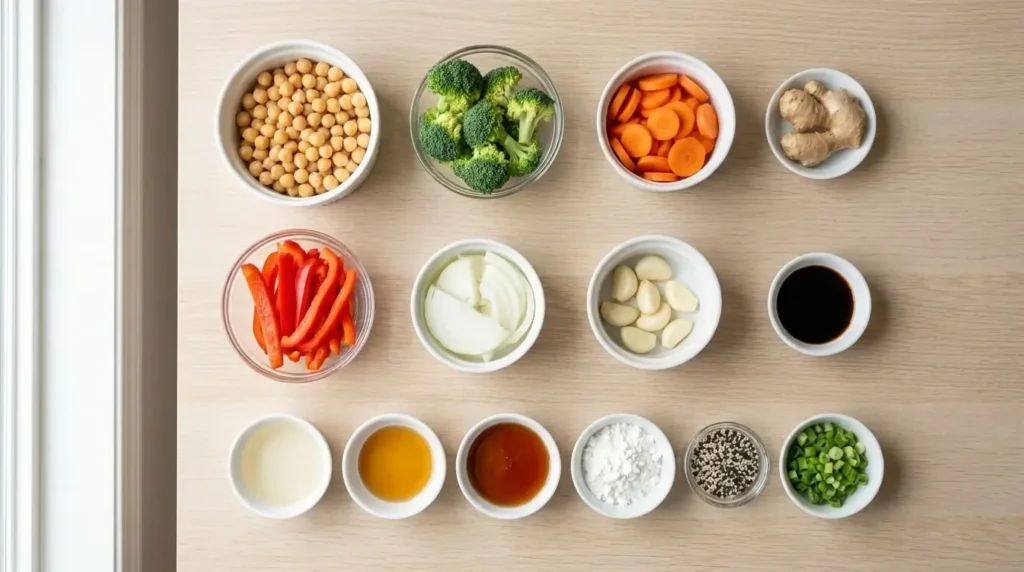
The beauty of this recipe is its flexibility. So, we’ll treat the ingredient list below as a starting point, not a contract – nearly everything can be swapped for what you have. The only non-negotiables are the chickpeas and a properly whisked sauce.
Core Ingredients
- Canned chickpeas – two cans, drained and rinsed. Additionally, pat them dry if you want crisp edges.
- Broccoli – florets cut small so they cook in minutes.
- Carrots – sliced thin so they finish at the same time as everything else.
- Onion and bell pepper – for sweetness and color.
- Garlic and ginger – fresh and added late so they don’t burn. These two carry most of the flavor.
For the Stir-Fry Sauce
- Soy sauce (or tamari for gluten-free) – the salty backbone.
- Rice vinegar – brightness that keeps the sauce from tasting flat.
- Maple syrup – a little sweetness to balance the salt.
- Toasted sesame oil – nutty depth; a teaspoon goes a long way.
- Cornstarch – thickens the sauce into a glossy coating.
Ingredient Substitution Guide
| Original | Substitute | Flavor Difference |
| Soy sauce | Tamari | Gluten-free |
| Soy sauce | Coconut aminos | Sweeter |
| Cornstarch | Arrowroot | Slightly lighter texture |
| Peanut butter | Tahini | Earthier |
| Maple syrup | Agave (or honey; note: not vegan) | Sweetness varies |
| Fresh broccoli | Frozen broccoli | Softer texture |
Which Vegetables Work Best?
Almost any vegetable works in a chickpea and vegetable stir fry, but the trick is knowing when to add each one. Additionally, firm vegetables like carrots and onions need a head start. And tender vegetables like bok choy, zucchini and green onions go in at the end or they’ll collapse into mush. Lastly, mushrooms and cabbage land in the middle. Also, snap peas are lovely tossed in during the last two minutes.
Frozen vegetables work too – no need to thaw. They release extra water, so cook them over slightly higher heat and expect a softer texture than fresh. This is the classic vegan chickpea stir fry with broccoli and carrots for a reason: both hold their shape and take on the sauce beautifully.
Vegetable Cooking Order
| Vegetable | Add First? | Approximate Cook Time | Ideal Texture |
| Onion | Yes | 3-4 min | Softened |
| Carrots | Yes | 4-5 min | Tender-crisp |
| Broccoli | Yes | 3-4 min | Bright green |
| Bell pepper | Middle | 2-3 min | Slight bite |
| Mushrooms | Middle | 3-4 min | Lightly browned |
| Bok choy | Last | 1-2 min | Wilted stems and vibrant leaves |
| Green onions | Last | 30 sec | Fresh |
Should You Crisp the Chickpeas?
You have three options and none of them is wrong; it totally depends on how much time you have and how much texture you want. Since all of these three ways of stir fry with chickpeas are tested and here’s the honest breakdown.
Method 1 – Straight From the Can
Drain, rinse and toss them in. This is the fastest by far, with a soft and creamy texture. Additionally, it is the right call on genuinely busy nights when the goal is dinner, not a project.
Method 2 – Pan-Crisped Chickpeas
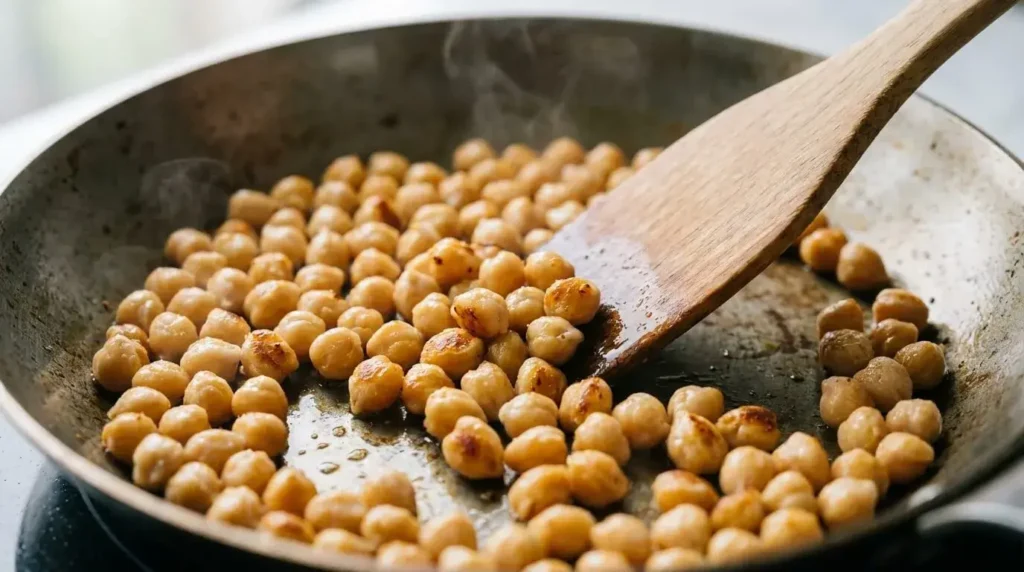
In this method you have to pat the chickpeas dry, then give them a few minutes alone in the hot skillet before the sauce goes in. By doing this, you get lightly crispy chickpeas outside, creamy inside – the best balance of effort and texture and my default.
Method 3 – Oven-Roasted Chickpeas
In this, roasted chickpeas (about 20 minutes at high heat) deliver maximum crunch. And they’re wonderful in grain bowls and for meal prep, but they push this past the 20-minute mark, so save this method for weekends.
| Method | Time | Texture | Best For |
| Straight from the can | Fast | Soft | Weeknight dinner |
| Pan crisped | Medium | Crisp outside | Classic stir-fry |
| Oven roasted | Longest | Crunchy | Bowls & meal prep |
How to Make Vegan Chickpea Stir-Fry
Here’s the complete recipe in five simple steps, followed by a detailed walkthrough with the visual cues to check at each stage.
5 Simple Steps
- Mix the sauce.
- Cook the vegetables.
- Crisp or warm the chickpeas.
- Add sauce and thicken.
- Serve immediately.
Step 1 – Make the Sauce
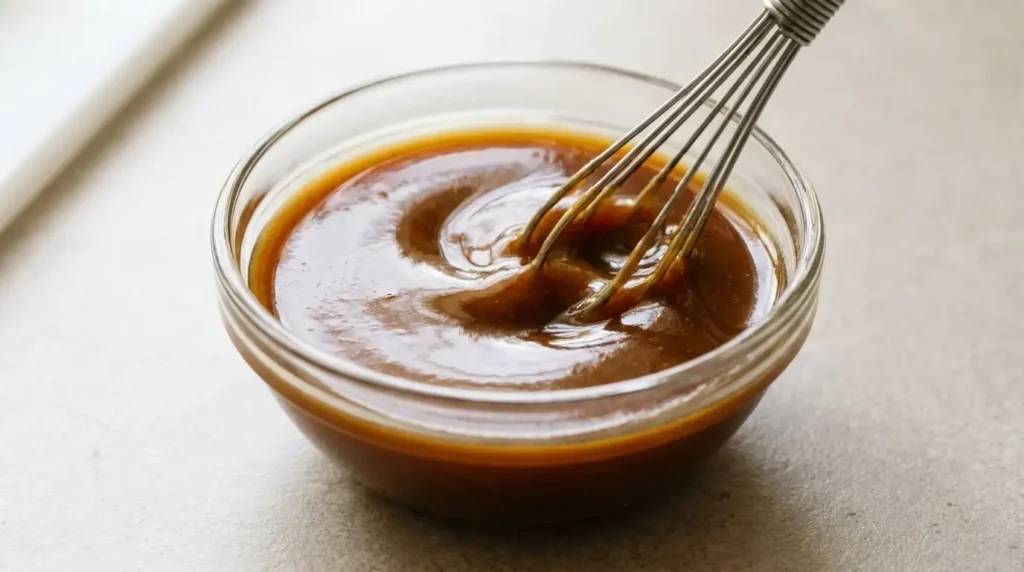
Whisk the soy sauce, rice vinegar, maple syrup, sesame oil, cornstarch and water in a small bowl. Additionally, whisk more than you think you need to; because cornstarch loves to hide in clumps at the bottom.
What it should look like: smooth and glossy, with no starch clumps clinging to the whisk. And keep whisking, if you see white streaks.
Step 2 – Cook the Vegetables
Heat oil in a large skillet over medium-high heat; the pan is ready when a drop of water sizzles and evaporates instantly. Additionally, sauté the onion and carrots first, then add broccoli and bell pepper. Also, stir often but not constantly; letting vegetables sit for 30 seconds at a time gives them light browning.
What it should look like: the vegetables stay bright and slightly firm; that’s tender-crisp. And if the broccoli turns olive green, you’ve gone too far.
Step 3 – Add the Chickpeas
Now, stir in the garlic and ginger for 30 seconds until fragrant, then add the chickpeas. And if you’re pan-crisping, push the vegetables to one side and give the chickpeas direct contact with the pan for a few extra minutes.
What it should look like: chickpeas heated through and holding their shape; not splitting or turning mushy.
Step 4 – Add Sauce
Whisk the sauce one more time (the starch settles quickly), pour it in and stir continuously while it simmers and thickens; it usually takes only a minute.
What it should look like: the sauce turns from cloudy to glossy and lightly coats every piece. And when you drag your spatula across the pan, the trail should fill in slowly rather than instantly flooding with thin liquid. And that’s exactly your cue to pull it off the heat.
Step 5 – Finish and Serve
Top with green onions, sesame seeds and cilantro if you like. Finally, serve right away over rice, noodles, quinoa, cauliflower rice or in lettuce cups.
Cooking Method Decision Guide
There’s no single “correct” way to make this easy chickpea stir fry. As the best approach depends on what you’re optimizing for tonight. Whether you’re racing the clock after work, skip the crisping. Cooking for texture-obsessed eaters? Pan-crisp. And if Batch-cooking Sunday lunches? Roast. Use this table to decide in ten seconds instead of second-guessing mid-recipe.
| If You Want… | Choose This Method | Why It Works |
| Dinner as fast as possible | Use drained canned chickpeas | Ready to heat and serve in minutes |
| Crisp edges with little extra effort | Pan-crisp chickpeas first | Adds texture without extending cook time much |
| Maximum crunch | Roast chickpeas before stir-frying | Best for grain bowls and meal prep |
| Fewer dishes | Cook everything in one skillet | Simplest cleanup |
| Best leftovers | Slightly undercook vegetables | Helps them stay tender-crisp after reheating |
Whichever route you take, this vegan chickpea stir-fry stays a true one-skillet dinner; pan-crisped chickpeas and roasted chickpeas both finish in the same pan as everything else.
How Do You Know It’s Done?
Stir-fries move fast, so trust your eyes more than the clock. Remember that every stove runs a little differently, pans hold heat differently and vegetable sizes vary – but color, texture and sauce consistency never lie. So, watch for tender-crisp vegetables that still look vivid, chickpeas that hold their shape and a stir-fry sauce that clings rather than pools. And here’s exactly what to look for, component by component:
Doneness Guide
| Component | What You’re Looking For | Avoid |
| Broccoli | Bright green and tender-crisp stems | Olive green and mushy florets |
| Carrots | Easily pierced with a fork, but still slightly firm | Soft and limp |
| Bell Pepper | Slightly softened with a little bite | Wrinkled and collapsing |
| Chickpeas | Heated through with lightly crisp edges (if pan-crisped) | Dry, tough or falling apart |
| Sauce | Glossy and lightly coats vegetables | Watery or gluey |
When every row checks out, your vegan chickpea stir-fry is done – pull it off the heat even if the timer disagrees.
Common Mistakes (and How to Fix Them)
Good news first: stir-fries are forgiving and nearly every problem can be fixed in the pan before anyone sees it. I learned most of these fixes the hard way. In one early test of this recipe, I dumped the sauce over chickpeas I hadn’t dried and the whole pan steamed instead of sizzled; since then I pat the chickpeas dry with two rounds of paper towel and the difference in browning is night and day.
Troubleshooting Table
| Problem | Likely Cause | Quick Fix |
| The sauce is too thin | Not enough thickener or not simmered long enough | Mix a small amount of cornstarch (or arrowroot) with cold water and stir in gradually |
| The sauce is too thick | Too much starch or reduced too long | Stir in water or vegetable broth 1 tablespoon at a time |
| Sauce tastes too salty | Too much soy sauce | Add a splash of water plus a little maple syrup or extra vegetables |
| Sauce is too sweet | Too much sweetener | Add rice vinegar or a little extra soy sauce |
| Vegetables are soggy | Pan is overcrowded or overcooked | Cook over a higher heat in batches next time |
| Chickpeas aren’t crispy | Too much moisture | Dry thoroughly before cooking and avoid adding sauce too early |
What It Should Look Like
The finished dish should have vegetables that are still colorful, a sauce that’s glossy rather than sticky, and chickpeas that are coated but not swimming. Tilt the pan: you want little or no liquid pooling at the bottom. And if it passes that tilt test, you nailed it.
Easy Variations
Think of this recipe as a framework, not a fixed formula. In this the sauce and technique stay the same – you just steer the flavor in a different direction.
Make It Spicy
Whisk a teaspoon of sriracha or chili garlic sauce into the sauce or finish the pan with red pepper flakes. Now start small; you can always add more heat at the table.
Make It Peanut Style
Whisk a tablespoon of peanut butter into the sauce and finish with lime juice and crushed peanuts. Also, this peanut butter chickpea stir fry variation is rich, tangy and my kids’ favorite version.
Make It Gluten-Free
Swap the soy sauce for tamari or a certified gluten-free soy sauce and check the labels on any other bottled sauces you add; sriracha brands vary. Also, you can find more ideas in our gluten-free recipes collection.
Add More Protein
Stir in edamame, cubed tofu or shelled peas alongside the chickpeas. Additionally, keep the chickpeas as the star; these are boosters, not replacements.
You can also take it in a lightly Indian direction with curry powder and coconut milk, though that becomes a different dish entirely.
What to Serve with Vegan Chickpea Stir-Fry
Honestly, this stir-fry is satisfying enough to eat straight from a bowl; the chickpeas make sure of that. But a base turns it into a fuller meal, stretches the servings and soaks up every drop of that soy-ginger sauce. So, rice and noodles are the obvious partners; quinoa and cauliflower rice cover higher-protein and lighter meals; lastly lettuce cups make a genuinely fun light lunch. Here’s how I match the base to the occasion:
Serving Options
| Serving Option | Best For | Notes |
| Brown rice | Everyday dinner | Classic pairing |
| Jasmine rice | Fast weeknight meal | Soft texture balances crisp vegetables |
| Rice noodles | Gluten-free option | Absorbs sauce well |
| Quinoa | Higher-protein meal | Adds extra texture |
| Cauliflower rice | Lower-carb meal | Keeps the meal lighter |
| Lettuce cups | Light lunch | Fresh and crunchy option |
Build it as a chickpea stir fry bowl over any grain for a meal prep lunch or serve it family-style with rice and noodles on the table and let everyone assemble their own.
Meal Prep Notes
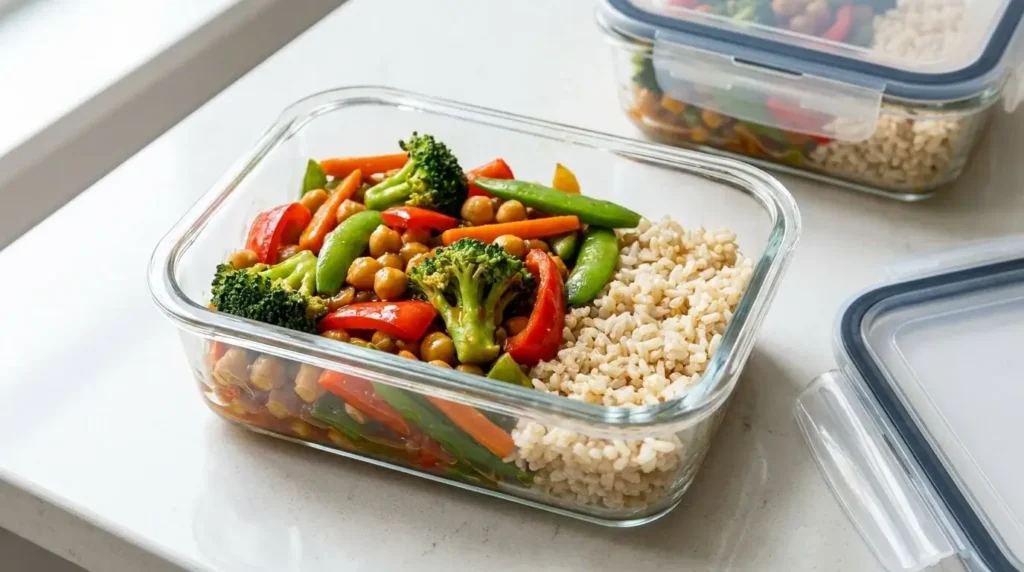
This recipe divides neatly into four meal-prep portions: one skillet and four lunches. In addition, glass containers with tight-fitting lids work best because they reheat evenly and won’t hold onto the sauce’s aroma the way plastic can. Now, pack the stir-fry and rice side by side in the same container; the sauce-coated vegetables won’t make the rice soggy if the sauce was properly thickened.
Know what to expect: after Day 1, the vegetables soften slightly and the flavors deepen; many people (me included) think Day 2 tastes better. And by Day 3, the texture fades a bit, which is exactly why the tip below matters. You’ll also find more batch-friendly ideas in our meal prep recipes hub.
Meal Prep Tip: If you’re planning to reheat the stir-fry later in the week, remove it from the heat while the vegetables are still slightly tender-crisp. They’ll finish softening during storage and reheating.
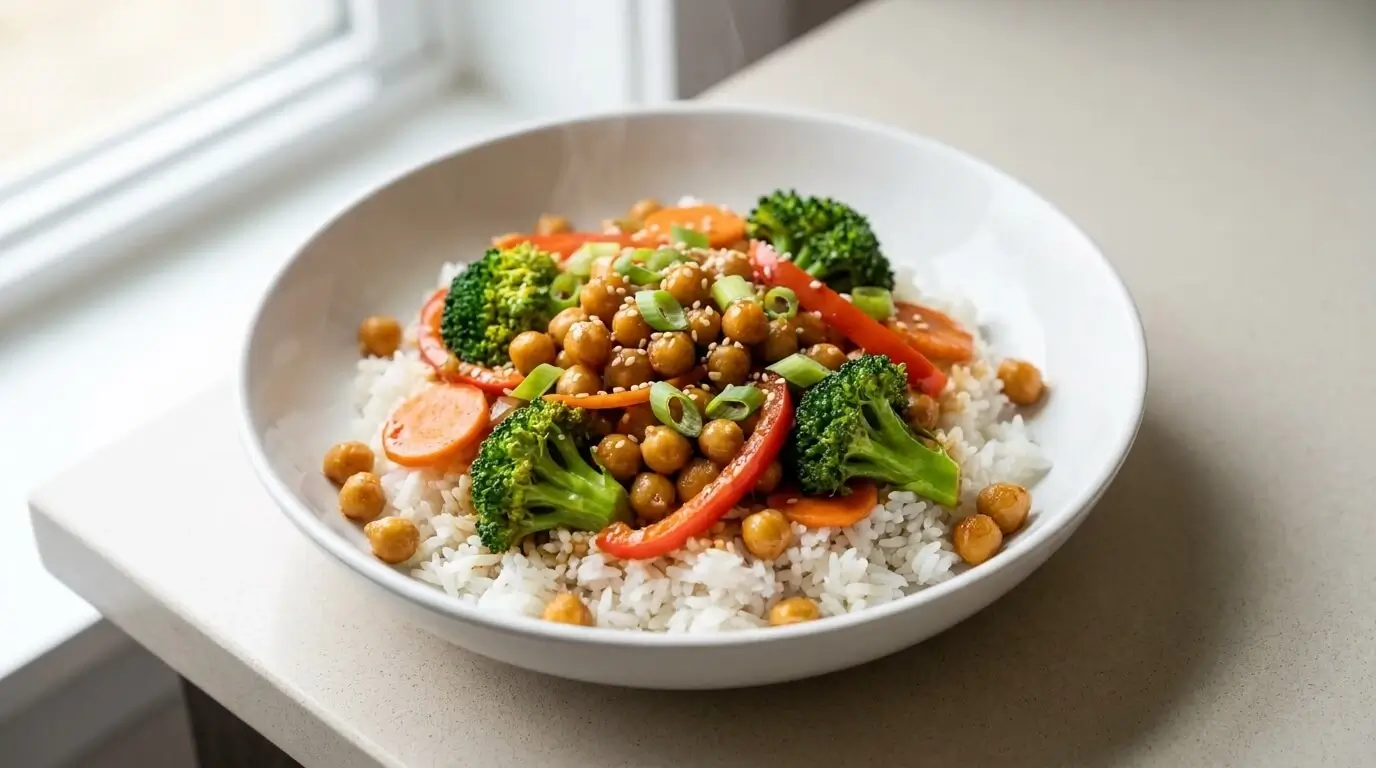
Easy Vegan Chickpea Stir-Fry (20 Minutes)
Ingredients
Equipment
Method
- Whisk together the soy sauce, rice vinegar, maple syrup, sesame oil, cornstarch, water and optional chili sauce until completely smooth. Then set aside.
- Heat the oil in a large skillet over medium-high heat. Add the onion and carrots. And cook until they begin to soften.
- Add the broccoli and bell pepper. Then cook until the vegetables are bright and tender-crisp.
- Stir in the garlic and ginger. And cook just until fragrant, about 30 seconds. Make sure to avoid browning the garlic.
- Add the chickpeas and cook until heated through or continue cooking for a few extra minutes if you’d like lightly crisped chickpeas.
- Whisk the sauce again and pour it into the skillet. Make sure to stir continuously until the sauce becomes glossy and lightly coats the vegetables and chickpeas.
- Remove from the heat. Then top with green onions and sesame seeds. Lastly, serve immediately over rice, noodles, quinoa, cauliflower rice or in lettuce cups.
Notes
- Chickpeas: Pat dry before cooking if you want crisp edges.
- Soy Sauce: Use tamari for a gluten-free version.
- Cornstarch: Arrowroot starch works well as a substitute.
- Vegetables: Feel free to substitute mushrooms, cabbage, zucchini, bok choy or snap peas.
- For Crispier Chickpeas – Pat the chickpeas completely dry before cooking. And for even more texture, pan-crisp them for a few extra minutes before adding the sauce.
- Don’t Overcook the Vegetables – The vegetables should stay bright and slightly firm. And they’ll continue softening slightly from the residual heat.
- Sauce Too Thick? – Whisk in a tablespoon of water at a time until it reaches your preferred consistency.
- Sauce Too Thin? – Continue simmering briefly or stir in a small amount of cornstarch slurry until the sauce coats the vegetables.
- Meal Prep – Slightly undercook the vegetables if you’re making this recipe ahead, so they stay tender-crisp after reheating.
- Calories: ~340-380
- Protein: ~13-15 g
- Carbohydrates: ~42-48 g
- Fiber: ~10-12 g
- Fat: ~10-12 g
- Saturated Fat: ~1-2 g
- Sodium: Varies depending on the soy sauce used
- Sugar: ~6-8 g
Storage, Freezing & Reheating
How to Store
Refrigerate leftovers promptly in an airtight container; don’t leave the skillet sitting out through a long dinner. Also, for best quality, eat refrigerated leftovers within a few days, because the flavor holds up well, though the vegetables gradually lose their snap.
Can You Freeze It?
Yes, you can if the expectations are managed. By freezing chickpeas freeze beautifully and come back with their texture intact. And the vegetables soften noticeably after thawing and the sauce may loosen slightly. Additionally, frozen leftovers are best used in situations where texture matters less (stirred into rice, folded into a wrap or spooned over noodles) rather than served as a fresh-looking stir-fry.
Best Way to Reheat
The skillet is the gold standard: medium heat, a splash of water to refresh the sauce and two to three minutes of stirring. Moreover, the microwave is fine for desk lunches; cover loosely and heat in short bursts, stirring between them, with a teaspoon of water if the sauce has tightened up. Also, if you pan-crisped your chickpeas, the air fryer does something the other methods can’t: a few minutes at moderate heat actually revives their crisp edges. So, we reheat the chickpeas in the air fryer and the vegetables in the skillet when we want leftovers that taste like night one.
Nutritional Information
The recipe card below shows the full nutrition panel, but here’s what those numbers actually mean for your dinner. The chickpeas do the heavy lifting: each serving delivers meaningful plant protein and roughly 10-12 grams of fiber, which is why this meal keeps you full in a way many vegetable dishes don’t. Additionally, if you’re building out a rotation of high-protein recipes, this one fits without any protein powder tricks.
You also get a genuine serving of vegetables; several kinds in one pan. And sodium is the one number you control directly: low-sodium soy sauce or tamari cuts it substantially. This is all told, it’s a balanced weeknight meal and you’ll find more practical guidance like this in our healthy tips section.
Frequently Asked Questions
Can you use canned chickpeas in stir-fry?
Yes, canned chickpeas are ideal for stir-fry. Firstly, drain and rinse them, then pat them dry if you want crisp edges. Since they’re already cooked, they only need a few minutes in the pan to heat through, which is exactly why this recipe stays under 20 minutes.
Should chickpeas be roasted before stir-frying?
Not necessarily, because straight-from-the-can chickpeas are fastest and stay soft. And pan-crisping for a few minutes in the skillet gives crisp edges with minimal extra time, which is the best balance for most cooks. Also, oven-roasting delivers maximum crunch but adds about 20 minutes, so save it for grain bowls and meal prep.
What vegetables work best in a chickpea stir-fry?
Broccoli, carrots, onion and bell pepper are the reliable core. Additionally, mushrooms, cabbage, zucchini, bok choy and snap peas all work too; the key is adding firm vegetables first and tender ones last. Also see the vegetable cooking order table above for exact timing on each.
How do you thicken stir-fry sauce?
Use cornstarch or arrowroot. Now whisk one tablespoon into the cold sauce before cooking or fix a thin finished sauce by stirring a slurry (one teaspoon of starch mixed with two teaspoons of cold water) into the simmering pan gradually until the sauce turns glossy and coats the vegetables.
Can I make this recipe gluten-free?
Yes, easily. For this, you have to swap the soy sauce for tamari or a certified gluten-free soy sauce; the flavor is nearly identical. As cornstarch, rice vinegar and the other sauce ingredients are naturally gluten-free, but check labels on optional add-ins like sriracha and serve over rice or rice noodles.
Can I make this ahead for meal prep?
Absolutely, it’s one of the best chickpea recipes for meal prep. For this, first pull the vegetables off the heat while still slightly tender-crisp so they don’t turn soft during storage and reheating. Now, portion the rice into airtight containers and enjoy it within a few days for the best texture.
Can I freeze vegan chickpea stir-fry?
Yes, the chickpeas and sauce freeze well; the vegetables will be noticeably softer after thawing. Freeze in airtight containers, thaw overnight in the refrigerator and use frozen leftovers where texture matters less, stirred into rice, wraps or noodle bowls.
What’s the best way to reheat leftovers?
A skillet over medium heat is best; add a splash of water to loosen the thickened sauce and stir for two to three minutes. Also, the microwave works for lunches: heat in short bursts and stirring between them. Additionally, an air fryer revives pan-crisped chickpeas especially well.
Final Thoughts
This Vegan Chickpea Stir-Fry has earned its place in my weeknight rotation because it solves the real problem: getting a healthy and satisfying dinner on the table when time and energy are both running low. It also bends to whatever vegetables you have, forgives beginner mistakes and packs into lunch containers without complaint. Firstly, start with the recipe as written once, then make it yours. And if tight schedules are your everyday reality, my guide to healthy eating when you’re short on time pairs well with this recipe and when you want more easy dinners, our one-pot meals are the natural next stop.
Recipe Tips for Best Results
- Dry the chickpeas well before cooking for better browning.
- Keep the pan hot to prevent vegetables from steaming.
- Stir the sauce before pouring it into the skillet because the starch settles quickly.
- If you prefer a sweeter sauce, taste before serving and adjust with a splash of rice vinegar for brightness or a little maple syrup.
5 thoughts on “Easy Vegan Chickpea Stir-Fry Recipe (20 Minutes)”