
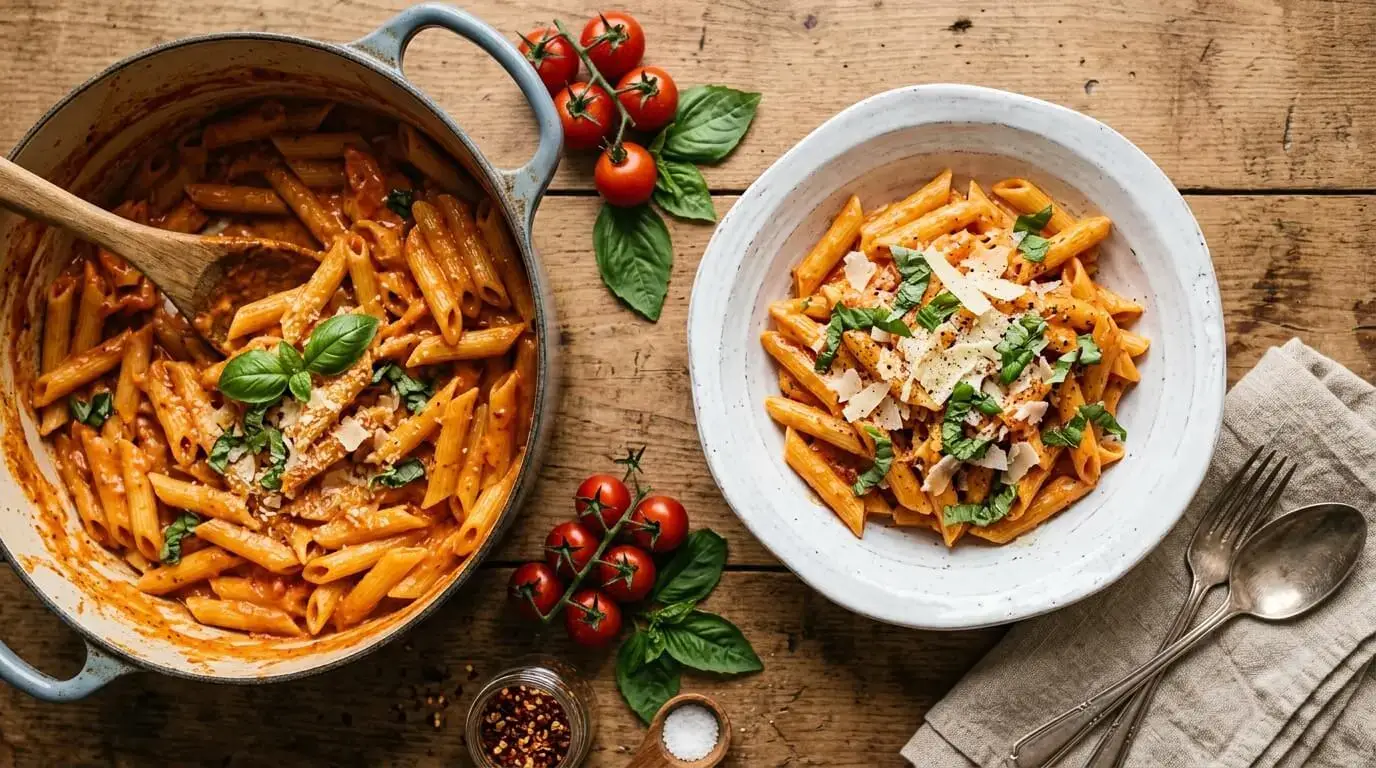
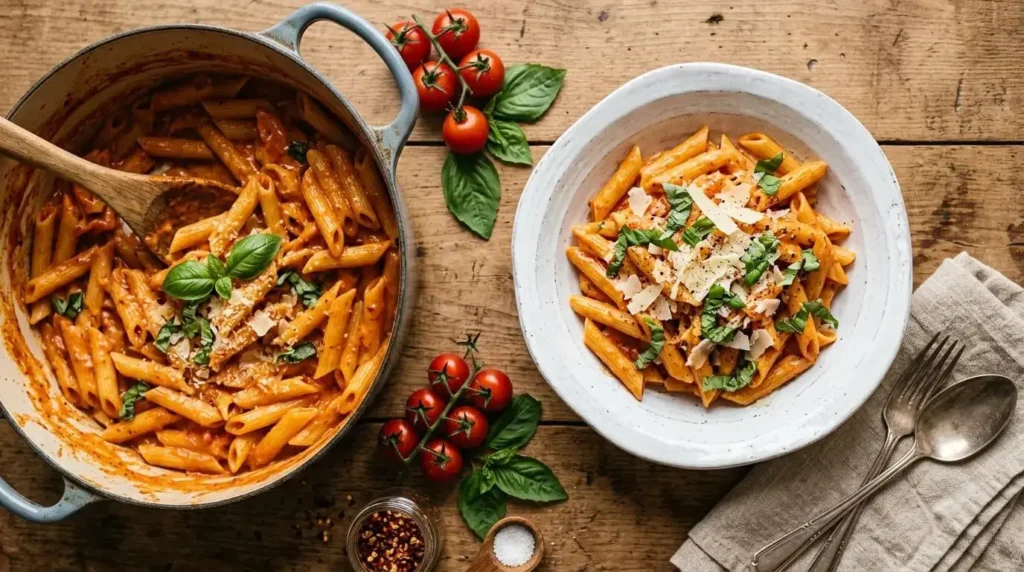
One-pot creamy tomato pasta is a weeknight dinner where the pasta simmers directly in a tomato sauce instead of a separate pot of water. And the starch it releases thickens the sauce on its own and a finish of cream and parmesan turns it silky. Moreover, it’s ready in about 30 minutes, with one pot to wash.
Some nights, the sink is already full from yesterday and the last thing you want is a recipe that dirties a pasta pot, a saucepan and a colander just to get dinner on the table. This one-pot creamy tomato pasta solves that. Because this pasta cooks directly in the sauce, there’s no draining and only one pot to wash when you’re done.
It’s built for beginners, but it doesn’t taste like a beginner recipe. As the sauce comes out silky and clingy, not watery or separated, because the pasta’s own starch does the thickening for you as it cooks. That means no roux, no cornstarch slurry and absolutely no separate cream sauce simmering on another burner while you watch the clock.
From start to finish, this takes about 30 minutes, most of which is hands-off simmering. Additionally, it uses ingredients most kitchens already have (canned tomatoes, pasta, a little cream and parmesan), so there’s no special trip to the store required. In addition, kids tend to like it as-is and it holds up well as leftovers, which matters if you’re cooking for more than one meal.
Below you’ll find the full recipe card, plus the reasoning behind each step, common ways it can go wrong and also how to fix them if it does.
Why You’ll Love This Recipe
- One pot, start to finish – the pasta cooks in the sauce, so there’s no separate pot of boiling water and no colander to wash.
- Ready in 30 minutes – realistic for a weeknight, including prep.
- Beginner-friendly – no advanced techniques and no hard-to-find ingredients.
- Naturally thickened sauce – pasta starch does the work instead of flour or cornstarch.
- Kid-approved – mild, creamy and easy to make, even milder by skipping the red pepper flakes.
- Reheats well – leftovers taste just as good the next day with a splash of liquid.
- Budget-friendly – built from pantry staples and also no specialty items are used.
- Easy to customize – takes well to added protein, vegetables or extra spice.
How to Choose Ingredients for Creamy Tomato Pasta & What Each One Does
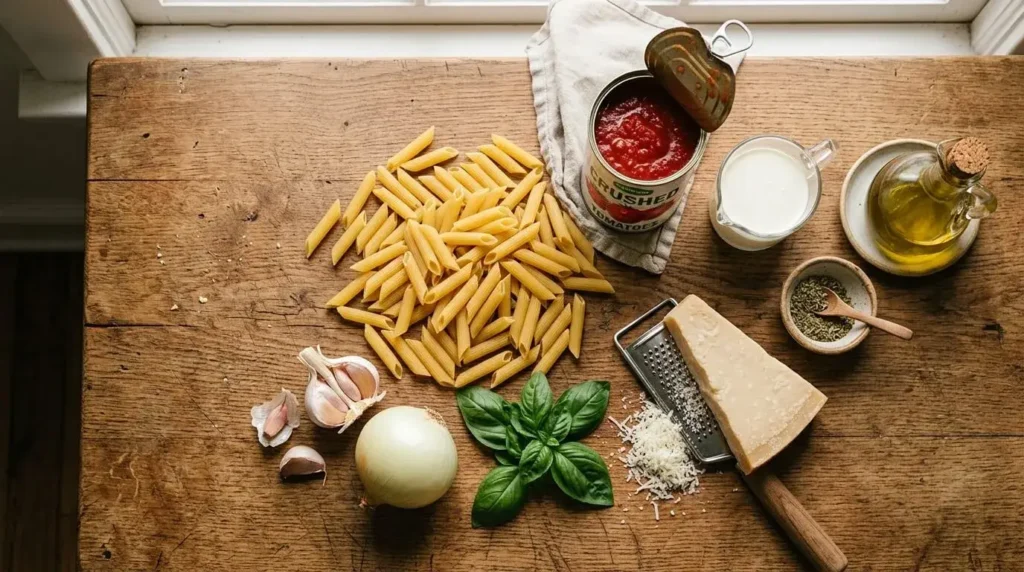
Short Pasta (Penne, Fusilli or Rotini)
Purpose: The base of the dish and the source of the starch that thickens the sauce.
Flavor contribution: Neutral; it serves as a canvas for the sauce.
Texture contribution: Ridges and curves in shapes like fusilli and penne physically trap sauce, so each bite gets more of it than a smooth noodle would.
Buying tips: Look for pasta made from durum wheat semolina; it holds its shape better during the longer simmer this method requires.
Substitutions: Shells or farfalle work well. Also, long noodles like spaghetti tend to clump since they’re not designed to cook mostly submerged in a shallow pot.
Storage: Dry pasta keeps well in a sealed container in the pantry for a year or more.
Olive Oil
Purpose: Cooks the onion and garlic and carries their flavor into the sauce.
Flavor contribution: Mild fruitiness that supports the tomato without competing with it.
Buying tips: A standard “extra virgin” bottle is fine here; save your finishing-quality oil for drizzling, not sautéing.
Substitutions: Butter works and adds richness, though it browns faster, so watch the heat.
Onion
Purpose: Builds a sweet, savory base flavor underneath the tomato.
Flavor contribution: Mellow sweetness once cooked, which balances tomato acidity.
Texture contribution: Softens completely and mostly disappears into the sauce.
Buying tips: Yellow onion is the standard choice; white onion is a fine substitute with a slightly sharper bite.
Substitutions: Shallot works in a pinch, in a similar quantity.
Storage: Whole onions keep for weeks in a cool, dark and ventilated spot.
Garlic
Purpose: Adds aromatic depth.
Flavor contribution: Pungent when raw, mellow and slightly sweet once cooked.
Buying tips: Fresh cloves give noticeably better flavor than pre-minced jarred garlic.
Common mistake to avoid: Adding garlic too early; it burns quickly and turns bitter. So, always add it after the onion has already softened.
Substitutions: ½ teaspoon garlic powder per clove in a pinch, though fresh is preferred.
Tomato Paste
Purpose: Adds concentrated tomato flavor and body that crushed tomatoes alone don’t provide. Flavor contribution: Deep and slightly caramelized umami – cooking it briefly in the oil before the other liquids go in brings out flavor that stays flat if the paste is added raw.
Texture contribution: Extra thickness, which helps the sauce read as rich rather than watery even before the cream goes in.
Buying tips: A small tube keeps better in the fridge than an opened can, since you’ll rarely use a whole can at once.
Substitutions: Skip it if you don’t have it; the sauce will still work, just with slightly less depth.
Crushed Tomatoes
Purpose: The backbone of the sauce, providing most of its volume and body.
Flavor contribution: Bright acidity balanced by natural sweetness that increases as the tomatoes simmer. Additionally, paired with tomato paste, you get both brightness and depth instead of a one-note sauce.
Texture contribution: Smooth and cohesive body with no chunks to blend or strain.
Buying tips: Brands vary significantly in acidity and saltiness; if a favorite brand tastes overly sharp, a pinch of sugar or a small pat of butter balances it.
Substitutions: Diced tomatoes give a chunkier texture; tomato purée (sometimes labeled tomato sauce) is thinner and needs slightly less broth.
Vegetable Broth
Purpose: Provides the cooking liquid for the pasta.
Flavor contribution: Adds savory depth that water alone doesn’t provide.
Buying tips: Low-sodium broth gives you more control over final seasoning, since the salt from the pasta water and parmesan add up quickly.
Substitutions: Water works, though the sauce will taste slightly flatter and may need a bit more salt.
Dried Oregano
Purpose: The primary herb note in the sauce.
Flavor contribution: Earthy and slightly peppery background flavor typical of Italian-American tomato sauces.
Buying tips: Dried oregano actually works better here than fresh – drying concentrates its flavor and it holds up through the simmer.
Substitutions: Dried basil or Italian seasoning blend.
Salt and Black Pepper
Purpose: Basic seasoning that makes every other flavor in the dish more noticeable.
Buying tip: Taste and adjust at the end; canned tomato brands vary in sodium, so the amount listed is a starting point, not a fixed rule.
Heavy Cream
Purpose: Turns a tomato sauce into a creamy one and adds richness.
Flavor contribution: Rounds out tomato acidity with fat and a subtle sweetness.
Texture contribution: Silkiness and body.
Buying tips: Heavy cream (sometimes labeled heavy whipping cream) has enough fat to resist curdling from the tomato’s acidity – this matters more than brand.
Substitutions: Half-and-half or whole milk work but are more prone to a thinner, slightly less stable sauce. Full-fat coconut milk or unsweetened oat cooking cream work for a dairy-free version.
Storage: Keep refrigerated; use within the timeframe printed on the carton once opened.
Parmesan Cheese
Purpose: Adds salty and savory depth and helps bind the sauce.
Flavor contribution: Nutty, salty and umami-rich.
Buying tips: A block you grate yourself melts far more smoothly than pre-shredded cheese, which is often coated in anti-caking starch that can make sauce grainy.
Substitutions: Pecorino Romano is a sharper, saltier alternative – you can use slightly less added salt if you swap it in.
Storage: Well-wrapped parmesan keeps in the fridge for weeks.
Fresh Basil
Purpose: A fresh, aromatic finishing touch.
Flavor contribution: Bright, slightly peppery and sweet; a contrast to the rich sauce underneath.
Buying tips: Add it at the very end; basil turns dark and loses flavor if cooked directly into the sauce.
Substitutions: Fresh parsley if basil isn’t available, though the flavor profile shifts slightly.
What’s the Best Pasta Shape for Creamy Tomato Sauce?
Short, ridged or tubular shapes work best because their surface texture physically traps sauce, so more of it ends up on your fork instead of pooling at the bottom of the bowl.
| Category | Shapes | Why |
| Top picks | Penne rigate, rigatoni, fusilli and cavatappi | Ridges and curves grip sauce well; sturdy enough to hold shape through the full simmer |
| Also good | Ziti, shells, farfalle and rotini | Similar sauce capture, slightly different bite |
| Not recommended | Spaghetti, angel hair and other long thin noodles | Not built to cook mostly submerged in a shallow pot – they tend to clump instead of cooking evenly |
If you already have a box of something else in the pantry, it’s not worth a special trip to the store, but if you’re buying pasta specifically for this dish, penne rigate or rigatoni are the safest bet.
Equipment: Why Each Tool Matters
- Dutch oven or heavy-bottomed pot: Even heat distribution matters more here than in a normal pasta recipe, since the pasta is cooking directly against the bottom of the pot rather than floating in a large volume of boiling water. So, a thin and light pot is more likely to scorch the sauce.
- Wooden spoon or silicone spatula: Lets you scrape the bottom of the pot cleanly, which matters since starch can settle and stick as it thickens.
- Measuring cups and spoons: Precision matters more in a one-pot method, so too little liquid and the pasta won’t cook through; too much and the sauce stays thin.
- Cheese grater: Freshly grated parmesan melts smoothly; pre-shredded cheese often doesn’t.
- Chef’s knife and cutting board: Nothing specialized needed, for the onion and garlic.
No Dutch oven? Any large and heavy-bottomed pot with a lid works. And a thin pot will need slightly more attentive stirring to prevent scorching.
Step-by-Step Instructions
Step 1: Soften the Onion and Garlic
Warm the olive oil in your pot over medium heat. After that add the diced onion and cook (stirring occasionally) for 3 to 4 minutes. As, you’re looking for soft and translucent, not browned; this builds a sweet and mellow base rather than a caramelized one. Now, add the minced garlic for the final 30 seconds, stirring constantly so it doesn’t scorch.
Common mistake: Adding garlic at the same time as the onion. By doing this, garlic cooks much faster and turns bitter if it’s in the pan too long before the liquid goes in.
What it should look and smell like: Onion should look glossy and slightly see-through. And garlic should smell fragrant, not sharp or burnt.
Step 2: Add the Pasta, Tomatoes and Broth
Pour in the crushed tomatoes and broth, then add the pasta, oregano, salt, pepper and red pepper flakes if using. After that, stir well so the pasta is mostly covered by liquid; it doesn’t need to be fully submerged, since it will soften and settle as it cooks. Now, bring everything up to a steady simmer.
Why the ratio matters: Too little liquid and the pasta won’t fully hydrate and cook through; too much and you’ll be simmering longer than necessary to thicken the sauce back down. So, the amounts in this recipe are calibrated for a 12-14 minute cook time.
Step 3: Simmer, Stirring Often
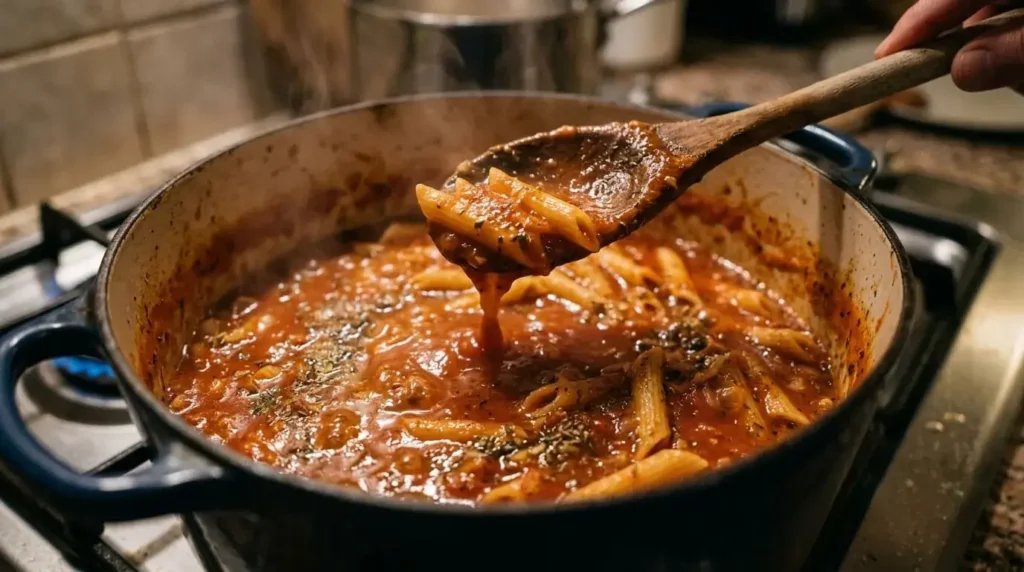
This is the step that determines whether your sauce turns out silky or thin. For this, keep the pot at a steady and gentle simmer (not a hard boil) and stir every 2 minutes or so. Because the pasta is cooking in a shallower volume of liquid than a full pot of boiling water, it’s more prone to sticking to the bottom if left alone too long.
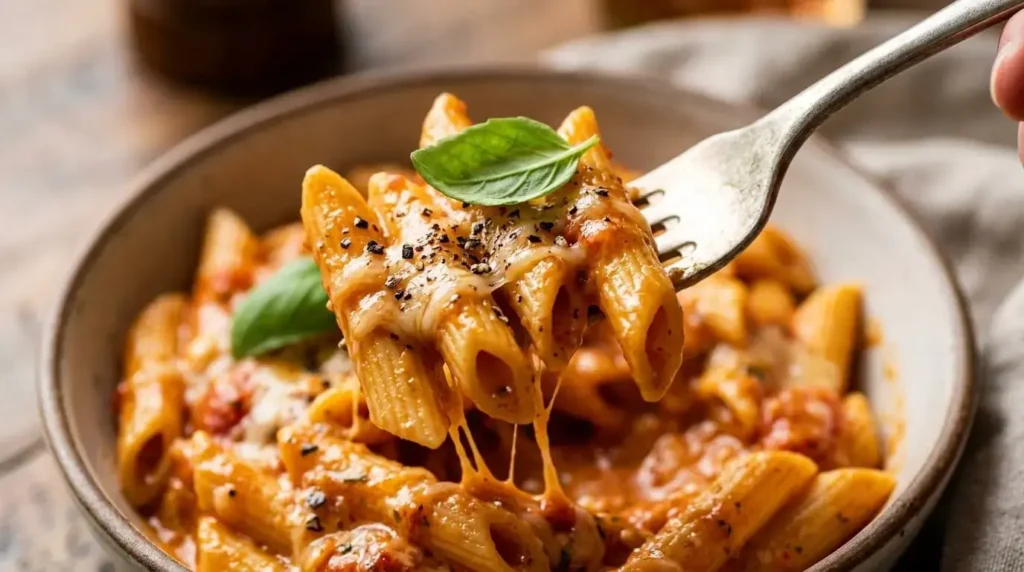
What should happen: Over 12 to 14 minutes, you’ll see the sauce visibly darken and thicken as starch releases from the pasta. Additionally, the pasta itself should soften from stiff and pale to tender with a slight bite (al dente) by the end.
Visual cue for doneness: Drag your spoon across the bottom of the pot. If the sauce briefly holds a clear trail before flowing back together, it’s thickened enough.
Common mistake: Walking away for several minutes at a time. Remember: Even a well-seasoned pot can develop a scorched layer on the bottom in that window, which will taste bitter if stirred back into the sauce.
Step 4: Lower the Heat and Add the Cream
Turn the heat down to low before adding the cream; you want small and lazy bubbles, not an active simmer. So, stir in the heavy cream and let it warm through for about a minute.
Why this order matters: Tomatoes are acidic and dairy proteins can curdle when acid and high heat hit at the same time. So, lowering the heat first is what keeps the sauce smooth instead of slightly grainy.
Step 5: Remove from Heat and Stir in the Cheese
Take the pot completely off the burner before adding the parmesan. And stir until it melts into the sauce and turns glossy.
Common mistake: Adding cheese while the pot is still over direct heat. And this is the single most common cause of clumpy and stringy sauce in creamy pasta recipes – the proteins in the cheese seize up in the heat instead of melting smoothly into the liquid.
Step 6: Rest, Then Serve
Let the pasta sit off the heat for about 2 minutes before serving. By doing this, the sauce will noticeably thicken during this short rest; that’s expected, not a sign of overcooking. Finally top with torn basil and extra parmesan.
Sauce Texture Diagnostic: Watery, Gluey or Curdled?
If something looks off, this is usually the fastest way to identify what happened:
| Symptom | Cause | Fast Fix |
| Watery – sauce pools instead of clinging to the pasta | Not enough starch has released yet or too much liquid was used | Simmer uncovered a few more minutes before adding the cream |
| Gluey – sauce is pasty and overly thick | Too little liquid or it cooked down too far | Loosen with warm broth or water, a tablespoon at a time |
| Curdled – sauce looks grainy or slightly separated | Cream or cheese hit the pot while it was too hot | Remove from heat, let cool briefly and whisk in a small splash of cold cream |
Pro Tips for the Best One-Pot Creamy Tomato Pasta
- Grate your own parmesan; pre-shredded cheese contains anti-caking starch that can make the sauce grainy.
- Taste the sauce before adding the cream; it’s easier to fix acidity or seasoning before dairy is involved.
- If the sauce tastes sharp or tinny, a small pinch of sugar or a pat of butter rounds it out without making it sweet.
- Keep the heat at a gentle simmer, not a rolling boil and once the pasta goes in; a hard boil cooks the outside of the pasta faster than the inside.
- Stir every couple of minutes during the main simmer to prevent scorching on the bottom.
- Always add cream and cheese off or at very low heat to avoid curdling or clumping.
- Let the pasta rest for 2 minutes before serving; the sauce thickens noticeably during this time.
- If the sauce looks too thick after resting, loosen it with a small splash of hot water or broth rather than more cream.
- Choose ridged or curved pasta shapes; they physically hold more sauce per bite than smooth noodles.
- To keep control over final seasoning, use low-sodium broth if you’re also using a salty canned tomato brand.
- Add red pepper flakes early, with the other dried seasonings, so the heat has time to infuse through the sauce.
- If doubling the recipe, use a wider pot rather than a deeper one; pasta needs enough surface contact with the liquid to cook evenly.
- Reserve a little extra broth on the side in case the sauce reduces faster than expected.
- Finish with fresh basil rather than cooking it into the sauce; it keeps the bright and fresh flavor intact.
- When reheating leftovers, add liquid before heating, not after – it absorbs more evenly.
Common Mistakes and How to Fix Them
| Problem | Likely Cause | How to Fix It |
| Watery sauce | Pulled off heat before enough starch released | Simmer uncovered a few more minutes before adding cream |
| Curdled or grainy sauce | Cream or cheese added while sauce was still at a hard simmer | Remove from heat, let cool slightly, whisk in a small splash of cold cream |
| Mushy pasta | Heat too high or pasta sat too long after finishing | Check doneness a couple of minutes early, especially on hot stoves |
| Undercooked pasta, no liquid left | Liquid evaporated faster than pasta cooked | Add a splash of hot water or broth, cover and simmer a few more minutes |
| Too acidic | Tomato brand naturally sharper | Stir in a pinch of sugar or small pat of butter |
| Too salty | Salty broth or tomato brand, plus added salt | Add a splash of unsalted broth or water to dilute, adjust seasoning at the end next time |
| Sauce too thick | Cooked down too far before cream was added | Loosen with hot water or broth, a tablespoon at a time |
| Burnt bottom | Pot left unstirred too long during simmering | Stir every 2 minutes; switch to a heavier pot if this happens repeatedly |
| Cheese clumping | Cheese added over direct heat | Always remove pot from heat before stirring in cheese |
| Bland flavor | Under-seasoned or acidity not balanced | Taste before serving; adjust salt and add a pinch of sugar if the tomato tastes flat or sharp |
Best Ingredient Substitutions
Dairy-Free
To make it dairy-free, swap heavy cream for full-fat canned coconut milk or unsweetened oat cooking cream and use a dairy-free parmesan-style alternative or nutritional yeast in place of parmesan.
Flavor: coconut milk adds a faint sweetness; oat cream is closer to neutral.
Texture: slightly less silky than dairy cream, but still creamy.
Success rate: high, with no change to cooking time.
Vegan
Combine the dairy-free swap above with a plant-based butter or extra olive oil in place of any dairy fat.
Flavor: mild, savory and less rich than the dairy version.
Success rate: high, as this is one of the more reliable vegan adaptations of a cream sauce.
Gluten-Free
Use a gluten-free short pasta shape made from rice, corn or a rice-corn blend.
Texture: these cook slightly faster and can turn mushy if simmered too long, so start checking for doneness a couple of minutes early.
Success rate: high with attentive timing.
Higher Protein
Stir in shredded rotisserie chicken, browned Italian sausage or a can of drained white beans.
Flavor: meat adds savory depth; beans add a milder and earthier note.
Texture: heartier and more filling.
When to add: during the last few minutes so pre-cooked proteins just warm through.
Lower Fat
Use half-and-half instead of heavy cream and reduce the parmesan slightly.
Flavor: a little less rich and slightly more tomato-forward.
Texture: thinner sauce, more prone to a light curdle if the heat isn’t kept low.
Success rate: moderate and requires more careful heat control than the original.
Different Pasta Shapes
Shells and farfalle work as well as penne or fusilli. And long noodles like spaghetti are not recommended, since they clump rather than cook evenly in a shallow simmer.
Different Tomatoes
Diced tomatoes give a chunkier sauce. Because tomato purée is thinner and needs slightly less broth. And fire-roasted crushed tomatoes add a subtle smoky note.
Different Cream Options
Half-and-half or whole milk both work but carry more curdling risk than heavy cream, especially if added while the sauce is still hot.
Different Cheeses
Pecorino Romano is a sharper and saltier substitute for parmesan – reduce added salt slightly if using it. Also, asiago is a milder option with similar melting behavior.
Easy Variations
High Protein: Stir in a drained can of white beans or chickpeas during the last few minutes. It works well for anyone wanting more protein without added meat.
Chicken: Add shredded rotisserie chicken during the last 2-3 minutes, just to warm through. It’s a good option for using up leftover chicken.
Shrimp: Add raw and peeled shrimp during the last 3-4 minutes of simmering; they cook quickly and turn tough if added too early. It’s best for a slightly more elegant version of the dish.
Italian Sausage: Brown sliced or crumbled sausage in the pot before the onions, then continue the recipe as written. It adds significant savory depth; best for those who want a heartier, meatier dish.
Spinach: Stir in a few handfuls of baby spinach at the very end until wilted. It adds color and nutrients without changing the cooking time.
Kale: Add chopped and stemmed kale a few minutes before the pasta is done, since it needs slightly longer than spinach to soften.
Mushrooms: Sauté alongside the onions for a savory and earthy addition. One of the best for mushroom lovers who want extra umami depth.
Roasted Red Peppers: Stir in sliced jarred roasted red peppers during the last few minutes for a sweet and slightly smoky note.
Sun-Dried Tomatoes: Add chopped sun-dried tomatoes with the crushed tomatoes for a more concentrated, tangy tomato flavor.
Extra Vegetables: Frozen peas or diced zucchini both work well added in the last few minutes of cooking.
Spicy Version: Increase red pepper flakes or add a diced fresh chile with the onion. Wik is best for those who prefer a sauce with real heat rather than a background warmth.
Kid-Friendly Version: Skip the red pepper flakes entirely and stir in a little extra parmesan for a milder and cheesier result.
Extra Cheesy Version: Increase parmesan to ¾ cup and add a handful of shredded mozzarella off the heat for extra richness and stretch.
What to Serve With It
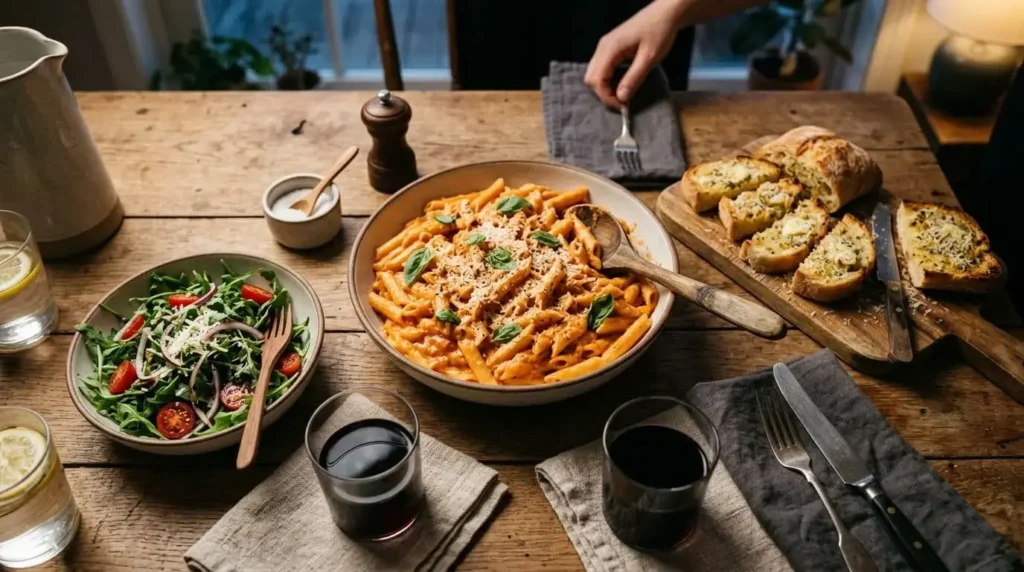
Salads: A simple arugula salad with lemon and olive oil cuts through the richness of the sauce without competing with it.
Garlic Bread: A classic pairing, in which the bread is ideal for scraping up leftover sauce from the bowl.
Vegetables: Roasted broccoli or a simple sautéed green like green beans adds freshness and balances the creaminess of the pasta.
Soups: A light minestrone or vegetable soup as a starter keeps the meal from feeling too heavy overall.
Protein Pairings: Grilled chicken or a simple pan-seared fish on the side works well if you want to keep the pasta itself vegetarian but add protein separately.
Drinks: Sparkling water with lemon is a refreshing and palate-cleansing option alongside the rich sauce.
How to Store Leftover Creamy Tomato Pasta
Store leftovers in an airtight container in the refrigerator for up to 4 days. Additionally, use shallow containers rather than one deep one; pasta cools faster and more evenly, which is better for food safety.
Signs it should be discarded: an off or sour smell, visible mold or a slimy texture on the surface.
Freezing: Cream-based sauces don’t freeze especially well – the dairy tends to separate slightly as it thaws, leaving a somewhat grainy texture even after reheating. Though it’s still safe and edible frozen for up to 2 months, just less silky than fresh.
How texture changes in storage: The pasta continues to absorb sauce as it sits, so leftovers will look thicker and denser straight out of the fridge than they did fresh. However, this is normal and is fixed easily with a splash of liquid during reheating.
How to Reheat It Without Losing the Creamy Texture
Stovetop (best method): Warm over low heat in a pot or skillet with a splash of milk, cream or broth stirred in. After that, stir frequently and heat gently; high heat risks separating the sauce again. It takes about 5 minutes for a single portion.
Microwave: Add a splash of liquid, cover loosely and heat in 30-second intervals, stirring between each one. This prevents hot spots that can cause the sauce to separate unevenly.
Oven: Place pasta in an oven-safe dish, add a splash of liquid, cover with foil and warm at 325°F (163°C) for about 15-20 minutes. It’s best for reheating a larger batch at once rather than a single serving.
Common mistake across all methods: Reheating without adding any liquid first. Additionally, the sauce firms up significantly in the fridge and reheating it dry tends to leave it looking broken or overly thick.
Ingredients
Equipment
Method
- Heat olive oil in the pot over medium heat. After that add the onion and cook until soft. Now, stir in garlic for the last 30 seconds, then add the tomato paste and cook and stirring, for about a minute until it darkens slightly.
- Add crushed tomatoes, broth, pasta, oregano, salt and pepper (and red pepper flakes if using). After that stir and bring to a simmer.
- Simmer uncovered, stirring every couple of minutes, until the pasta is tender and the sauce has thickened, 12-14 minutes.
- Lower the heat, stir in the cream and let it warm gently for about a minute.
- Remove from heat entirely and stir in the parmesan until melted and glossy.
- Finally, rest for 2 minutes, then top with basil and extra parmesan before serving.
Notes
Chef Notes
The sauce will look slightly thinner than you expect right when the cheese goes in; it thickens noticeably during the 2-minute rest, so resist the urge to add extra liquid right away.Nutrition Disclaimer
Nutrition values are estimates based on standard ingredient data and will vary depending on the specific brands used, especially the broth and canned tomatoes.Storage Summary
Refrigerate in an airtight container for up to 4 days.Freezer Friendly
Not ideal, because the cream-based sauce tends to separate slightly when thawed. Freezing is possible but the texture won’t be as smooth as fresh.Make Ahead
Best cooked fresh, but onions and garlic can be prepped a day ahead and refrigerated.Make-Ahead Guide
What can be prepped ahead: Dice the onion and mince the garlic up to a day in advance and store them refrigerated in a sealed container. Also, grate the parmesan ahead of time as well.
What should be cooked fresh: The full simmer itself – the pasta continues absorbing sauce over time, so cooking it fully ahead and reheating it later changes the texture more noticeably than with a non-pasta sauce.
Storage timeline: Prepped vegetables keep for about 24 hours in the fridge before they start to lose freshness.
Meal prep recommendation: If you want this ready for multiple meals, it reheats better as leftovers within 4 days than it holds up being fully cooked far in advance.
Nutrition (Estimated, Per Serving)
| Nutrient | Amount |
| Calories | ~410 kcal |
| Protein | ~14 g |
| Carbohydrates | ~56 g |
| Fat | ~15 g |
| Fiber | ~4 g |
| Sugar | ~7 g (mostly natural, from tomatoes) |
| Sodium | ~550 mg |
Figures above are calculated for 6 servings from this recipe, which lines up with the typical 350-450 kcal range seen across creamy tomato pasta recipes generally. And if you split the pot into 4 larger portions instead, scale these numbers up by about 1.5x. These are estimates based on standard ingredient values and will vary depending on the specific brands of broth, canned tomato and cheese used – sodium in particular can shift significantly between brands. And for exact figures, run the specific products you use through a nutrition calculator.
Ways to adjust the nutrition profile:
- Higher protein: Stir in white beans, chicken or a scoop of cottage cheese blended into the sauce.
- Higher fiber: Use a whole-wheat or legume-based pasta or add extra vegetables like spinach or zucchini.
- Lower sodium: Use low-sodium broth and no-salt-added canned tomatoes, then season to taste at the end.
- Lower fat: Use half-and-half instead of heavy cream and reduce the parmesan slightly.
- More vegetable-rich: Add spinach, kale, mushrooms or roasted red peppers as described in the variations section.
For general guidance on balanced meals and sodium intake, resources like the USDA’s dietary guidelines and the American Heart Association’s sodium recommendations are useful references.
Frequently Asked Questions
How do you make one-pot creamy tomato pasta?
Sauté onion and garlic, add crushed tomatoes, broth and pasta. After that, simmer until the pasta is tender and the sauce has thickened. Finally, finish with cream over low heat, then stir in parmesan off the heat entirely.
Can you freeze creamy tomato pasta?
Yes, but the texture suffers somewhat – cream sauces tend to separate slightly as they thaw. It’s safe to eat for up to 2 months frozen, just less silky than when it was fresh.
What pasta works best for creamy tomato sauce?
Short, ridged or curved shapes like penne, fusilli, rotini or shells. Because, they hold sauce better and cook more evenly in a shallow pot than long noodles like spaghetti.
Why did my sauce curdle?
The cream or cheese most likely hit the pot while it was still at a hard simmer. Tomato’s acidity, combined with high heat, is what causes dairy proteins to separate. Additionally, keeping the heat low when cream goes in and adding cheese completely off the heat prevents this.
Can I use milk instead of heavy cream?
Yes, though the sauce will be thinner and more prone to separating, since milk has far less fat to buffer against the tomato’s acidity. Make sure to keep the heat as low as possible if you make this swap.
Why is my sauce too acidic?
Canned tomato acidity varies significantly by brand. Although a small pinch of sugar or a pat of butter stirred in balances it without making the dish taste sweet.
Can I make this ahead of time?
It’s best fresh, since the pasta keeps absorbing sauce as it sits. Incase, if you do make it ahead, slightly undercook the pasta and add a splash of extra broth when reheating.
Is this recipe kid-friendly?
Yes, it’s naturally mild. So skip the red pepper flakes for an even gentler version and add extra parmesan if your kids prefer a cheesier flavor.
How do I make this dairy-free?
Substitute full-fat canned coconut milk or unsweetened oat cooking cream for the heavy cream and use a dairy-free parmesan alternative or nutritional yeast in place of the cheese.
Why is my pasta mushy?
The heat was likely too high or it sat too long after finishing cooking. So start checking for doneness a couple of minutes before the recipe’s stated time, especially on a hot stove.
Can I double this recipe?
Yes, use a wider pot rather than a deeper one, so the pasta has enough surface contact with the liquid to cook evenly.
What can I add for more protein?
Shredded rotisserie chicken, browned Italian sausage, shrimp or white beans all work well, added toward the end of cooking so they just warm through.
Can I make this without heavy cream at all?
Yes, a tomato sauce enriched with just the pasta starch and a generous handful of Parmesan will still taste rich, but less silky than with cream. Although it’s a reasonable option if you’re out of cream or want a lighter dish.
Can I use tomato sauce instead of crushed tomatoes?
Yes, though tomato sauce (sometimes labeled tomato purée) is thinner, so you may want to use slightly less broth to keep the same final consistency.
Should I undercook the pasta if I’m planning on leftovers?
Yes, pasta keeps absorbing sauce even after it’s off the heat and in the fridge, so pulling it slightly before fully al dente helps it maintain its texture better the next day.
What’s the right amount of liquid to use for one-pot pasta?
As a starting point, plan on roughly 1 cup of combined broth and tomato liquid for every 2 ounces of dry pasta, then adjust slightly based on the shape you’re using – denser shapes can absorb a bit more.
What vegetables go well with creamy tomato pasta?
Spinach and kale both wilt easily at the end, peas add a pop of sweetness and roasted red peppers or sautéed mushrooms add extra depth without changing the cooking time.
External References
Use sparingly, only where they strengthen trust rather than as decoration:
- USDA FoodData Central – general ingredient nutrition values
- Academy of Nutrition and Dietetics – general dietary balance guidance
- Harvard T.H. Chan School of Public Health – general healthy eating framework
- Serious Eats – supporting general cooking-science claims (starch thickening, dairy behavior with acid)
- King Arthur Baking – supporting general pasta-cooking fundamentals