
Zucchini Noodles Stir-Fry in 15 Minutes – Quick Answer
Zucchini noodles turn into a genuine 15-minute dinner once you stop treating them like a science project. Spiralize, stir-fry hot and fast and pull them off the heat before they turn soft – that’s the whole method behind this low-carb zucchini noodle stir-fry. If you keep a rotation of 15-minute meals on hand for busy nights.This one earns a permanent spot.
Quick Answer
- Time: 15 minutes
- Yield: 4 servings
- Best texture: tender-crisp, never mushy
- Best tool: a countertop spiralizer (a peeler or knife works fine too)
- Key moisture rule: cook zucchini noodles briefly over high heat, then remove them from the pan immediately
- Beginner tip: don’t crowd the pan – crowding is the #1 cause of a watery skillet
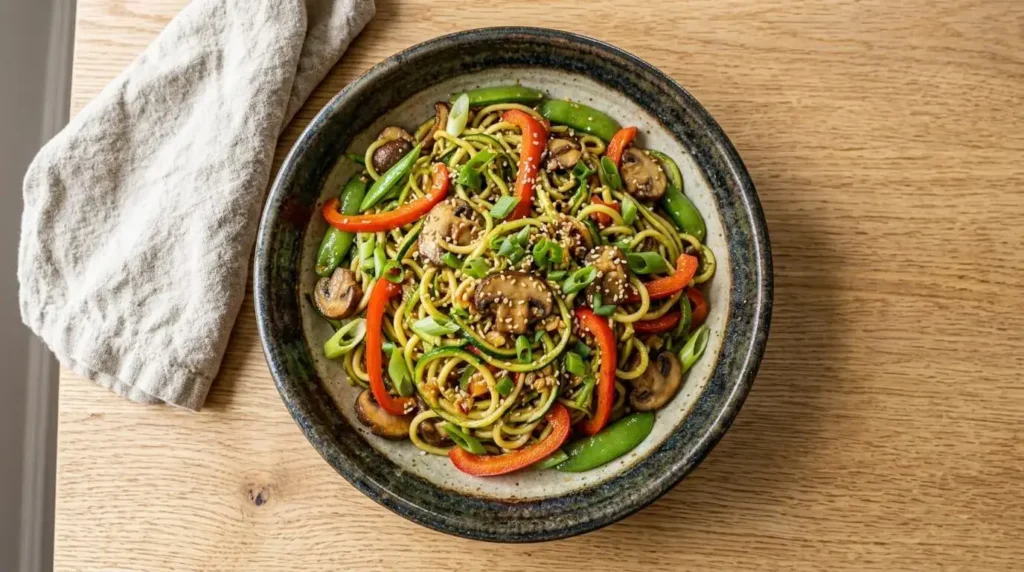
Why These Zucchini Noodles Work for a 15-Minute Dinner
Zucchini has a mild, faintly sweet flavor that takes on whatever sauce you toss it in which is exactly why it works as a stand-in for pasta. Cooked briefly so the strands stay crisp-tender instead of going limp the way wheat noodles do when they overcook and that texture is the whole appeal of a good zoodle. Because zucchini is mostly water and fiber rather than starch. This dish naturally lands in low-carb recipes without any special substitutions. The stir-fry method is what makes it fast: everything cooks in one pan and the zucchini itself needs less than two minutes.
It’s worth saying plainly that “low-carb” describes this specific dish not a verdict on carbohydrates in general. Harvard’s Nutrition Source points out that the type of carbohydrate you eat matters more than simply how much of it you eat so treat this as one good, fast dinner option rather than a statement about carbs overall.
How to Make Zucchini Noodles
Choose and spiralize firm zucchini
Reach for medium zucchini that feel firm and heavy for their size – soft or bendy ones release more water. Wash and dry them well then leave the skin on; it holds the noodle together and adds color. Spiralize down to the soft, seeded core and stop there since that center section falls apart in the pan. Aim for medium-thick strands rather than the thinnest setting – very thin zoodles cook (and overcook) almost instantly.
No spiralizer? Use what you already have
You don’t need a spiralizer to make zucchini noodles. A julienne peeler cuts thin strands with almost no effort so a regular Y-peeler makes wide ribbons.A mandoline with a julienne blade works quickly for larger batches and a sharp chef’s knife can turn zucchini into thin matchsticks by hand. Any of these gets you dinner tonight – pick whichever tool is already in your drawer.
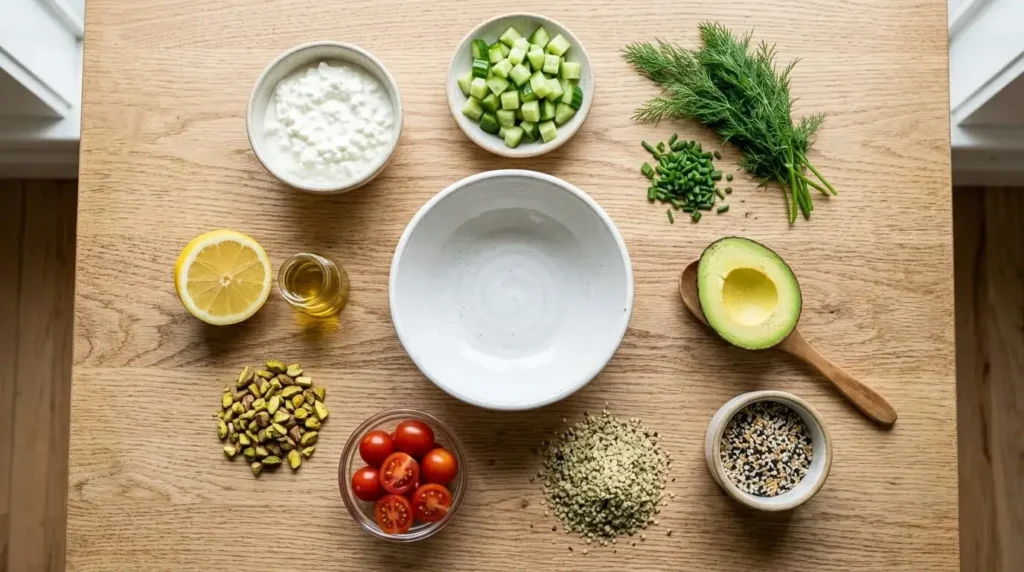
Should you salt zucchini noodles first?
This is where most zoodle tutorials contradict each other so here’s the straight answer: For this 15-minute version, don’t pre-salt. Instead use firm zucchini, avoid the watery seeded center, cook in a wide, very hot pan, don’t crowd it, keep the zucchini in the pan for well under two minutes and add your sauce near the very end. Salting and draining is a legitimate moisture-control method – it’s just a slower one useful if you have 20-30 extra minutes and want the driest possible noodle not something this recipe needs.
The first time I tested this I salted the zucchini out of habit, drained it for 20 minutes and blew right past my 15-minute window. Skipping the salt and just cooking hot and fast got me the same tender crisp result in a fraction of the time.
Which Cooking Method Is Best for Zucchini Noodles?
Zucchini noodles can be cooked half a dozen ways and the method you choose changes both the texture and how much liquid ends up in your pan.
| Method | Approx. time | Texture | Best for | Moisture risk |
| Quick stir-fry | 60-90 sec | Tender-crisp | Fast dinner | Low-medium |
| Raw | 0 min | Firmest | Salads/warm sauce | Low |
| Microwave | Short | Soft-tender | Convenience | Medium |
| Oven | Longer | Drier/soft | Moisture control | Low |
| Boiling | Very short | Soft | Limited use | High |
For a 15-minute dinner a quick stir-fry in a wide hot pan wins: it’s faster than the oven gives a better bite than the microwave and doesn’t dump the noodles into standing water the way boiling does. Raw zoodles are great for a salad but they’re not what you want in a warm, saucy stir-fry.
How to Make the 15-Minute Zucchini Noodle Stir-Fry
0-3 minutes – Make the sauce and prep the noodles
Whisk together soy sauce or tamari, rice vinegar, a little toasted sesame oil, minced garlic and grated ginger. Stir in a small amount of cornstarch if you want the sauce to cling rather than pool, plus red pepper flakes if you like heat. Set the sauce aside – it goes in near the end not now.
3-7 minutes – Cook the protein or firm vegetables
This recipe is vegetable-based at its core, with chicken, shrimp or tofu as optional add-ins. If you’re adding protein cook it now before anything else goes into the pan – it needs to be fully cooked and out of the way before the zucchini arrives so it isn’t sitting in a crowded, wet pan at the end.
7-11 minutes – Stir-fry the vegetables
Add vegetables that can handle a few minutes of heat without going mushy: sliced bell pepper, mushrooms, onion or small broccoli florets all work well here. Keep everything in a single, uncrowded layer so the pan stays hot and dry rather than steamy – that’s what sets up a good final step.
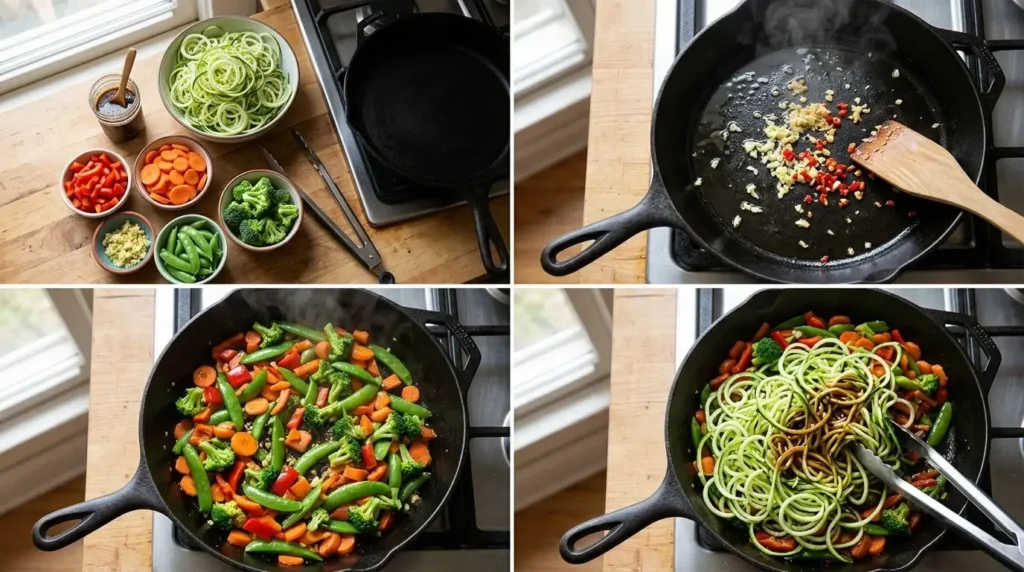
11-13 minutes – Add zucchini noodles
Turn the heat to high. Add the zucchini noodles to the wide skillet and toss gently with tongs rather than stirring aggressively which breaks the strands. Give them 60-90 seconds no more. Pour in the sauce right at the end of this window so tossing just enough to coat everything. The goal is noodles that still have a little resistance when you bite them – not noodles that have gone limp.
13-15 minutes – Finish and serve
Pull the pan off the heat the moment the noodles are glossy and coated. Top with sliced scallions, sesame seeds and a pinch of chili flakes or a squeeze of lime if you want brightness, then serve right away. Zucchini keeps cooking from residual heat even off the burner so a pan left sitting on the stove or noodles left waiting on a warm plate – will go soft within minutes. Get it to the table while it’s still glossy and firm.
Zucchini Noodle Doneness & Temperature Guide
Zucchini doneness is a texture call not a food-safety temperature but if you’re adding protein that part does need a thermometer.
| What you’re cooking | Target | How to tell |
| Zucchini noodles | 60-90 sec | Glossy, flexible, still slightly firm |
| Thin/ribbon noodles | 30-60 sec | Just heated through |
| Chicken | 165°F | Verify with a food thermometer |
| Fish/seafood | 145°F | Verify with a food thermometer |
| Leftovers when reheating | 165°F | Verify with a food thermometer |
The FDA’s guidance on safe food handling is clear that color and texture aren’t reliable indicators for meat, poultry or seafood. A thermometer is the only way to confirm poultry has reached a safe temperature and fin fish has reached its target. Zucchini itself doesn’t carry that requirement; its “done” point is about texture, not safety.
Troubleshooting Zucchini Noodles
Almost every zucchini noodle complaint traces back to one of these fixes.
| Problem | Likely cause | Fix |
| Watery pan | Crowding/too much liquid | Spread noodles out raise the heat remove zucchini and reduce the sauce separately |
| Mushy noodles | Overcooking | Pull them earlier shorten the final cook to 60-90 seconds |
| Broken noodles | Too much tossing/thin strands | Cut thicker strands and use gentle tongs |
| Bland noodles | Sauce diluted by released water | Reduce the sauce separately or use a thicker sauce |
| Raw vegetables | Added too late | Cook firmer vegetables before the zucchini goes in |
| Too salty | Salt plus a salty sauce combined | Skip the pre-salt step and use low-sodium soy sauce or tamari |
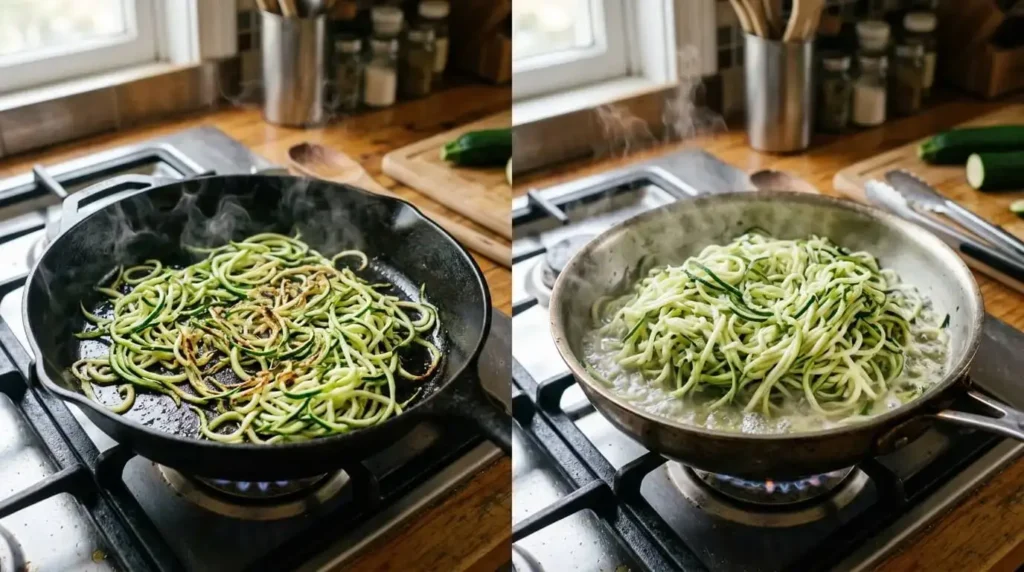
How to rescue a watery stir-fry
If your pan does turn watery don’t keep cooking the zucchini to try to evaporate it – that just leads to mushy noodles. Instead lift the zucchini out with tongs and leave the liquid behind in the pan. Turn up the heat and let the sauce reduce on its own adding a small cornstarch slurry if it needs to thicken faster. Return the zucchini and toss it just long enough to get coated in that tightened sauce.
Substitutions & Variations
| If you don’t have… | Use… |
| Soy sauce | Tamari or coconut aminos |
| Shrimp | Chicken or tofu |
| Bell pepper | Snap peas or broccoli |
| Sesame oil | Neutral oil + sesame seeds |
| Fresh ginger | A smaller amount of ground ginger |
| Spiralizer | Julienne peeler or Y-peeler |
Add chicken, shrimp or tofu
Stir in cooked sliced chicken or cubed tofu during the vegetable step so it just needs reheating; raw shrimp can go in with the vegetables and cook through in a few minutes. If you’re using raw poultry then cook it separately first and confirm 165°F with a food thermometer before it goes anywhere near the zucchini. Looking for a different weeknight protein entirely? This 15-minute salmon recipe follows the same fast, one-pan logic and if you’d rather skip meat altogether tofu keeps this fully in line with our vegan recipes.
Make it gluten-free
Swap in a certified gluten-free tamari in place of regular soy sauce and double-check any packaged sauces or condiments you add since gluten can hide in unexpected places.
Craving something in the same vein? Our vegan chickpea stir-fry uses a similar sauce-forward approach and egg roll in a bowl is another fast low-carb dinner built around the same stir-fry-and-serve idea.
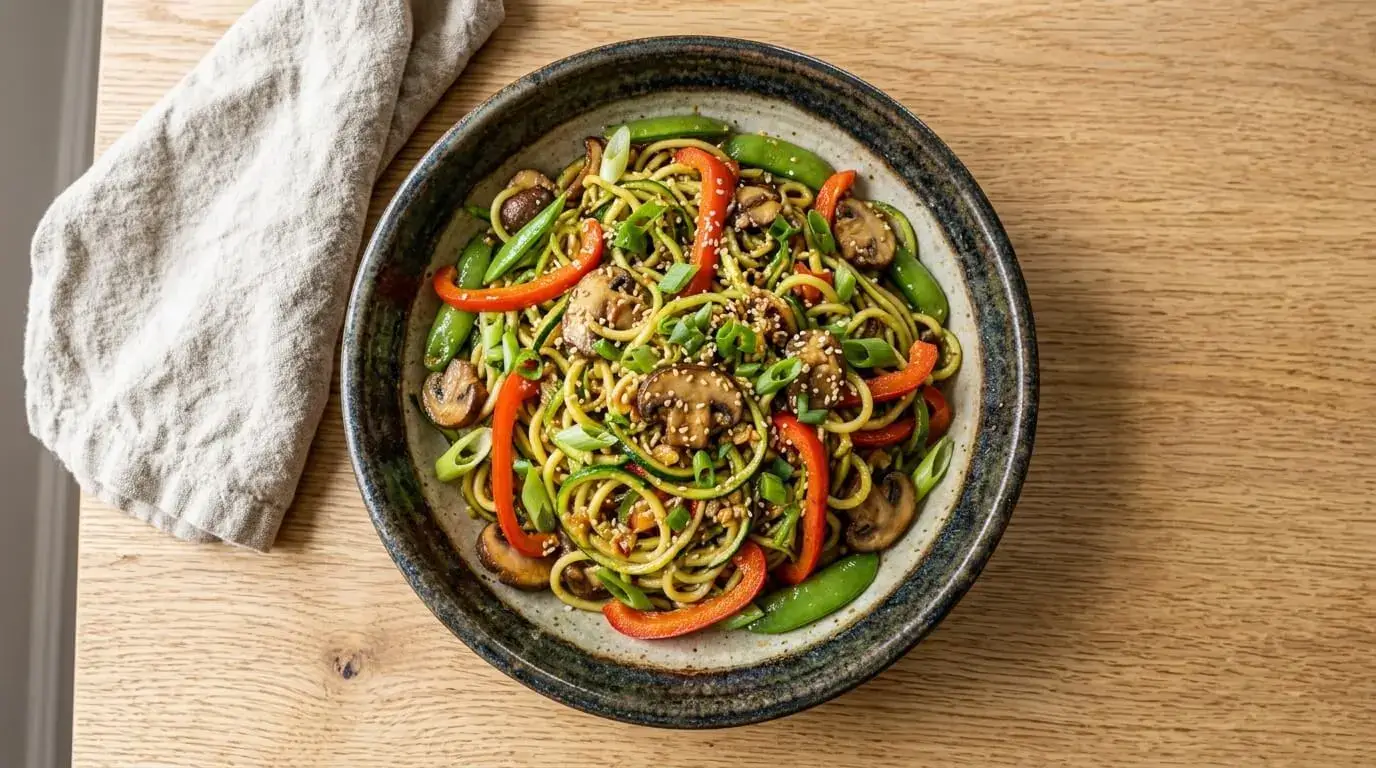
15-Minute Low-Carb Zucchini Noodle Stir-Fry
Ingredients
Method
- Spiralize the zucchini, leaving the skin on and stopping before the soft seeded center. Pat the noodles dry if they’re visibly wet.
- Whisk together soy sauce or tamari, rice vinegar, sesame oil, cornstarch, and red pepper flakes.
- Heat a wide skillet over medium-high/high heat. Add oil, then cook bell pepper and mushrooms until just tender.
- Add garlic and ginger and cook briefly until fragrant.
- Add optional cooked protein, if using, and heat through.
- Add zucchini noodles and toss gently over high heat for 60-90 seconds.
- Pour in the sauce and toss for another 20-30 seconds, just until the noodles are glossy and coated.
- Remove from heat immediately. Top with scallions and sesame seeds and serve.
Notes
- Do not pre-salt the zucchini for the standard 15-minute version.
- Do not overcrowd the skillet.
- Stop cooking while the noodles still have slight resistance.
- For larger quantities, cook the zucchini in batches.
- The zucchini continues softening from residual heat, so serve promptly.
- If adding raw chicken, cook it separately or first and verify 165°F with a food thermometer.
- If adding seafood, follow FDA/USDA safe-cooking guidance.
- Calories: ~108
- Protein: ~4-5 g
- Total carbohydrates: ~12 g
- Fiber: ~3-4 g
Storage & Reheating
How to store raw zucchini noodles
Pat spiralized zucchini dry before storing it line the container with a paper towel to absorb any moisture that releases over time and keep the noodles separate from the sauce until you’re ready to cook. Refrigerate and use within a few days for the best texture.
How to store and reheat cooked zucchini noodles
Cooked zoodles lose their tender-crisp texture faster than raw-prepped ones so expect a softer result the second time around. For food safety refrigerate leftovers promptly and use them within a few days – the USDA’s guidance on leftovers recommends refrigerating promptly and reheating thoroughly. For the best texture reheat briefly in a hot skillet rather than the microwave and avoid reheating more than once – repeated reheating softens the noodles further each time.
Meal Prep Notes
The smartest way to meal-prep this dish is by component not as a finished dish spiralize the zucchini chop the stir-fry vegetables, mix the sauce and cook the protein ahead of time then store each piece separately in the fridge. Keep the garnishes ready to go too. The one rule worth remembering: cook the zucchini noodles fresh at serving time rather than ahead since that’s the part that loses texture fastest. This approach fits neatly into a broader meal prep recipes routine and if you’re looking for more ways to keep dinner fast on busy weeks, quick, healthy meals is a good next stop.
Nutritional Information
Per serving: for the base vegetable version of this recipe:
- Calories: ~108
- Protein: ~4-5 g
- Total carbohydrates: ~12 g
- Fiber: ~3-4 g
- Net carbohydrates: ~8-9 g
- Fat: ~7 g
- Sodium: varies by soy sauce or tamari brand
These are recipe-level estimates not lab measurements and they’ll shift depending on the exact brands and quantities you use – especially the sauce which is the main variable for sodium and calories. Zucchini itself is naturally low in both calories and carbohydrates; Cleveland Clinic notes that it’s a nutrient-dense vegetable worth including regularly. Adding chicken, shrimp or tofu will raise the protein and calorie totals and it’s worth remembering that “low-carb” describes this specific dish rather than a guarantee that any low-carb food is automatically the healthier choice.
Frequently Asked Questions About Zucchini Noodles
How do you keep zucchini noodles from getting watery?
Use firm zucchini, cook in a wide, hot, uncrowded pan and keep the zucchini in the pan for well under two minutes. Add sauce near the very end rather than early and pull the noodles off the heat the moment they’re glossy and coated.
How long do zucchini noodles take to cook?
In a hot pan zucchini noodles only need about 60-90 seconds. They continue softening from residual heat even after you take them off the burner so it’s better to slightly undercook than overcook them.
Can you make zucchini noodles without a spiralizer?
Yes. A julienne peeler a regular vegetable peeler for ribbons, a mandoline or a sharp chef’s knife will all turn zucchini into noodle-like strands without any special equipment.
Should you salt zucchini noodles before cooking?
Not for a fast weeknight version. Salting and draining removes extra moisture but it takes 20-30 minutes. Cooking briefly in a hot uncrowded pan achieves a similar result without the wait.
Do zucchini noodles taste like pasta?
Not exactly – zucchini has a mild slightly sweet flavor and a crisp-tender bite rather than pasta’s soft, starchy chew. It works well as a lighter low-carb stand-in that takes on whatever sauce you pair it with.
Can you make zucchini noodles ahead of time?
You can spiralize zucchini a day or two ahead if you dry it well and store it separately from any sauce. For the best texture though cook the noodles themselves just before serving rather than reheating them later.
Can you reheat cooked zucchini noodles?
Yes, though they’ll be softer the second time around. A quick reheat in a hot skillet keeps the texture better than a microwave. Refrigerate leftovers promptly and use them within a few days for both quality and food safety.
Are zucchini noodles low-carb?
Yes – zucchini is naturally low in carbohydrates and calories compared to wheat pasta which is why it’s a popular pasta substitute. The overall carb count of a finished dish still depends on the sauce and any add-ins you use.
Whether you’re spiralizing for the first time or fixing a watery pan from a past attempt.This 15-minute zucchini noodle stir-fry is built to get a low-carb dinner on the table without a long ingredient list or a fussy technique.
1 thought on “Zucchini Noodles 15-Minute Low-Carb Stir-Fry”