
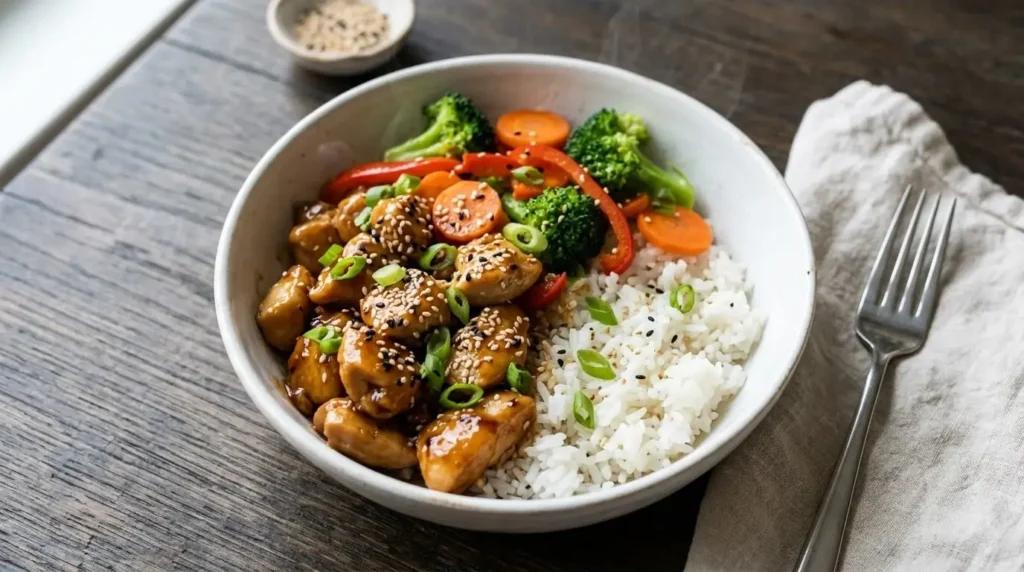
This teriyaki chicken bowl is seared bite-size chicken for quick-cooked vegetables and a glossy homemade sauce over rice. The whole thing lands on the table in about 20 minutes because the rice starts first everything is cut small and nothing needs marinating. If you want a chicken teriyaki bowl on a weeknight without a delivery fee. This teriyaki chicken rice bowl uses one skillet, one small bowl for the sauce and a short list of pantry staples. Below you’ll find the exact order of operations, plus fixes for the usual problems: watery sauce, dry chicken and soggy rice. More fast dinners live in our 20-minute meals collection.
Quick Answer: 20-Minute Teriyaki Chicken Bowl
- Time: 20 minutes total (8 prep, 12 cook)
- Servings: 4
- Chicken: 1 lb boneless skinless chicken breast, cut into ¾-inch pieces (thighs work too)
- Rice: Jasmine rice started first
- Sauce: Whisk soy sauce, honey or brown sugar, rice vinegar, garlic and ginger then thicken with a cornstarch slurry added gradually
- Safe temperature: Cook chicken to 165°F (74°C), checked with a thermometer
How to Make a Teriyaki Chicken Bowl in 20 Minutes
A 20-minute dinner only works when several things cook at the same time. The rice simmers on its own while you chop the sauce and takes one minute to whisk and the chicken needs your attention only after the first five minutes. If you’re wondering how to make a teriyaki chicken bowl without rushing then the answer is sequencing: start the longest, most hands-off task first, then fill that waiting time with prep.
Read the recipe once before you start. Set out the cutting board, a large skillet, a small bowl for the sauce and a second small bowl for the cornstarch slurry. Cooked rice is the one item with a hard deadline so it goes on the stove before you touch a knife. If you’re using leftover or pre-cooked rice then you’ll finish a few minutes early.
The 20-Minute Cooking Timeline
| Time | What you’re doing |
| 0:00 | Start the rice |
| 0:00-5:00 | Cut chicken and vegetables then whisk sauce and slurry |
| 5:00-10:00 | Sear chicken |
| 10:00-14:00 | Cook vegetables and finish chicken |
| 14:00-17:00 | Add sauce and thicken |
| 17:00-20:00 | Assemble bowls |
Why This Teriyaki Chicken Bowl Works
Each shortcut here has a reason behind it.
- Bite-size chicken browns and cooks through in minutes.
- No marinade: the sauce does the flavoring at the end so there’s no waiting.
- Quick sauce: five pantry ingredients and one slurry.
- Thin vegetable cuts cook in the same window as the chicken.
- Rice goes first, so it’s never the thing you’re waiting on.
- Controlled sauce addition keeps the bowl glossy instead of soupy.
Choosing the Chicken, Rice and Vegetables
Chicken Breast vs. Chicken Thigh
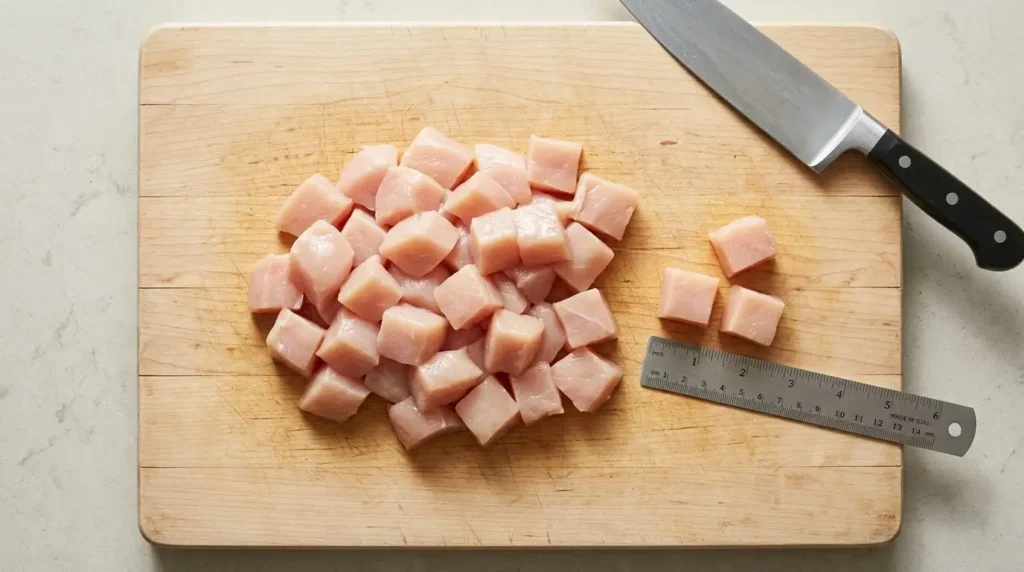
| Cut | Best for | Advantage | Watch-out |
| Breast | Lean, higher-protein bowls | Mild flavor easy to cube evenly | Dries out fast if overcooked |
| Thigh | Forgiving juicier results | More fat means more tolerance for extra minutes | Trim excess fat; pieces can cook unevenly |
Breast is the default in this recipe because it’s what most people have on hand. If you tend to overcook chicken then thighs are the safer choice. Our high-protein recipes collection has more lean chicken ideas.
What Rice Is Best for a Teriyaki Chicken Bowl?
Jasmine rice is the best all-around choice. It cooks in about the time this recipe allows stays fluffy and holds up under sauce. Sushi rice is stickier and softer which some people prefer for a sauce-heavy bowl. Brown rice is a good whole-grain option but takes much longer so use pre-cooked or microwaveable pouches to stay on schedule.
Which Vegetables Work Best?
Broccoli, carrots and red bell pepper are the core of this bowl. Edamame and snap peas are good additions because they need almost no prep.
Cut size matters more than the vegetable itself. Slice carrots thin to keep broccoli florets small and cut peppers into strips. Pat wet vegetables dry and don’t crowd the pan since released water thins the sauce.
How to Make the Teriyaki Sauce
Each ingredient has a job:
- Soy sauce: salt and savory depth. Low-sodium keeps the sauce from reducing into something too salty.
- Honey or brown sugar: sweetness and a glossy finish.
- Rice vinegar: a little acidity to balance the sweetness.
- Garlic and ginger: aromatic backbone.
- Cornstarch: thickens the sauce so it clings instead of pooling.
Homemade Teriyaki Sauce
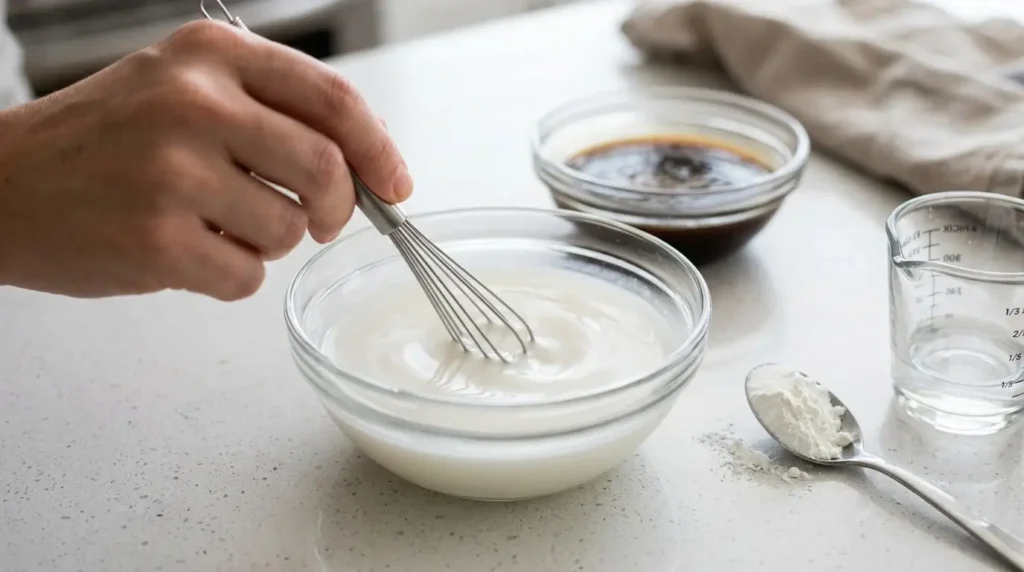
Whisk ¼ cup low-sodium soy sauce, 2 tablespoons honey or brown sugar, 1 tablespoon rice vinegar, 1 tablespoon water, 1 teaspoon grated ginger and 1 minced garlic clove in a bowl. In a separate small bowl, stir 1 tablespoon cornstarch into 2 tablespoons cold water.
How to Thicken Teriyaki Sauce Without Lumps
- Mix the cornstarch with cold water until completely smooth. Never add dry cornstarch to hot liquid.
- Pour the whisked sauce into the skillet and bring it to a gentle simmer.
- Re-stir the slurry right before using it since the starch settles.
- Drizzle in about half the slurry while stirring constantly.
- Simmer for 30 to 60 seconds and check the thickness before adding more.
- Stop when the sauce coats the back of a spoon.
Homemade vs. Bottled Teriyaki
Make it homemade when you want control over sodium and sweetness then it takes about a minute. Use bottled when you’re truly out of time or short on ingredients and taste before adding salt-heavy extras. Bottled sauces vary a lot in thickness and sodium so check the label and adjust the slurry accordingly.
Cooking Method Decision Guide
| Method | Speed | Best for | Main drawback |
| Skillet | Fast | Browning chicken and building the sauce in one pan | Needs a large pan to avoid crowding |
| Grill pan | Moderate | Grill marks and a smoky edge | Small pieces can stick or fall through ridges |
| Air fryer | Moderate | Hands-off chicken | Sauce must be made separately |
| Sheet pan | Slower | Cooking everything together | Sauce doesn’t reduce or thicken properly |
The skillet is the right call for this 20-minute recipe. It sears the chicken to cook the vegetables and thickens the sauce in a single pan with no extra dishes.
How to Know the Chicken Is Done
Doneness and Temperature Guide
| Check | What to look for |
| Consistent cube size | Pieces cut to about ¾ inch cook at the same pace |
| Visual cues | Golden-brown outside, no translucent pink centers; a helpful sign but not proof of safety |
| Thermometer | Insert into the thickest piece for an instant-read check |
| Safe temperature | 165°F (74°C), per USDA FSIS |
Color alone can’t tell you chicken is safe so use a thermometer for especially with small pieces that cook fast. Check a few of the largest pieces before adding the sauce.
How to Prevent a Watery Teriyaki Chicken Bowl
Most watery bowls come from the same few causes.
- Overcrowding steams the chicken instead of searing it. Cook in two batches if your pan is small.
- Chicken juices: pat the chicken dry before it hits the pan.
- Vegetable water: dry vegetables well and cut them small so they cook quickly.
- Sauce reduction: let the sauce simmer before judging its thickness.
- Slurry: add it gradually rather than all at once.
- Measured sauce: pour it over the bowl in controlled amounts not by the ladleful.
- Fluffy rice: fluff it with a fork and don’t let it sit under sauce.
How Much Sauce Should Go on Each Bowl?
Exact sauce amount per bowl that gave the best balance without making the rice soggy.
How to Fix Watery Teriyaki Sauce
Return the sauce to a gentle simmer and stir in a small amount of fresh cornstarch slurry (½ teaspoon cornstarch mixed with 1 teaspoon cold water). Simmer for 30 to 60 seconds. Repeat only if needed since too much slurry turns the sauce gummy.
Troubleshooting Teriyaki Chicken Bowls
| Problem | Likely cause | Fix |
| Watery sauce | Slurry not added or the sauce didn’t simmer long enough | Simmer then add a little fresh slurry |
| Gummy sauce | Too much cornstarch | Stir in a splash of water or broth and warm gently |
| Dry chicken | Overcooked or cubes cut uneven | Pull at 165°F, cut evenly consider thighs |
| Soggy rice | Too much sauce or sauced too early | Serve sauce in measured amounts just before eating |
| Burnt sauce | Sugar scorched over high heat | Lower the heat once sauce is added stir constantly |
| Soft vegetables | Cut too thin or cooked too long | Cut slightly thicker or add them later |
To check thickness, run a spoon through the sauce and draw a line with your finger across the back. If the line holds, it’s ready.
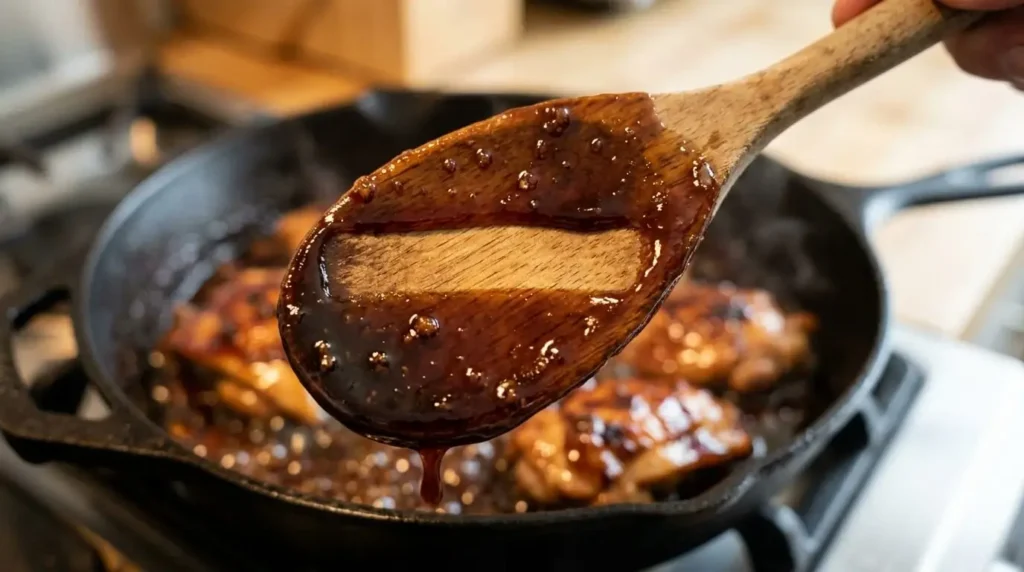
what you observed about sauce thickness at the point you stopped adding slurry.
Easy Substitutions and Variations
Protein Swaps
Use boneless chicken thighs for juicier results. Swap in extra-firm tofu, pressed and cubed for a vegetarian bowl (use the same sauce).
Rice and Base Swaps
Brown rice, quinoa, cauliflower rice or cooked rice noodles all work. Cauliflower rice releases water so squeeze or sauté it dry first.
Sauce Swaps
Tamari can replace soy sauce and bottled teriyaki works in a pinch. Honey and brown sugar are interchangeable. If you need gluten-free first read the label on every product you use since it varies by brand.
Storage, Reheating and Meal Prep
How to Store Teriyaki Chicken Bowls
Refrigerate leftovers promptly, within two hours, as USDA FSIS advises. Most cooked leftovers are kept for 3 to 4 days per USDA leftovers guidance. Store components separately when you can. For more planning help see our guide to meal prepping and meal prep recipes.
How to Reheat Without Drying the Chicken
Warm the chicken in a skillet with a small splash of water to keep it tender. Whatever method you use reheat leftovers to 165°F (74°C).
Meal-Prep Layering
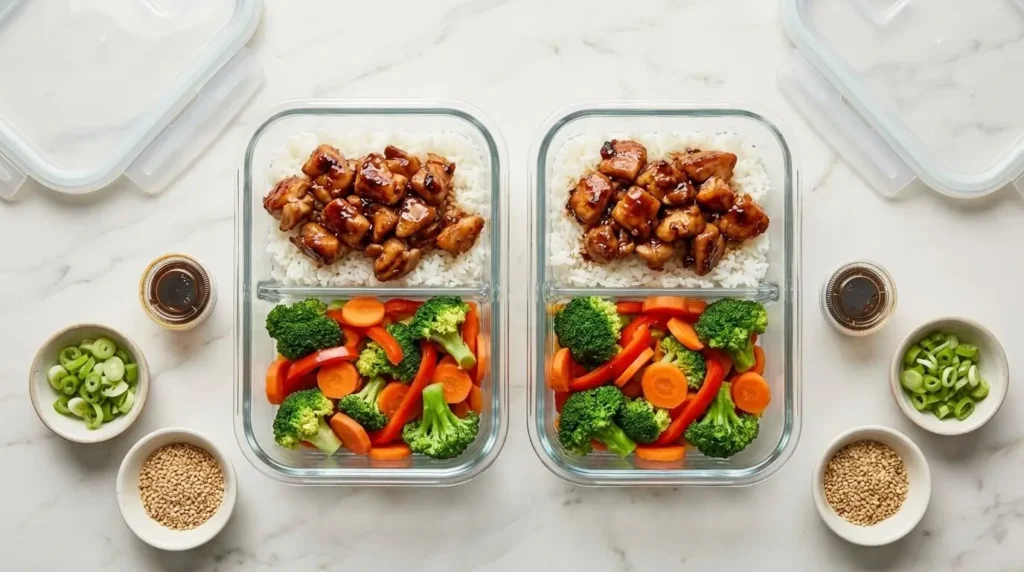
- Rice
- Vegetables
- Chicken
- Sauce separately when practical
- Fresh toppings after reheating
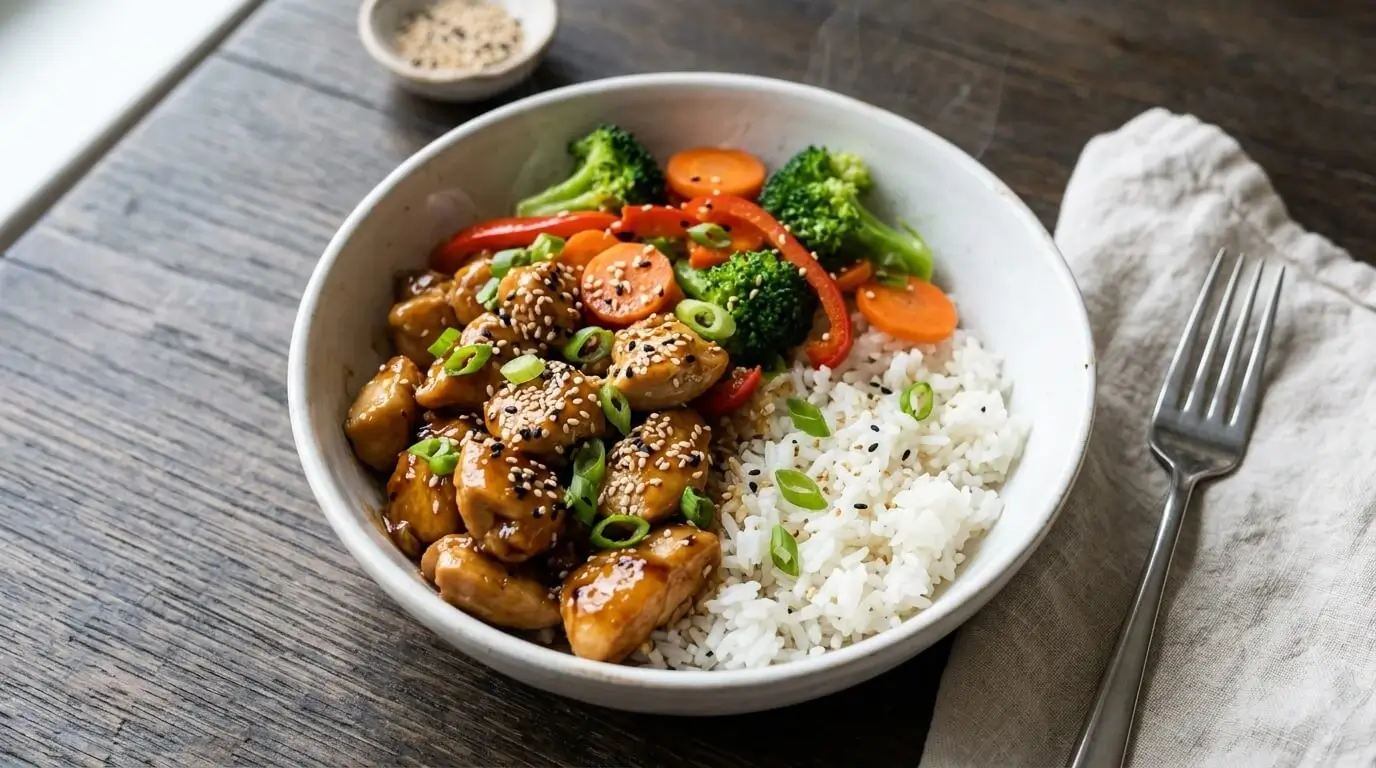
20-Minute Teriyaki Chicken Rice Bowls
Ingredients
Method
- Start the rice.
- Cut the chicken and vegetables.
- Whisk the sauce ingredients, except the cornstarch and cold water.
- Mix the cornstarch and cold water in a separate small bowl.
- Sear the chicken in a large skillet until browned.
- Cook the vegetables.
- Return the chicken to the pan and add the sauce.
- Add the slurry gradually and simmer until thickened.
- Assemble over the rice.
- Garnish with green onions and sesame seeds and serve.
Notes
- No marinade is required for the 20-minute version.
- Cut chicken evenly.
- Avoid overcrowding the pan.
- Mix cornstarch with cold water first.
- If using bottled sauce, adjust the thickness with slurry as needed.
- Store sauce separately for meal prep when practical.
Nutritional Information
Calories and macros depend on the cut of chicken, the amount of rice, how much sauce you use, the labels on your products and toppings like sesame seeds. Chicken thighs add more fat than breast and a larger rice portion adds carbohydrates.
For balance, the Harvard Healthy Eating Plate suggests filling half your plate with vegetables and fruit a quarter with whole grains and a quarter with healthy protein. Adding extra vegetables or using brown rice moves this bowl in that direction. For other easy ways to eat well see how to eat healthy when you have no time.
Frequently Asked Questions
What goes in a teriyaki chicken bowl?
A teriyaki chicken bowl has seared chicken, a glossy teriyaki sauce and rice as the base. Vegetables like broccoli, carrots and bell pepper add color and crunch and toppings such as green onions and sesame seeds finish it. You can adjust each component to suit what’s in your kitchen.
What rice is best for a teriyaki chicken bowl?
Jasmine rice is the best choice for a quick teriyaki chicken bowl because it cooks fast stays fluffy and soaks up sauce without turning mushy. Sushi rice gives a stickier result and brown rice adds fiber but needs longer cooking so use a pre-cooked pouch to save time.
How do you thicken teriyaki sauce?
Stir 1 tablespoon cornstarch into 2 tablespoons cold water until smooth. Then drizzle it into a simmering sauce while stirring. Cook for 30 to 60 seconds and check the thickness before adding more. The sauce is ready when it coats the back of a spoon.
Why is my teriyaki chicken bowl watery?
Watery bowls usually come from an overcrowded pan, wet vegetables or sauce that hasn’t simmered long enough to thicken. Pat ingredients dry, cook in batches and add the slurry gradually. Spooning on sauce just before serving also helps keep the rice from absorbing too much liquid.
Can I use bottled teriyaki sauce?
Yes, bottled teriyaki sauce works when you’re short on time. Check the label for sodium and sugar since brands vary a lot and taste before adding extra seasoning. Some bottled sauces are thin so you may need a small cornstarch slurry to get a glossy coating.
Can I use chicken thighs instead of chicken breast?
Yes. Boneless skinless chicken thighs are juicier and more forgiving than breast. Trim visible fat cut them into even pieces and cook them until they reach 165°F (74°C). Thighs may take slightly longer so confirm with a thermometer rather than relying on timing alone.
How long does teriyaki chicken last in the fridge?
Cooked teriyaki chicken keeps for 3 to 4 days in the fridge when refrigerated promptly in a sealed container as per USDA FSIS. Store the rice and sauce separately when possible and reheat leftovers to 165°F (74°C) before eating.
For more weeknight dinners in the same spirit must try our one-pot chicken and rice, beef and broccoli or egg roll in a bowl. A good teriyaki chicken bowl comes down to even cuts a pan that isn’t crowded and a sauce you stop thickening on time.